Gamified Health & Safety: Leveraging AI and IoT in Smart Wearables for Engagement and Oversight
Explore how gamified wearables, exemplified by the Fitbit Ace LTE, leverage AI and IoT for enhanced user engagement and robust safety features, and discover enterprise applications.

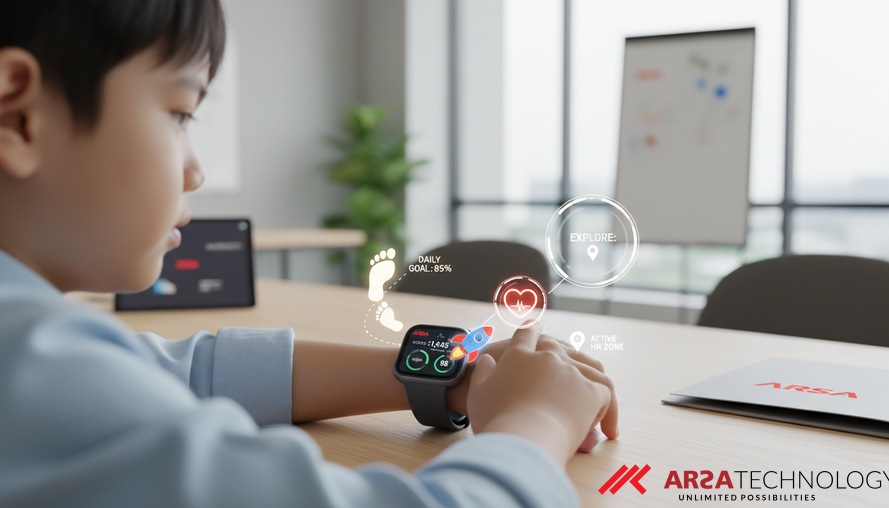
Wearable technology has rapidly evolved from niche gadgets to essential tools for enhancing daily life, health monitoring, and personal safety. While often associated with adult fitness and convenience, the market for smart wearables designed specifically for younger demographics is expanding, presenting unique opportunities and challenges. These devices, integrating Artificial Intelligence (AI) and the Internet of Things (IoT), aim to foster healthy habits through engaging experiences while providing peace of mind for parents and guardians. A notable example in the consumer space is the Fitbit Ace LTE, a smartwatch that ingeniously blends activity tracking with gamified elements, available at a competitive price point, as noted in a recent report by The Verge.
This guide explores the underlying AI and IoT principles that make such devices effective, examining how features like activity-based games, communication tools, and robust parental controls are transforming engagement and safety. We will also discuss the broader implications and potential enterprise applications of these technologies, emphasizing data security and flexible deployment models.
The Power of Gamification in Wearable Technology
At its core, the appeal of devices like the Fitbit Ace LTE lies in gamification – the application of game-design elements and game principles in non-game contexts. For children aged 7 to 11, this approach transforms mundane physical activity into an exciting challenge. By turning steps into points and virtual rewards, these wearables motivate consistent movement. Features such as fishing challenges, where arm movements simulate casting and reeling, or racing games activated by tilting an arm, ingeniously link physical activity to digital progression. This immediate feedback and reward system cultivates a positive relationship with exercise, moving children away from sedentary habits and encouraging them to explore the outdoors.
The concept of using gamification to drive behavior extends far beyond consumer smartwatches. In enterprise environments, this principle can be adapted to various applications, from enhancing employee engagement in wellness programs to improving compliance in industrial safety training. ARSA Technology, for instance, develops custom AI solutions that can incorporate gamified learning modules or interactive interfaces to boost user adoption and performance in complex operational settings. The same AI-driven engagement strategies that get kids moving can optimize learning outcomes and operational efficiency for businesses.
Enhanced Safety and Communication Features through IoT
Beyond encouraging activity, modern kid-friendly wearables are built with safety and communication as paramount features. The Fitbit Ace LTE, for example, offers robust parental controls, allowing guardians to manage contacts and settings, monitor activity goals, and even disable games during school hours to minimize distractions. Crucially, these devices often support calling, texting, and location sharing via a cellular data plan, providing a vital communication link without the need for a separate smartphone. The ability to make purchases via features like Tap to Pay further enhances a child’s independence within a controlled framework.
This fusion of IoT connectivity and AI-powered monitoring has significant parallels in enterprise-grade solutions. Imagine similar precision and oversight applied to workforce management or public safety. ARSA’s expertise in AI Video Analytics and Industrial IoT enables real-time monitoring for environments where safety and security are critical. For instance, our systems can detect PPE compliance on a factory floor or monitor restricted areas, providing instant alerts, much like a parent receives a notification if a child wanders outside a designated safe zone. The foundational technology ensures sensitive environments are protected with automated intelligence.
Data Privacy and Secure Edge Processing
A critical aspect of any connected device, especially those collecting personal or sensitive data, is privacy and data security. Consumer wearables often rely on cloud infrastructure, but for enterprise applications, data sovereignty and on-premise processing are frequently non-negotiable requirements. The architectural design of devices that process data at the edge—meaning the data is processed directly on the device or a local server rather than being sent to a remote cloud—is vital for minimizing latency, enhancing privacy, and ensuring compliance with regulations like GDPR or HIPAA.
ARSA Technology prioritizes these considerations in our AI and IoT solutions. Our ARSA AI Box Series and AI Video Analytics Software offer fully on-premise deployment options, providing enterprises with complete control over their data infrastructure. This capability is essential for government, defense, and regulated industries where sensitive information must remain within a secure, air-gapped environment, offering a level of control and assurance that cloud-dependent solutions cannot match. Our systems are engineered to provide real-time intelligence while upholding the highest standards of data protection and privacy, a principle that ARSA has been focused on since being experienced since 2018.
Beyond Consumer: Enterprise Potential of Wearable AI/IoT Principles
The innovations seen in consumer wearables, such as those targeted at children, provide a blueprint for addressing complex challenges in various enterprise sectors. The combination of miniature sensors, real-time data processing, engaging user interfaces, and secure communication can be adapted for:
- Industrial Safety: Wearable sensors for lone workers, fall detection, proximity alerts to hazardous machinery, and biometric authentication for access control.
- Healthcare: Remote patient monitoring, personalized rehabilitation programs, and staff coordination in hospitals.
- Logistics: Location tracking of personnel, optimizing movement flows within warehouses, and hands-free data entry for field operations.
- Smart Cities: Public safety monitoring, rapid response coordination, and personalized citizen services.
These enterprise applications often require robust hardware, custom software development, and deep integration with existing IT infrastructure—areas where ARSA Technology excels. By leveraging our expertise in AI, IoT, and custom web applications, we transform operational complexity into strategic advantages, delivering solutions that are not only technologically advanced but also practical, scalable, and secure.
Conclusion
The evolution of smart wearables, exemplified by engaging devices like the Fitbit Ace LTE, underscores a broader trend in technology: the integration of AI and IoT to create more intelligent, interactive, and secure environments. While consumer products focus on individual user experience and parental peace of mind, the underlying principles of gamification, real-time monitoring, and secure data handling are critically important for enterprise digital transformation. For organizations seeking to harness the power of AI and IoT for enhanced security, optimized operations, and new value creation, understanding these core technological tenets is essential.
To explore how ARSA Technology can design and deploy customized AI and IoT solutions tailored to your specific operational needs and leverage these innovative principles for your business, we invite you to contact ARSA.
**Source:** Sheena Vasani. (2026, March 23). The kid-friendly Fitbit Ace is $100, which matches its best price. The Verge. https://www.theverge.com/gadgets/899134/fitbit-ace-amazon-big-spring-sale-2026-deal