Google's Omni AI Model: The Wild Frontier of Anything-to-Anything Video Generation
Explore Google's new Omni AI model, its "anything-to-anything" video generation capabilities, the emerging realism of deepfakes, and the implications for enterprise AI, balancing creative potential with practical deployment challenges.

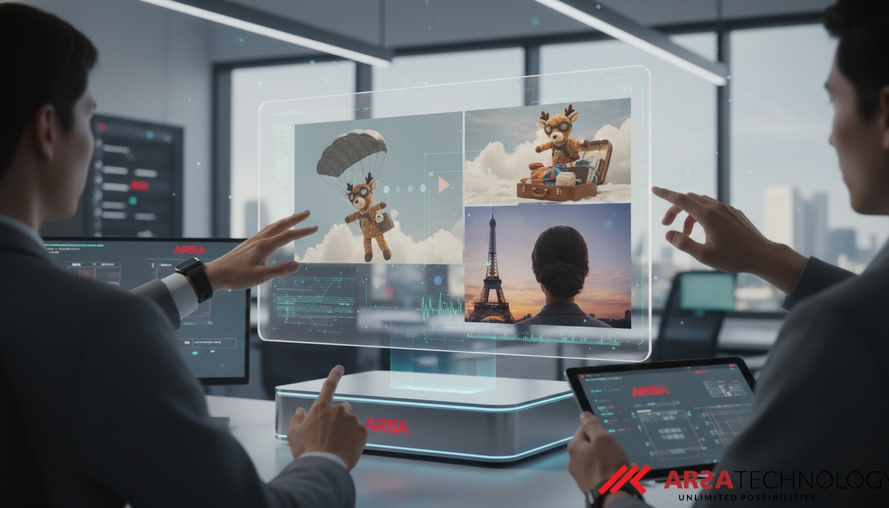
The realm of artificial intelligence continues to push boundaries, particularly in the domain of generative media. Google’s latest innovation, the Omni AI model, promises a future where any input—be it a photo, video, or text—can be transformed into any desired output. While the full "anything-to-anything" vision is still evolving, its initial release, Omni Flash, is already demonstrating remarkable, albeit sometimes perplexing, capabilities in video generation and editing. This advancement highlights both the incredible creative potential and the growing ethical complexities inherent in cutting-edge AI.
The Dawn of Omni: Google's Advanced Generative AI
Omni Flash, now integrated into Google's AI video generation platform, Flow, marks a significant step forward from its predecessor, Veo. This new model allows users to initiate video creation by uploading an existing video alongside a detailed text prompt. Google asserts that Omni is more adept at incorporating real-world knowledge into its generated content, leading to improved consistency of characters throughout a video sequence. This particular feature aims to address a common challenge in generative AI: maintaining coherent narrative and visual identity across dynamic scenes.
The underlying principle of Omni is to democratize complex video production, enabling even novice users to craft sophisticated visual narratives with relative ease. For enterprises, this could translate into faster content creation cycles for marketing, training, or internal communications. However, practical deployment requires solutions that are not only innovative but also reliable and controlled, an area where ARSA Technology excels by delivering production-ready AI and IoT systems designed for accuracy and operational integrity.
Testing the "Anything-to-Anything" Claims: Mixed Realities
Early hands-on evaluations of Omni Flash reveal a fascinating mix of impressive performance and occasional "AI jump scares," as noted by a senior reviewer from The Verge in May 2026 (Source). The model demonstrated significant improvements in consistency compared to earlier iterations, particularly in adhering to prompts. For example, a generated clip of a stuffed deer skydiving could be remarkably consistent for the most part. Yet, abrupt changes in character orientation or objects transforming unexpectedly within a scene still occur, reminding users of the AI's artificial nature.
One particular experiment involved prompting Omni to create a playful montage of a stuffed animal packing for a cruise. While the AI successfully generated a whimsical scene, complete with the animal mistakenly using a honey jar as sunscreen, the consistency of the honey bottle itself fluctuated wildly—from a jar to a squirt bottle and back again. Such inconsistencies, while perhaps amusing in a casual context, underscore the importance of precision and reliability for business-critical applications. For scenarios demanding high accuracy and consistency, such as industrial monitoring or security, robust AI Video Analytics solutions are paramount, focusing on real-time detection and actionable intelligence.
The Unsettling Power of AI Deepfakes
Beyond creative video generation, one of Omni's most potent, and perhaps unsettling, capabilities lies in its ability to add AI-generated elements to real videos, creating highly convincing "deepfakes." The reviewer's personal experiment, transforming a selfie video into clips of herself eating spaghetti, flying on an airplane, or posing in front of the Eiffel Tower, yielded startlingly realistic results. Minor glitches, like a manufactured sound or a background extra appearing twice, were present, but the overall effect was incredibly persuasive—enough to momentarily fool someone who knows her intimately.
This level of realism, generated with "trivial" effort, ushers in a new era of digital authenticity challenges. For industries reliant on verified identity, such as finance, security, and access control, the proliferation of sophisticated deepfake technology presents significant risks. The ability to create convincing fake videos necessitates equally advanced countermeasures, including robust liveness detection and multi-factor identity verification. Solutions like ARSA's Face Recognition & Liveness API are designed to provide enterprise-grade biometric security, actively combating spoofing attacks and ensuring genuine human presence.
Navigating the Cost and Iteration of Advanced AI Video
While the creative potential of models like Omni is vast, the practicalities of achieving desired outcomes, especially for intricate visions, involve considerations of cost and iterative effort. Google's system operates on a credit-based model, with different actions—generating clips, making edits—consuming varying amounts of credits. An enterprise-level plan might offer a significant credit allocation, but complex projects requiring numerous iterations and fine-tuning can quickly deplete resources. The reviewer noted that achieving a precise vision might entail "a lot of costly back-and-forth with the model."
This highlights a crucial distinction for businesses: while generative AI offers exciting possibilities for ideation and rapid prototyping, its integration into production workflows demands efficiency, predictability, and a clear return on investment. Organizations must evaluate whether the time and resources spent on iterative AI generation align with their operational needs. For on-site, mission-critical applications where immediate, reliable insights are non-negotiable, pre-configured edge AI systems like the ARSA AI Box Series offer a plug-and-play approach, minimizing infrastructure management and ensuring localized processing without cloud dependency.
Beyond the Uncanny Valley: Future Implications for Enterprise AI
The emergence of increasingly realistic generative AI models, while exciting, undoubtedly deepens our dive into the "uncanny valley"—a psychological phenomenon where near-human replicas evoke feelings of unease or revulsion. For businesses, this means navigating the fine line between leveraging compelling AI-generated content and preserving audience trust and brand authenticity. The implications extend beyond marketing to areas like employee training, virtual assistants, and even critical incident simulations.
As generative AI continues its rapid evolution, enterprises must adopt a strategic approach that balances innovation with responsible deployment. This involves investing in robust, privacy-by-design solutions that deliver measurable outcomes and build trust. The path to truly impactful enterprise AI lies not just in what models can create, but in how effectively and ethically they can be integrated into real-world operations to reduce costs, enhance security, and create new value.
To explore how ARSA Technology can help your organization leverage practical, proven AI and IoT solutions for your specific operational challenges, we invite you to contact ARSA for a free consultation.
Source: Allison Johnson, The Verge (May 23, 2026). "Google’s new anything-to-anything AI model is wild". Retrieved from https://www.theverge.com/tech/936507/gemini-omni-hands-on-deepfake-ai-video