Hardware Reality Check: Millions of Tesla Vehicles Won't Get Unsupervised FSD
Elon Musk confirms approximately 4 million Tesla vehicles with Hardware 3 won't receive unsupervised Full Self-Driving due to memory bandwidth limitations, necessitating complex upgrades.

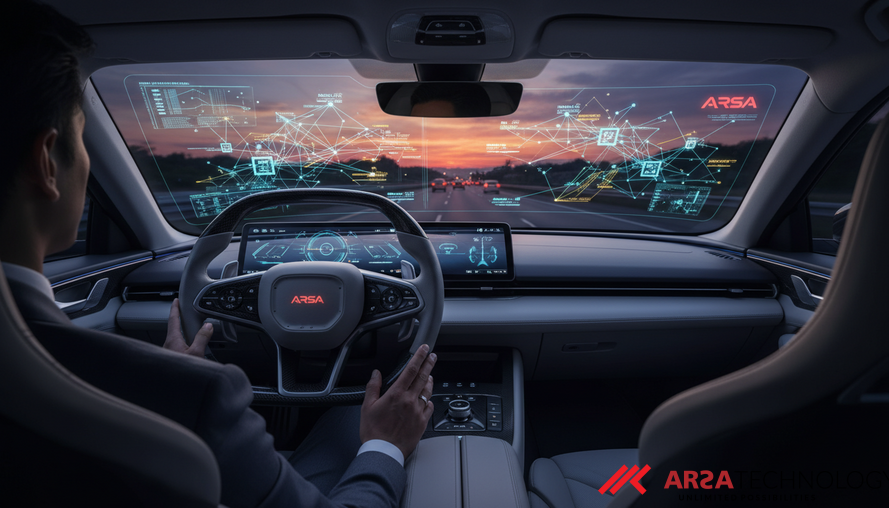
In a significant announcement, Tesla CEO Elon Musk has acknowledged that a substantial portion of the company's fleet, specifically around four million vehicles equipped with Hardware 3 (HW3), will not be capable of achieving "unsupervised" Full Self-Driving (FSD) functionality. This revelation, made during the Q1 2026 earnings call, marks a crucial turning point for many Tesla owners who invested in the FSD feature with the expectation of fully autonomous capabilities. The core issue, as explained by Musk, lies in the fundamental limitations of the HW3 platform's processing power, particularly its memory bandwidth.
The Unsupervised FSD Challenge for Hardware 3
Musk candidly stated, "I wish it were otherwise, but Hardware 3 simply does not have the capability to achieve unsupervised FSD." He elaborated that while Tesla initially believed HW3 would suffice, it possesses only one-eighth of the memory bandwidth of its successor, Hardware 4 (HW4). Memory bandwidth is a critical factor for advanced artificial intelligence systems, especially those driving complex real-time operations like autonomous navigation. It dictates how quickly the system can access and process vast amounts of sensor data—from cameras, radar, and ultrasonic sensors—to make split-second decisions.
For unsupervised FSD, which aims to remove human intervention, the system must continuously analyze environmental data, predict outcomes, and command the vehicle with extreme precision. This necessitates massive parallel processing and rapid data throughput, areas where HW3 falls short. The challenge underscores a common hurdle in the development and deployment of sophisticated AI: the constant demand for more robust and specialized hardware to keep pace with evolving software capabilities. This scenario is familiar to companies pushing the boundaries of edge AI systems, where local processing power directly impacts performance and responsiveness.
Tesla's Proposed Upgrade Path and Logistical Hurdles
To address the millions of customers who purchased FSD for their HW3 vehicles, Tesla is offering two primary solutions. The first is a discounted trade-in for new cars equipped with HW4. The second, more complex option, involves upgrading existing HW3 cars to HW4. However, this is not a simple software update. Musk confirmed that the upgrade requires not only replacing the vehicle's computer but also its cameras, highlighting the integrated nature of the autonomous driving system.
The sheer scale of upgrading four million vehicles presents a significant logistical challenge. Musk indicated that performing these upgrades at standard service centers would be "extremely slow and inefficient," necessitating the establishment of "microfactories" or "mini production lines" in major metropolitan areas to carry out the conversions effectively. This massive undertaking reflects the complexities of retrofitting integrated technology at scale, far beyond typical software updates. Solutions for such complex, integrated deployments often involve bespoke engineering and custom AI solutions tailored to specific hardware and operational environments.
Implications for Owners and the Autonomous Future
This announcement carries substantial implications for the approximately four million Tesla owners with HW3 who have been anticipating full autonomous capabilities. Many paid for the FSD feature upfront, often at a significant premium, with the promise of future "unsupervised" driving. The need for a hardware upgrade, whether through trade-in or retrofitting, could lead to additional costs and inconvenience, even with Tesla's discounted offerings. This isn't the first time this issue has surfaced; Musk had previously conceded in January 2025 that HW3 cars would require upgrades for FSD purchasers, as reported by The Verge.
Musk's long-term vision for this massive upgrade effort is to enable all HW3 cars to eventually join Tesla’s planned robotaxi fleet, alongside gaining unsupervised FSD capabilities. This underscores the strategic importance of HW4 as the foundational hardware for Tesla's future in fully autonomous mobility services. For businesses and governments experienced since 2018 in deploying mission-critical AI, managing hardware lifecycles and ensuring future compatibility is a constant, evolving challenge that requires foresight and adaptability.
Broader Industry Context: The Demands of Advanced AI
The situation with Tesla's HW3 and FSD serves as a powerful reminder of the rigorous demands of advanced artificial intelligence, particularly in safety-critical applications like autonomous driving. Developing and deploying AI that can reliably operate without human oversight is not merely a software problem; it's a profound engineering challenge that extends deep into hardware architecture, sensor integration, and real-time processing capabilities. As AI models become more sophisticated and data-intensive, the underlying hardware must evolve in tandem to provide the necessary computational resources, speed, and efficiency.
Companies investing in AI and IoT solutions across various industries, from manufacturing to smart cities, often encounter similar considerations. The promise of AI to reduce costs, enhance security, and create new revenue streams is immense, but its practical deployment often hinges on robust, purpose-built systems that can handle real-world complexities. The lessons from this experience highlight the importance of designing AI solutions with scalability and future hardware requirements in mind, ensuring that today's investments can adapt to tomorrow's technological advancements.
Source: Elon Musk admits that millions of Tesla vehicles won’t get unsupervised FSD
Ready to discuss your AI or IoT project and ensure your infrastructure is future-proof? Explore ARSA Technology's solutions and contact ARSA for a consultation.