Kia EV3: Unpacking the Compact SUV's Smart Features, Extended Range, and On-Premise Energy Potential
Kia's 2027 EV3 offers a 320-mile range and V2L/V2H capabilities, marking a significant step in smart electric vehicle technology. Explore its design, features, and implications for a connected future.

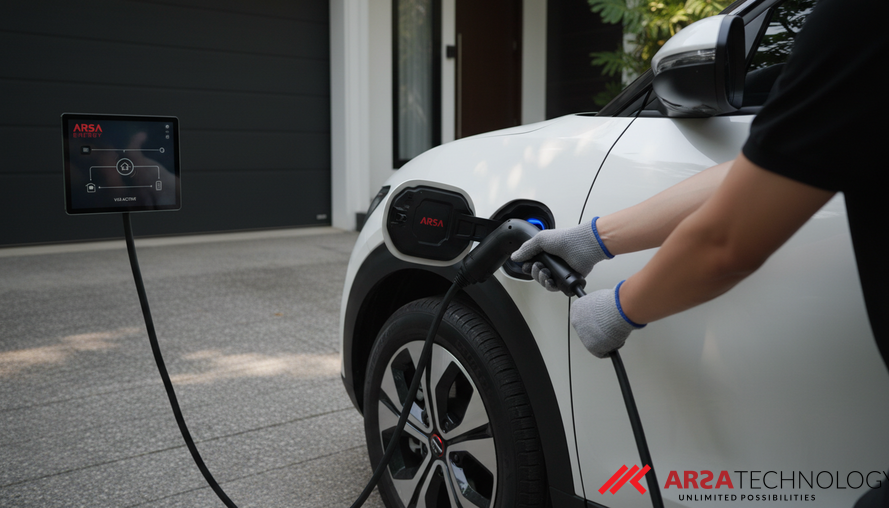
The electric vehicle (EV) landscape continues to evolve rapidly, with manufacturers pushing boundaries in range, efficiency, and integrated smart technologies. A notable entrant poised to make an impact in the North American market is Kia's compact electric SUV, the EV3. Slated for a US release in late 2026 as a 2027 model, this vehicle is more than just a means of transport; it represents a step forward in how vehicles can interact with our daily lives and energy ecosystems. With an impressive projected range and innovative power-sharing capabilities, the EV3 highlights the growing convergence of automotive, smart home, and broader IoT solutions.
The Kia EV3: Design Evolution and Market Entry
The 2027 Kia EV3 arriving in the US builds on a design that has already seen success overseas. This compact SUV first debuted in South Korea and Europe in 2024, garnering attention for its blend of practicality and modern aesthetics. For its North American debut, the EV3 maintains its distinctive, slightly boxy silhouette, a design choice that maximizes interior space and offers a robust, contemporary appearance.
While retaining its core visual identity, Kia has also introduced refinements to the EV3's interior, notably updating the center console to replace an earlier design feature. Additionally, the North American version will offer a new "Nightfall" appearance package, featuring a glossy black finish, allowing for greater customization. These subtle enhancements underscore Kia's commitment to continuous improvement and regional market adaptation, ensuring the EV3 appeals to a diverse global audience. (Source: https://www.theverge.com/transportation/905363/kia-ev3-north-america-launch)
Performance and Advanced Charging Capabilities
One of the most critical aspects of any electric vehicle is its range, and the Kia EV3 aims to alleviate range anxiety with competitive options. It will be available in two primary battery configurations: a standard range model offering approximately 220 miles per charge and a long-range variant capable of an estimated 320 miles. This long-range option also introduces the availability of all-wheel drive, providing enhanced traction and performance for varied driving conditions.
Beyond impressive range figures, the EV3 prioritizes rapid recharging. Kia states that its DC fast charging system can replenish the battery from 10% to 80% in as little as 29 minutes for the standard range model and a mere 31 minutes for the long-range version. The integration of such robust battery technology with smart energy solutions is an area where companies like ARSA Technology, with its custom AI solutions and IoT expertise, could contribute to optimizing energy consumption and distribution within a smart home or even a commercial grid. Advanced algorithms can predict energy needs, manage charging schedules, and balance grid load for efficiency.
Beyond Mobility: Vehicle-to-Load (V2L) and Vehicle-to-Home (V2H)
The Kia EV3 distinguishes itself not just as a mode of transportation, but as a mobile power hub, thanks to its Vehicle-to-Load (V2L) and Vehicle-to-Home (V2H) functionalities. V2L technology allows the EV3 to act as a portable power bank, capable of charging a wide array of external devices, from personal electronics like laptops to larger items such as e-bikes. This feature provides immense convenience for outdoor activities, work on the go, or as a general power source in remote locations.
Even more significant for home users is the V2H capability. This innovative feature enables the EV3 to power parts of a residential property, effectively turning the vehicle's large battery into a dynamic energy resource for the home. While requiring a compatible bidirectional charging system, such as a Wallbox unit, V2H can even function as a critical backup power supply during electrical outages. This kind of flexible energy management requires sophisticated backend systems and, in an enterprise context, could benefit from edge intelligence solutions like the ARSA AI Box Series to manage power distribution efficiently and securely on-premise, ensuring reliable energy flow whether for a home or a business.
Inside the EV3: Driver Experience and Digital Integration
The driving experience in the EV3 is designed to be both intuitive and digitally advanced. A standout feature is Kia’s i-Pedal 3.0, an innovative system that allows drivers to control the vehicle's speed primarily using only the accelerator pedal. This one-pedal driving mode simplifies the driving process and enhances energy recuperation, contributing to the vehicle’s overall efficiency. Drivers can easily activate or deactivate the i-Pedal function using convenient shifters located on the steering wheel, offering flexibility based on driving conditions and personal preference.
The interior boasts a panoramic dash display, seamlessly integrating dual 12.3-inch screens for infotainment and driver information. Complementing these is a dedicated 5-inch climate display, providing easy access to environmental controls. This cohesive digital cockpit design ensures that vital information and controls are readily accessible, enhancing both safety and comfort for the driver and passengers.
The Business and Societal Impact of Accessible EVs
Kia's intention to position the EV3 as a relatively affordable electric SUV is crucial for broadening EV adoption. However, the market landscape for electric vehicles in the US has become more challenging, particularly with the loss of certain electric vehicle tax credits that were previously available. This shift could impact the vehicle's perceived affordability compared to its initial announcement in 2023.
Despite these potential hurdles, the introduction of accessible, feature-rich EVs like the EV3 has broader implications for smart cities and energy infrastructure. As more EVs integrate V2H capabilities, they become distributed energy resources, potentially stabilizing grids and supporting renewable energy initiatives. Managing this complex interplay of vehicle, home, and grid energy requires sophisticated data analytics and AI-driven insights. As a company experienced since 2018 in developing AI and IoT solutions, ARSA understands the complexities of deploying advanced technology in real-world scenarios, from smart cities to industrial environments, ensuring systems are accurate, scalable, and reliable.
The Kia EV3's forthcoming arrival heralds more than just another electric vehicle; it signifies the ongoing evolution towards smarter, more integrated mobility solutions. Its combination of practical range, innovative power-sharing, and advanced digital interfaces underscores a future where vehicles are integral components of a larger, interconnected ecosystem. This evolution promises not only more efficient transportation but also a more resilient and intelligent way of managing our energy resources.
To explore how intelligent AI and IoT solutions can transform your operations and infrastructure, we invite you to contact ARSA for a free consultation.