MixerCA: Advancing Hyperspectral Image Classification with Efficient AI
Explore MixerCA, a novel AI model leveraging depthwise convolution and coordinate attention for efficient, high-accuracy hyperspectral image classification. Discover its practical applications in remote sensing.

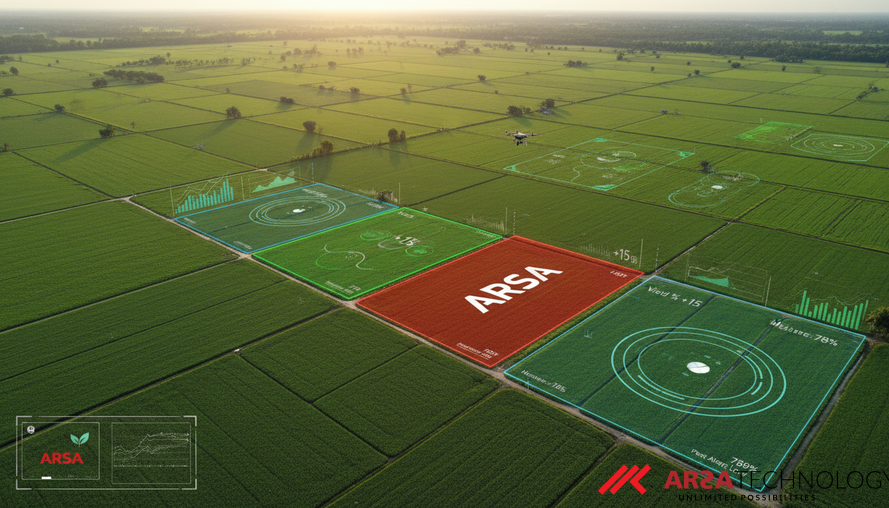
The rise of Artificial Intelligence has continually pushed the boundaries of what's possible in image analysis, with applications spanning from everyday photography to complex scientific endeavors. Among these, hyperspectral imaging (HSI) stands out for its ability to capture incredibly detailed information, revealing hidden properties of objects and environments. However, making sense of this rich data has historically been a computationally intensive challenge. A recent academic paper, "MixerCA: An Efficient and Accurate Model for High-Performance Hyperspectral Image Classification" by Alkhatib and Jamali, introduces a groundbreaking AI model designed to overcome these hurdles, offering both efficiency and precision for advanced HSI classification.
Understanding Hyperspectral Imaging and Its Challenges
Hyperspectral imaging systems are like advanced cameras that see beyond the visible spectrum, capturing hundreds of narrow, contiguous spectral bands, from visible light to infrared. Unlike a standard camera that captures just red, green, and blue, an HSI system records a unique "spectral fingerprint" for each pixel. This fingerprint reveals the chemical and physical properties of materials, making HSI invaluable for applications such as environmental monitoring, agriculture, mineral exploration, and sophisticated surveillance. By analyzing these spectral responses, HSI classification assigns each pixel to a specific material or land-cover class, providing deep insights into composition and status.
Despite its immense potential, HSI classification presents significant challenges. The sheer volume and high dimensionality of the data, coupled with complex, non-linear correlations between spectral bands, make traditional machine learning methods like Support Vector Machines (SVM) or Random Forests often fall short. These older techniques frequently struggle to capture subtle interdependencies and typically rely solely on spectral data, overlooking the crucial spatial context—the information gleaned from neighboring pixels—which is vital for accurate classification. This data-intensive nature necessitates powerful, yet efficient, analytical tools.
Deep Learning's Evolution in HSI Classification
The advent of deep learning, particularly Convolutional Neural Networks (CNNs), marked a turning point for HSI classification. CNNs excel at automatically extracting hierarchical features from raw data, with shallower layers recognizing basic elements like edges and textures, and deeper layers identifying more complex patterns. This capability has led to substantial improvements in classification accuracy by effectively fusing both spectral and spatial information. Early implementations saw 2D-CNNs handle spatial data well but struggle with the spectral dimension, while 3D-CNNs offered comprehensive spectral-spatial feature extraction but at a high computational cost.
The primary limitation of traditional deep learning approaches like deep 3D-CNNs lies in their computational intensity and their demand for substantial training data. Given that many publicly available HSI datasets have limited sample sizes, this often proves to be a significant bottleneck. Furthermore, stacking multiple 3D convolutions can complicate the direct optimization of the loss function due to the resulting non-linear structure. These challenges spurred research into more efficient architectures, paving the way for innovations that balance accuracy with practical deployment constraints.
Introducing MixerCA: A Paradigm Shift in Efficiency
MixerCA emerges as a novel, lightweight model specifically engineered to address the computational demands and data limitations inherent in HSI classification. Unlike prior models that often use specialized mechanisms in isolation, MixerCA integrates three key components into a unified, optimized framework: depthwise convolution, token and channel mixing, and coordinate attention. This innovative combination allows MixerCA to achieve high performance without the heavy computational footprint of its predecessors.
The core of MixerCA's efficiency stems from depthwise convolution, a technique that drastically reduces computational load by processing each input channel separately before combining the results. This is crucial for handling HSI's numerous spectral bands more efficiently. Alongside this, token and channel mixing allows the model to intelligently decouple spatial and channel interactions, maintaining consistent resolution throughout the network. This means the model can process HSI patches directly, understanding both where features are and what those features represent across the spectrum, without losing fidelity. Finally, coordinate attention acts as a self-attention mechanism, enabling the model to selectively focus on the most relevant features across both the width and height of the image, enhancing feature discrimination and overall accuracy. This intelligent focus helps the model extract more meaningful insights from the complex HSI data, making it particularly effective in real-world scenarios.
Practical Applications and Business Impact
The capabilities of models like MixerCA have profound implications across various industries, making the power of hyperspectral insights more accessible and cost-effective. By delivering efficient and accurate classification, HSI technology can drive significant business outcomes, including cost reduction, enhanced security, and the creation of new revenue streams.
In agriculture, MixerCA can enable precise crop health monitoring, identifying nutrient deficiencies or disease outbreaks at an early stage across vast fields. This allows for targeted interventions, reducing waste and increasing yields. For environmental monitoring, it can accurately classify land cover, detect pollution, and track changes in ecosystems, supporting sustainable resource management and compliance. In smart cities, HSI, powered by efficient AI, can enhance urban planning by categorizing surfaces, monitoring infrastructure integrity, and managing resources more effectively. These are areas where ARSA Technology excels, providing robust AI Video Analytics and ARSA AI Box Series for edge deployments that address similar complex visual data challenges across various industries. The ability of MixerCA to perform efficiently at the edge opens doors for real-time analysis in remote locations or on devices with limited computational resources, further democratizing the power of advanced imaging.
Key Advantages and Future Outlook
Extensive experiments conducted on four hyperspectral benchmark datasets clearly demonstrated MixerCA’s superiority over several established algorithms, including 2D-CNN, 3D-CNN, Tri-CNN, HybridSN, ViT, and Swin Transformer. This strong performance, combined with its lightweight architecture, makes MixerCA a significant advancement in the field. Its ability to provide both efficiency and accuracy directly tackles critical challenges that have previously hindered the widespread adoption of HSI solutions.
The development of models like MixerCA signifies a move towards more deployable, production-ready AI for complex data types. By reducing computational demands while maintaining or even improving accuracy, these innovations pave the way for real-time HSI analysis on edge devices, expanding possibilities for autonomous systems and intelligent sensors. This efficiency translates directly into lower operational costs and faster insights, accelerating digital transformation for enterprises and public institutions globally.
Ready to explore how advanced AI and IoT solutions can transform your operations with precision, efficiency, and measurable impact? Discover ARSA Technology's innovative platforms and services designed for mission-critical applications. For a tailored discussion on your specific needs, we invite you to contact ARSA today.