Revolutionizing Agriculture: Probabilistic AI for Accurate Fruit Maturity Assessment
Discover how probabilistic AI models like FruitProM-V2 are transforming fruit maturity detection, offering robust, real-time insights for optimal harvesting and supply chain management.

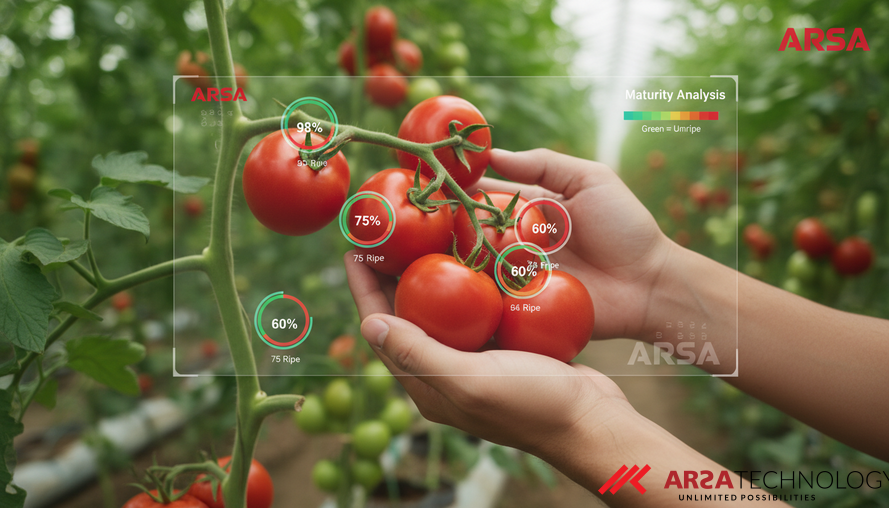
Fruit and vegetable maturity assessment is a cornerstone of efficient agriculture and a robust food supply chain. Misjudging ripeness can lead to significant economic losses, from reduced market value for premature harvests to spoilage and damage for overripe produce. Traditionally, this process relies on human observation, which is inherently subjective and inconsistent. Recent advancements in AI, particularly computer vision, offer a path towards more objective and scalable solutions. However, even cutting-edge AI models have grappled with the nuanced, continuous nature of fruit ripening.
The Challenge of Traditional Maturity Assessment
Historically, farmers and harvesters have relied on their experience, using visual cues like skin color, size, and firmness, along with tactile and olfactory signals, to determine optimal harvest times. While rapid, this manual method suffers from high variability dueent to individual judgment, varying environmental conditions, and the subjective interpretation of cues. Furthermore, external appearance doesn't always perfectly correlate with internal physiological attributes like sugar content or starch degradation, which are more precise indicators of ripeness. This inconsistency leads to variable quality, reduced shelf life, and increased post-harvest losses.
Beyond manual inspection, laboratory methods provide accurate physiological measurements but are destructive and impractical for large-scale, real-time field use. Non-destructive sensing systems, such as spectroscopic and hyperspectral imaging, have shown promise but often require specialized equipment, controlled environments, and incur significant computational costs, limiting their deployment in dynamic agricultural settings. Similarly, mechanical proxies or volatile-based sensing can be cultivar-dependent or sensitive to environmental factors like temperature and humidity, diminishing their robustness in real-world scenarios.
Limitations of Current AI Approaches
With the rise of deep learning, convolutional neural networks (CNNs) and advanced object detection frameworks like YOLO have been successfully applied to fruit maturity estimation directly from images. These models analyze visual cues such as color transitions and texture changes. However, most existing AI systems treat maturity as a series of discrete, distinct categories (e.g., "unripe," "intermediate," "ripe"). This categorical approach imposes rigid boundaries on what is fundamentally a continuous biological process.
The problem intensifies near transition points between maturity stages. Even expert human annotators often disagree on labels for fruits that are visually ambiguous, introducing "label noise" into training datasets. Standard classification algorithms, which typically use cross-entropy loss, assume perfect, mutually exclusive labels. This forces the AI to learn sharp decision boundaries that don't reflect the gradual progression of ripening. Such models, while achieving high accuracy on clean, controlled datasets, can struggle with generalization in real farm environments characterized by variable lighting, occlusions, and inherent label ambiguity. These issues underscore the need for a more sophisticated approach that can embrace, rather than simplify, the uncertainty in ripeness assessment.
Introducing Probabilistic Maturity Estimation: FruitProM-V2
A recent study by Rahul Harsha Cheppally et al. from Kansas State University highlights a groundbreaking approach to overcome these limitations. Their paper, titled "FruitProM-V2: Robust Probabilistic Maturity Estimation and Detection of Fruits and Vegetables" (Source: arXiv:2604.26084), redefines fruit maturity estimation as a probabilistic perception task. Instead of forcing the AI to pick a single category, this framework models maturity as an underlying continuous variable and predicts a probability distribution over potential maturity levels.
The core innovation lies in replacing the traditional AI model's "head" (the part that makes the final prediction) with a "distribution-based head." This allows the system to predict continuous α-β parameters, which describe a probability distribution. This distribution is then converted into class probabilities using a Cumulative Distribution Function (CDF), effectively representing the likelihood of a fruit being in various stages of ripeness. This method provides a more accurate and nuanced representation of the fruit's continuous ripening journey, acknowledging the inherent uncertainty rather than ignoring it.
How FruitProM-V2 Enhances Robustness and Accuracy
The research found that this probabilistic formulation maintains comparable performance to standard detectors when trained with perfectly clean labels. Crucially, it excels in better representing uncertainty, providing a spectrum of possible maturity stages rather than a single, potentially misleading, categorical prediction. The true advantage emerges when label noise – the inevitable inaccuracies introduced by human annotation or natural ambiguity – is present during training. Under these real-world conditions, the probabilistic model demonstrates significantly improved robustness compared to conventional approaches.
To achieve this, FruitProM-V2 introduces a CDF-based focal loss function. This advanced loss function enables more robust learning by accommodating interval-based observations, effectively bridging the gap between discrete, human-assigned labels and the continuous biological reality of ripening. By explicitly modeling and accounting for maturity uncertainty, the system becomes more reliable in diverse agricultural environments, leading to more consistent and accurate visual maturity estimation. This kind of robust AI is vital for enterprises seeking dependable automation. ARSA Technology, for example, has been experienced since 2018 in developing and deploying such reliable AI solutions across various industries, prioritizing practical, real-world impact over experimental concepts.
Practical Applications in Modern Agriculture
The implications of robust probabilistic maturity estimation are vast for the agricultural sector. For farmers, it means:
- Optimal Harvest Timing: More precise data leads to harvesting at peak ripeness, maximizing flavor, quality, and market value.
- Reduced Waste: Minimizing premature or overripe harvests directly reduces spoilage and post-harvest losses throughout the supply chain.
- Improved Consistency: Automation with probabilistic AI can standardize maturity assessment, leading to a more consistent product quality and better brand reputation.
- Enhanced Supply Chain Efficiency: Predictive insights into ripeness can optimize logistics, storage conditions, and delivery schedules, ensuring fresh produce reaches consumers.
This technology can be integrated into existing infrastructure, such as CCTV systems in packing houses or on robotic harvesting platforms. For example, systems like ARSA AI Video Analytics can leverage these probabilistic models to convert standard camera feeds into real-time operational intelligence. This means instant insights into fruit conditions, enabling immediate adjustments to sorting, packing, or even guiding robotic harvesters.
The Future of Precision Agriculture with Edge AI
Deploying such sophisticated AI models at the edge, directly where the data is collected (e.g., on farm equipment or in packing facilities), is a critical aspect for real-time agricultural operations. Edge AI processing, as offered by products like the ARSA AI Box Series, ensures low latency, privacy, and operational reliability without constant cloud dependency. This is particularly important for remote farms or facilities where internet connectivity might be limited or data sovereignty is a concern.
By moving beyond simple classification to a probabilistic understanding of maturity, AI can provide granular, actionable data that empowers decision-makers across the entire agricultural value chain. This transformation promises not only economic benefits through increased yields and reduced losses but also environmental advantages by optimizing resource use and minimizing food waste. For organizations that require specific, tailored AI solutions, investing in custom AI solutions built on these robust principles ensures the technology perfectly aligns with unique operational realities and business goals.
Strategic technology transformation in agriculture demands partners who deeply understand both the nuanced challenges of biological processes and the capabilities of cutting-edge AI. By embracing probabilistic models, the industry can unlock a new level of precision and efficiency.
To explore how advanced AI and IoT solutions can transform your agricultural operations and integrate these cutting-edge capabilities, you are invited to contact ARSA.