Multi-Modal AI: Revolutionizing Low-Light Image Enhancement with M2Retinexformer
Explore M2Retinexformer, a pioneering multi-modal AI framework enhancing low-light images using depth, luminance, and semantic cues. Improve visibility, reduce noise, and boost AI performance in critical applications.

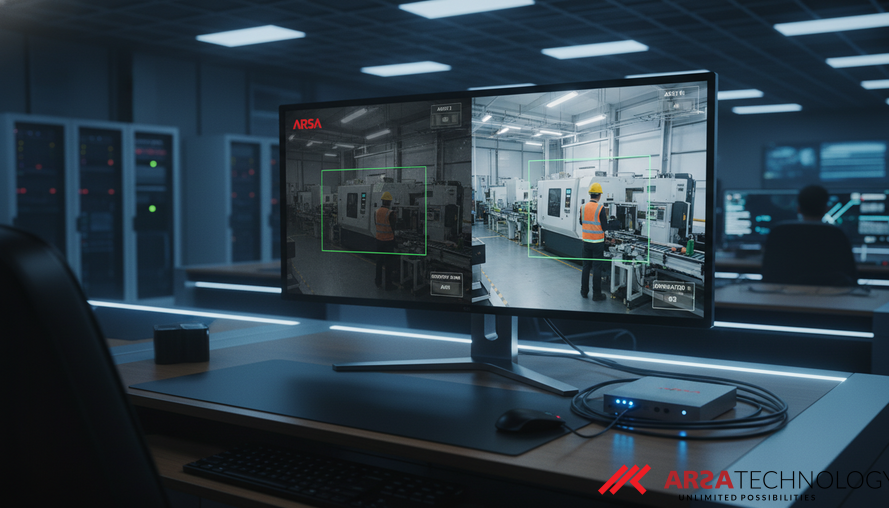
In an increasingly automated world, reliable visual data is paramount. From surveillance systems securing public spaces to industrial cameras monitoring critical operations, images form the bedrock of decision-making. However, a persistent challenge remains: low-light conditions. Images captured in dim environments often suffer from a host of degradations, including poor visibility, reduced contrast, amplified noise, and severe color distortion. These issues not only hinder human perception but also critically impair the performance of advanced AI vision tasks like object detection, semantic segmentation, and facial recognition, which typically rely on clear, well-exposed inputs.
This is where the innovative M2Retinexformer, a multi-modal AI framework, offers a significant leap forward in low-light image enhancement. By moving beyond traditional single-modality approaches, M2Retinexformer harnesses diverse data inputs to transform dark, noisy visuals into clear, actionable intelligence, making a substantial impact across various industries.
The Deep-Seated Challenge of Low-Light Vision
The problems inherent in low-light photography are complex. Imagine a security camera attempting to identify an intruder in a dimly lit warehouse. The resulting footage might be blurry, noisy, and distorted, making it nearly impossible for human operators or AI algorithms to accurately discern details. This degradation isn't just an aesthetic inconvenience; it carries real-world consequences. In critical applications such as public safety, industrial monitoring, and autonomous navigation, poor image quality can lead to missed threats, operational inefficiencies, and even safety hazards. For instance, an AI system tasked with monitoring personal protective equipment (PPE) compliance in a factory relies on clear imagery to detect helmets or safety vests. In low light, these crucial details can vanish, rendering the system ineffective. Similarly, a smart city traffic monitor needs distinct vehicle recognition to manage flow, a capability severely hampered by night-time image quality.
Unpacking Retinex Theory and its AI Evolution
For decades, the Retinex theory has provided a foundational understanding for low-light image enhancement. Developed by Edwin Land, this theory posits that any image can be decomposed into two fundamental components: reflectance and illumination. Reflectance represents the intrinsic properties of an object – its true color and texture, independent of lighting. Illumination, on the other hand, describes the amount and distribution of light falling on the scene. The goal of Retinex-based enhancement is to estimate and correct the illumination component, thereby revealing the true reflectance and restoring a natural, well-exposed appearance.
In recent years, deep learning has revolutionized the application of Retinex theory. AI models, particularly convolutional neural networks (CNNs) and more recently, transformer architectures, have been trained on vast datasets to learn complex mappings that accurately separate illumination from reflectance and restore corrupted images. Retinexformer, a notable advancement in this field, introduced a "One-stage Retinex-based Framework" utilizing an "Illumination-Guided Transformer" to achieve impressive results. However, even these advanced methods typically rely solely on RGB (Red, Green, Blue) color information, limiting their ability to fully understand the scene's geometry and the intricate interplay of light across surfaces.
The Multi-Modal Advantage: Beyond Basic Color
M2Retinexformer takes a revolutionary step by integrating additional data modalities beyond standard RGB. Its core innovation lies in incorporating depth cues, luminance priors, and semantic features, processing them through a progressive refinement pipeline to generate superior image enhancements. This multi-modal approach addresses the limitations of RGB-only systems by providing the AI with a richer, more comprehensive understanding of the scene.
- Depth Cues: Depth information provides geometric context, indicating how far objects are from the camera. Crucially, depth maps remain remarkably consistent regardless of lighting conditions (as illustrated in research findings from the paper, M2Retinexformer: Multi-Modal Retinexformer for Low-Light Image Enhancement). This geometric insight helps the AI differentiate between dark areas caused by distance, objects occluding one another, or shadows, thereby preventing misinterpretations and enabling more accurate enhancement.
- Luminance Priors: While Retinexformer uses an illumination prior at the beginning, M2Retinexformer continuously integrates luminance features throughout the enhancement process. This persistent guidance on brightness distribution helps the network dynamically adapt its enhancement strategy.
Semantic Features: Semantic features provide the AI with explicit scene understanding – it knows what* objects are in the image (e.g., a person, a vehicle, a building). This understanding is vital for preserving natural colors, fine textures, and accurate object boundaries during enhancement, preventing the "unnatural" look often associated with basic low-light algorithms.
Architectural Innovations for Smarter Enhancement
M2Retinexformer builds upon the robust foundation of Retinexformer but introduces two key components: a Modality Extractor and a Multi-Modal Cross-Attention Block (MMCAB). The Modality Extractor is responsible for intelligently extracting, aligning, and injecting the auxiliary depth, luminance, and semantic features at various scales within the network. These features are then fused with the primary RGB data through the MMCAB.
The power of the MMCAB lies in its use of cross-attention. In simple terms, cross-attention allows different types of information (e.g., depth data and color data) to "talk" to each other within the AI model, enabling effective information exchange and synthesis. An adaptive gating mechanism further refines this process, dynamically balancing the model's reliance on illumination-guided self-attention (processing within a single data type) and cross-attention (processing between different data types) based on how reliable the auxiliary cues are at any given moment. This modular and extensible architecture allows for flexible integration of additional modalities in the future without fundamental network redesign.
The systematic investigation and ablation studies conducted by the researchers confirmed the significant contribution of each auxiliary modality, both individually and in combination. Evaluations on standard benchmarks such as LOL, SID, SMID, and SDSD datasets consistently demonstrated M2Retinexformer's superior performance, achieving higher Peak Signal-to-Noise Ratio (PSNR) values compared to the baseline Retinexformer and other state-of-the-art methods.
Practical Impact and Business Outcomes
The enhanced capabilities of multi-modal low-light image enhancement, as demonstrated by M2Retinexformer, have profound implications across diverse industries:
- Public Safety & Security: Improved night vision for surveillance cameras means more accurate object detection, facial recognition, and anomaly detection in dimly lit streets, buildings, or remote areas. This translates directly to faster response times, enhanced situational awareness, and ultimately, greater public safety. ARSA Technology's AI Video Analytics can leverage such advancements for more robust security solutions.
- Industrial & Manufacturing: In factories and industrial sites, where lighting can be inconsistent and safety is paramount, enhanced imagery improves PPE compliance monitoring, restricted area detection, and quality control systems. This reduces accidents, ensures regulatory compliance, and optimizes operational efficiency. Deploying such enhanced AI on-site can be facilitated by solutions like the ARSA AI BOX - Basic Safety Guard.
- Smart Cities & Traffic Management: Accurate vehicle detection and classification, even in challenging night-time conditions, are crucial for intelligent traffic management systems. Multi-modal enhancement can lead to more effective congestion monitoring, incident detection, and urban planning. ARSA's AI BOX - Traffic Monitor benefits directly from such breakthroughs, ensuring optimal performance around the clock.
- Retail & Commercial: Enhanced image quality provides clearer data for retail analytics, such as footfall tracking, dwell time analysis, and queue management, especially in stores with varied lighting or during evening hours. This empowers businesses to make better decisions on layout, staffing, and marketing.
- Logistics & Transportation: For automated systems in warehouses or shipping yards, clear visibility in all conditions is critical for efficient package handling, vehicle identification, and inventory management.
The ability to extract reliable information from low-light environments significantly reduces operational risks, improves decision-making, and unlocks new avenues for automation and intelligence across various sectors. Companies like ARSA Technology, experienced since 2018 in delivering practical AI and IoT solutions to various industries, are at the forefront of implementing such innovative advancements.
Paving the Way for More Robust AI Systems
M2Retinexformer represents a significant step towards building more resilient and context-aware AI vision systems. By moving beyond the limitations of single-modality data, it ensures that critical visual information remains accessible and actionable, regardless of lighting conditions. This enhancement not only improves the raw image quality for human observers but critically boosts the reliability and accuracy of downstream AI applications, driving tangible business outcomes and enhancing safety across many domains.
To explore how advanced multi-modal AI can transform your operations and to learn more about bespoke AI and IoT solutions, we invite you to contact ARSA for a free consultation.
Source: Aboelwafa, Y., Elmongui, H. G., & Torki, M. (2026). M2Retinexformer: Multi-Modal Retinexformer for Low-Light Image Enhancement. arXiv preprint arXiv:2605.12556.