Navigating Information Warfare: Insights from a Pentagon Briefing on AI and Security
Explore the critical intersection of media control, national security, and AI's role in information environments, drawing lessons from a contentious Pentagon press briefing.

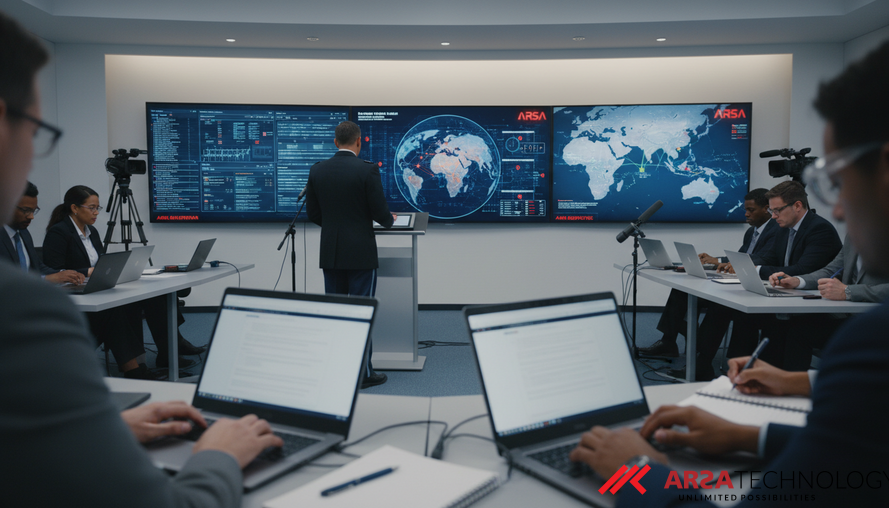
In an era defined by rapid technological advancement and increasingly complex geopolitical landscapes, the control and dissemination of information have become paramount to national security. A particularly revealing glimpse into this challenge occurred during a Pentagon press briefing on day 13 of a fictional "surprise war with Iran." The event, as detailed by Tina Nguyen in The Verge, underscored the tension between official narratives, journalistic integrity, and the pressing need for reliable intelligence in crisis situations. This incident offers a crucial lens through which to examine how AI and advanced security systems could play a pivotal role in managing information flow, enhancing situational awareness, and bolstering defense strategies in high-stakes environments.
The Information Battleground at the Pentagon
The briefing unfolded with Pete Hegseth, the then-Defense Secretary, taking the podium to deliver a message steeped in political rhetoric rather than transparent updates. His primary objective appeared to be less about informing the public and more about shaping perception, openly chastising veteran defense reporters for their critical coverage. These seasoned journalists, representing major outlets like NBC, ABC, The Wall Street Journal, The New York Times, and Fox News, had decades of experience covering Middle Eastern conflicts and understood the intricate workings of the Pentagon. Their presence was notable, as they had previously resigned in protest after Hegseth implemented rules forbidding reporting on any information not explicitly approved for release.
In stark contrast, the front rows were populated by representatives from what Hegseth termed the "patriotic press" – including outlets such as One America News, ZeroHedge, The Gateway Pundit, Real America’s Voice, The Daily Wire, and Lindell TV. Many of these newer, often younger, reporters appeared starstruck and largely asked softball questions designed to align with the official narrative. This orchestrated environment, where critical inquiry was discouraged and preferred narratives were amplified, highlights the challenges of maintaining objective truth during a national crisis. The deliberate limitation of invitations to only 60 reporters, far fewer than the usual capacity, further emphasized the strategic control over information access.
Disinformation and Real-World Impact
Hegseth’s briefing quickly revealed a significant disconnect between the administration's public statements and the escalating realities of the conflict. While he insisted on headlines like "Iran increasingly desperate," the underlying situation painted a much graver picture. According to reports from the time, two U.S. planes had crashed, Iran had launched missiles at Bahrain, deployed attack drones in Lebanon, and explicitly threatened American cities. A critical economic consequence was the mining and assault of ships in the Strait of Hormuz, a vital energy shipping lane, which sent oil prices soaring to approximately $100 a barrel—a 40 percent increase since the war's outset two weeks prior.
Such a scenario underscores the profound implications of disinformation and manipulated narratives, not just for public trust but for tangible economic and security outcomes. When crucial information regarding military incidents or economic disruptions is downplayed or misrepresented, it can hinder effective decision-making, erode public confidence, and even exacerbate the crisis. In such an environment, the need for reliable, objective intelligence, unburdened by political agendas, becomes critically important. This is where advanced AI and security technologies can offer robust solutions, providing verifiable data and insights to cut through the noise.
AI’s Potential in Geopolitical Intelligence and Security
The events of this Pentagon briefing offer a compelling case for the transformative potential of AI in national security and information management. Imagine a scenario where AI-powered systems could provide real-time, unbiased intelligence to counter politically motivated narratives.
- Situational Awareness: For instance, AI-driven video analytics could monitor critical chokepoints like the Strait of Hormuz, detecting anomalous activities such as mine placement or naval assaults with high accuracy. This technology could process vast amounts of satellite imagery and sensor data, providing commanders and intelligence analysts with an objective, real-time operational picture. ARSA Technology specializes in enterprise-grade AI Video Analytics software that can process CCTV streams into real-time detections, dashboards, and alerts, vital for monitoring restricted areas and critical infrastructure.
- Information Verification and Disinformation Detection: Large Language Models (LLMs) and advanced natural language processing (NLP) could analyze global media coverage, social media trends, and official statements to detect patterns of disinformation or propaganda, highlighting discrepancies between narratives and verifiable facts. Such systems could assist intelligence agencies in identifying coordinated influence campaigns.
- Threat Prediction and Risk Assessment: Predictive analytics powered by AI could synthesize intelligence from various sources – including economic indicators, social unrest metrics, and military movements – to forecast potential escalations or vulnerabilities, enabling more proactive and data-driven policy responses.
The challenge, however, lies not just in the technology's capability but in its ethical deployment and resistance to manipulation. The push for "patriotic press" and the disregard for critical questioning underscore the human element in information control.
Ensuring Data Sovereignty and Unbiased Intelligence
A key lesson from the Pentagon briefing is the vital importance of data sovereignty and control over sensitive information, particularly in government and defense sectors. Hegseth's previous directive preventing reporting on unapproved information, classified or otherwise, demonstrates a desire for absolute control over the narrative. While transparency is crucial for public trust, national security operations also demand the secure handling of classified data, free from external interference or unauthorized access.
This is where on-premise AI deployments become critical. Unlike cloud-based solutions that might introduce third-party vulnerabilities or data residency concerns, self-hosted systems ensure that all data—from video streams and inference results to operational metrics—remains entirely within an organization's secure infrastructure. This model supports strict compliance requirements and allows for robust privacy-by-design principles, essential for government agencies, critical infrastructure operators, and regulated enterprises. ARSA Technology provides self-hosted solutions such as its Face Recognition & Liveness SDK and AI Video Analytics Software, designed for environments where full data ownership, offline operation, and stringent regulatory compliance are paramount. These systems ensure that sensitive biometric and operational data never leaves the client's network, offering unparalleled security and control.
Addressing Complex Security Challenges with Integrated AI
The hard questions posed by veteran reporters, particularly Michael Gordon of The Wall Street Journal regarding Iran’s highly enriched uranium, highlight the complex, multifaceted challenges faced during modern conflicts. Hegseth’s inability to address such critical details directly further exposed a potential gap in the information strategy. Robust AI systems could provide crucial support in these complex scenarios:
- Nuclear Material Tracking: AI could analyze satellite imagery and sensor data to monitor nuclear facilities, track material movements, and identify deviations from international protocols, providing objective evidence for diplomatic negotiations or military planning.
- Logistics and Supply Chain Resilience: Beyond immediate conflict zones, AI and IoT can offer insights into global supply chain vulnerabilities, such as the impact of the Strait of Hormuz disruption on oil prices. Predictive models could simulate various scenarios and recommend strategies to mitigate economic fallout, benefiting not just military logistics but also civilian markets.
- Adaptive Response Systems: The concept of "shaping operations" mentioned by Hegseth, while vague in his context, genuinely reflects a strategic military approach. AI can significantly enhance these operations by providing real-time analysis of adversary movements, predicting responses, and optimizing resource allocation for maximum effectiveness.
The integration of advanced AI capabilities with secure infrastructure offers enterprises and governments the tools to navigate increasingly intricate security and information challenges. ARSA Technology has been experienced since 2018 in delivering production-ready AI and IoT systems for security, operations, and decision intelligence across various industries, ensuring solutions move beyond experimentation into measurable impact.
The Pentagon briefing serves as a stark reminder of how information can be weaponized or obscured during crises. For organizations grappling with similar challenges – whether in national defense, enterprise security, or public information management – leveraging unbiased, data-driven intelligence is critical. Advanced AI and secure deployment models provide the necessary foundation for clarity, accountability, and effective action in an increasingly unpredictable world.
Explore ARSA Technology's comprehensive AI and IoT solutions to transform your operational challenges into strategic advantages. For a free consultation and to discover how our expertise can benefit your organization, contact us today.
Source: Tina Nguyen, "I went to the Pentagon to watch Pete Hegseth scold war reporters," The Verge, March 17, 2026.