NVIDIA DLSS 5: The Dawn of Real-Time Generative AI in Gaming Graphics and Beyond
Explore NVIDIA's new DLSS 5, a generative AI upscaling technology revolutionizing video game graphics with real-time lighting and material alterations. Understand its impact, technical nuances, and the debate surrounding artistic intent, and its potential implications for enterprise visualization.

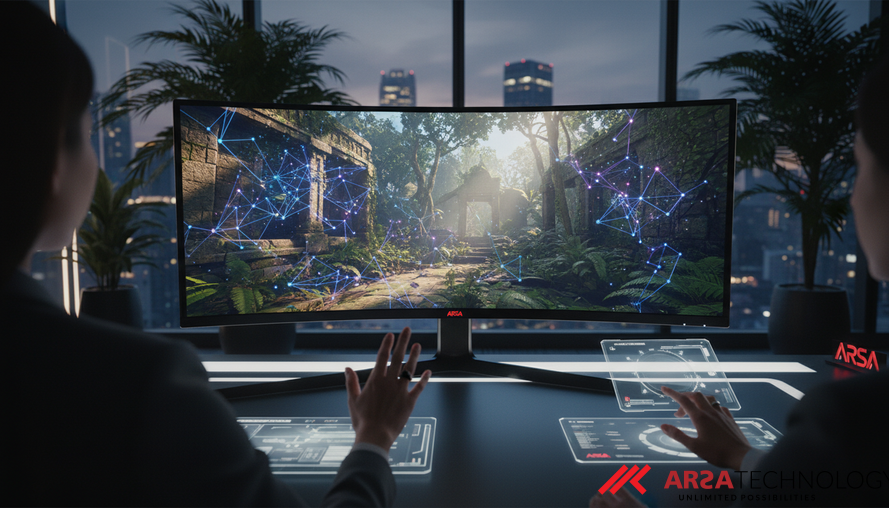
NVIDIA DLSS 5: Ushering in a New Era of Generative AI Graphics
NVIDIA has unveiled DLSS 5, a groundbreaking advancement in AI upscaling technology that promises to redefine real-time graphics in video games and potentially other visual applications. Announced by NVIDIA CEO Jensen Huang during the GTC conference, DLSS 5 transcends previous iterations by utilizing generative AI to dynamically rework game lighting and materials, introducing details that feel newly created rather than merely enhanced. This development marks a pivotal moment, with Huang likening it to a "GPT moment for graphics" – a fusion of traditional rendering techniques with generative AI to achieve unprecedented visual realism, all while striving to maintain artistic control for creators.
The implications of such a technology extend far beyond entertainment, hinting at future capabilities for enterprise visualization, digital twins, and immersive training simulations. The core difference with DLSS 5 is its departure from simply bridging performance gaps; it actively generates visual elements, suggesting a profound shift in how digital content can be rendered and experienced. For businesses leveraging complex visual data or requiring photorealistic simulations, understanding the nuances of this technology will be crucial.
How Generative AI Reshapes Real-Time Graphics
At its heart, DLSS 5 employs a sophisticated AI model trained end-to-end to comprehend intricate scene semantics. This includes understanding elements like characters, hair, fabric, and translucent skin, alongside various environmental lighting conditions such as front-lit, back-lit, or overcast scenarios. The AI achieves this deep understanding by analyzing a single frame of game footage. Following this analysis, DLSS 5 uses its acquired knowledge to generate visually precise images, adeptly handling complex visual phenomena such as subsurface scattering on skin, the subtle sheen of fabric, and the delicate interactions of light with hair. Crucially, NVIDIA emphasizes that this process retains the fundamental structure and semantic meaning of the original scene.
This ability to generate new visual details in real-time represents a significant leap for computer vision. While the primary application here is gaming, the underlying principles of AI analyzing complex visual data and generating enhanced output have wide-ranging potential. For instance, in industrial settings, advanced AI Video Analytics can process live camera feeds to identify complex patterns, monitor safety compliance, or detect anomalies, much like DLSS 5 interprets game scenes. Solutions like these can transform passive surveillance into intelligent operational insights.
The Artistic Intent Debate: Innovation vs. Preservation
Despite the technological marvel, DLSS 5 has already sparked a fervent debate within the gaming and creative communities. Early reactions have been mixed, with some critics labeling it "slop" that unacceptably alters a game's artistic intent. Examples from games like Resident Evil Requiem and Starfield showcased by NVIDIA revealed noticeable changes to character models, sometimes making them appear dramatically different from their original designs. For instance, a protagonist might gain fuller lips or intense eyeshadow, resembling the effects of a photo filter rather than a subtle graphic enhancement. In other cases, characters in Starfield exhibited an "uncanny" sharpness with highlights that made them look "stage lit," even in environments that lacked such dramatic illumination.
This tension between AI-driven enhancement and artistic fidelity is not new, but generative AI brings it to the forefront. While some developers, like Todd Howard from Bethesda Game Studios, express excitement about how DLSS 5 "brought [Starfield] to life," others, such as game developer Mike Bithell, criticize it for potentially undermining artistic direction. This underscores a critical consideration for any AI-driven content generation: balancing automated innovation with human creative control.
Developer Controls and Enterprise Considerations
NVIDIA acknowledges the importance of artistic intent and states that DLSS 5 provides game developers with comprehensive controls to manage its impact. Developers can adjust blending, contrast, saturation, and gamma, or even mask specific objects or areas to exclude them from enhancement. This granular control is intended to allow artists to integrate the AI's capabilities while preserving their game's unique aesthetic. The technology achieves this by incorporating the game's original color and motion vectors into the AI model, effectively anchoring the generated output to the source 3D content.
For enterprises, particularly those involved in simulations, product design, or architectural visualization, the debate around artistic intent translates directly into concerns about accuracy, brand consistency, and stakeholder approval. While a gaming character's appearance might be subjective, the precise visual representation of a complex machine part in a digital twin, or the accurate rendering of a building in a virtual walkthrough, is paramount. The ability to customize and control AI-generated visual enhancements, therefore, becomes a critical feature for successful enterprise adoption. Leveraging a Custom AI Solution ensures that AI augmentation aligns perfectly with specific operational requirements and brand guidelines.
Broader Implications for AI and IoT Solutions
The advancements seen in DLSS 5 highlight the increasing sophistication of real-time AI processing at the edge. The capability to perform complex generative AI operations at 4K resolution in real-time suggests powerful localized processing, minimizing latency and reducing reliance on cloud infrastructure. This "edge AI" paradigm is a cornerstone of modern IoT deployments, where immediate data processing is vital for critical operations.
For industries ranging from manufacturing to smart cities, edge AI systems are already providing significant value. For example, ARSA Technology's AI Box Series offers pre-configured edge AI systems that combine hardware with advanced video analytics software, enabling rapid, on-site deployment and processing. These systems are crucial for scenarios demanding low latency and offline operation, such as monitoring industrial safety, managing traffic flow, or securing restricted areas. The robustness and processing power demonstrated by DLSS 5 in gaming could pave the way for even more powerful and versatile edge computing solutions across various industries, reinforcing the value of practical, deployed AI that delivers tangible benefits. ARSA Technology has been experienced since 2018 in developing such cutting-edge AI and IoT solutions.
The Road Ahead for Generative Graphics
NVIDIA DLSS 5 is slated for release this fall, with initial compatibility confirmed for major titles like The Elder Scrolls VI: Oblivion remake and Assassin’s Creed Shadows, in addition to Resident Evil Requiem, Starfield, Hogwarts Legacy, and EA Sports FC. Its introduction marks a significant milestone in the evolution of real-time graphics, showcasing the potential of generative AI to transform visual experiences. While the debate over artistic purity will undoubtedly continue, the underlying technology offers a glimpse into a future where AI not only optimizes performance but actively participates in the creative and rendering process. For technology providers and enterprises, this signals a need to continuously evaluate how generative AI can be integrated responsibly and effectively to enhance operational intelligence, design workflows, and immersive experiences, ensuring that innovation serves both performance and purpose.
To explore how advanced AI and IoT solutions can be tailored to your specific enterprise needs and to request a free consultation, contact ARSA Technology today.
Source: The Verge: DLSS 5 looks like a real-time generative AI filter for video games