Optimizing "Scale-Across" AI Training: A Deep Dive into Distributed GPU Architectures
Explore "Scale-Across Explorer," a breakthrough in optimizing large AI model training across global data centers. Learn how parallelism, scheduling, and network innovations achieve significant speedups for frontier AI development.

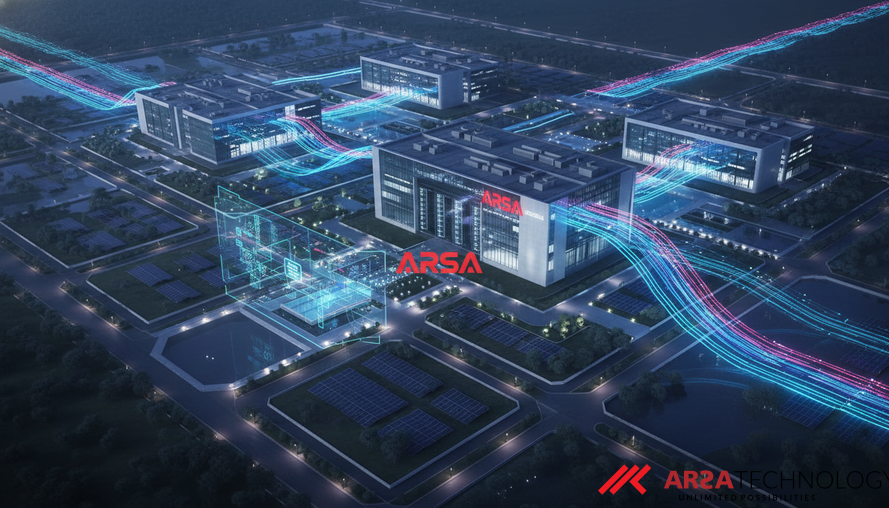
The rapid advancement of artificial intelligence, particularly in large language models (LLMs), has driven an unprecedented demand for computational resources. Training these colossal models often requires a scale of GPU infrastructure that simply cannot be housed within a single data center building or even a concentrated geographic zone. This challenge has given rise to a new paradigm: "scale-across" training, where AI model training is distributed across multiple, physically separated data center buildings or regions. This approach, while essential for progress, introduces a new layer of complexity in system design and optimization.
A recent academic paper, "ScaleAcross Explorer: Exploring Communication Optimization for Scale-Across AI Model Training" by Minghao Li et al. from Harvard University and Meta Platforms, Inc., delves into these intricate challenges, drawing from Meta's extensive production experience. The research highlights the complexities faced when deploying training jobs across hundreds of thousands of GPUs spread across several data centers. To accelerate the exploration of this vast design space and enable efficient training for future model development, the authors meticulously characterized three crucial design dimensions: parallelism placement, parallelism scheduling, and network layer technologies. Their work culminated in the proposal of ScaleAcross Explorer, an optimizer designed to holistically enhance scale-across training, demonstrating significant speedups over existing configurations. The insights shared in this paper are critical for any enterprise navigating the frontiers of AI deployment (Source: arXiv:2605.24326).
The New Frontier of AI Training: "Scale-Across" Challenges
The sheer size of today's LLMs means that confining all necessary GPUs to a single location is no longer practical. As the infrastructure scales, the system design becomes incredibly intricate. This complexity stems from various factors: new model architectures, the heterogeneity of hardware (both accelerators like GPUs and networking equipment), and evolving communication patterns. Meta's experience, particularly with models like Llama 4, which utilized over 100,000 GPUs across multiple data center buildings, underscores this shift.
"Scale-across" training, as defined by the paper, involves distributing model training across distinct data center buildings connected by cross-building networks. This differs from "scale-out" training, which expands capacity within a single zone or connects additional zones via a uniform network. The primary hurdles in scale-across environments are cross-building bandwidth oversubscription—where the demand for network capacity exceeds supply—and increased latency, the delay in data transmission. These factors directly impact training iteration time, which is the time it takes for one complete step of the training process. Understanding these challenges is paramount for deploying robust and efficient AI solutions.
Deciphering the Design Space: Three Key Dimensions
The paper identifies and characterizes three fundamental design dimensions that significantly influence the efficiency of scale-across AI training. By understanding and optimizing these, organizations can unlock substantial performance gains.
Parallelism Placement Strategies
When training massive AI models, parallelism is essential. This involves breaking down the training task into smaller, concurrent operations. The paper specifically examines two primary forms: Data Parallelism (DP) and Pipeline Parallelism (PP). Data Parallelism (DP) involves replicating the entire model across multiple GPUs, each processing a different subset of the training data. The results are then aggregated. Pipeline Parallelism (PP), on the other hand, divides the model itself into sequential stages, with different GPUs responsible for different stages.
The optimal placement—whether DP or PP forms the "outermost" layer of parallelization—depends heavily on the model's characteristics and network conditions. For instance, a "DP-out" strategy, where data parallelism is the primary cross-building method, is generally better for dense models as it uses the cross-building links less frequently. However, for emerging Mixture-of-Experts (MoE) models, where the number of specialized "experts" increases, the volume of data exchanged in DP grows significantly, making "PP-out" a more efficient choice to manage cross-building traffic. ARSA Technology specializes in developing custom AI solutions that consider these nuanced architectural decisions for optimal performance.
Optimizing Parallelism Scheduling
Beyond just placement, how parallelism is scheduled also plays a critical role. The paper explores various scheduling strategies used in production environments. For example, Fully Sharded Data Parallelism (FSDP) is a common technique, but its communication demands can bottleneck scale-across networks. Hybrid Sharded Data Parallel (HSDP) offers an alternative designed to mitigate these cross-building network constraints.
Further innovations include flexible Pipeline Parallelism (PP) strategies like DoraPP and Interleaved Zero Bubble V-schedule (ZBV). These methods offer different trade-offs between computational efficiency and the amount of data traffic generated across buildings. The choice of the most effective scheduling strategy is highly dependent on the specific characteristics of the cross-building network, including its latency and available bandwidth.
Harnessing Network Layer Technologies
The underlying network infrastructure is the literal backbone of scale-across training. Measurements from the authors' scale-across testbed reveal that the time required for "collective communication" (where multiple GPUs exchange data) varies significantly with message sizes and the physical distances between data centers.
Critical network layer factors influencing performance include latency (the delay in data transmission), loss rates (how much data is dropped), and transport configurations. Transport configurations, such as Equal-Cost Multi-Path (ECMP) routing or packet spraying, determine how data packets are distributed across available network paths. Optimizing these elements is crucial for minimizing communication overhead and maximizing the efficiency of distributed AI training. For mission-critical operations where reliability and low latency are non-negotiable, solutions like ARSA's AI Box Series are designed for on-premise edge processing, ensuring data control and minimizing external network dependencies.
Introducing ScaleAcross Explorer: The Holistic Optimizer
Recognizing that these design dimensions do not operate in isolation, the researchers proposed ScaleAcross Explorer. This advanced optimizer takes several inputs: the model architecture specification, batch sizes (the number of training examples processed at once), network topology configurations, and hardware specifications.
ScaleAcross Explorer then intelligently searches for the optimal configuration across the entire system stack, encompassing parallelism placement, parallelism schedules, and network protocols. Its ultimate goal is to minimize the total iteration time for AI model training. By considering the complex interplay between these elements, ScaleAcross Explorer moves beyond individual component optimization to achieve holistic system-wide efficiency. This integrated approach allows organizations to deploy powerful AI solutions with confidence, backed by robust optimization strategies, something ARSA Technology has been experienced since 2018 in providing for various industries.
Real-World Impact and Future Implications
The practical implications of ScaleAcross Explorer are significant. Testbed experiments and simulations showcased impressive results: up to 64.62% training speedups over Meta’s existing production configurations and up to 37.59% speedups over state-of-the-art baseline approaches across diverse model and network settings. Such substantial gains are vital for the continued development of frontier AI models.
These optimizations mean faster training cycles, reduced operational costs, and the ability to tackle even larger, more complex AI challenges. For enterprises investing heavily in AI, solutions that enhance training productivity directly translate into accelerated innovation and competitive advantage. The ability to efficiently scale AI model training across distributed infrastructure ensures that the next generation of AI breakthroughs can be realized without being bottlenecked by computational or network limitations.
Empowering your enterprise with optimized AI infrastructure means transforming complex operational challenges into competitive advantages. Explore how ARSA Technology's AI and IoT solutions can be tailored to meet your unique needs, from optimizing distributed AI workloads to delivering robust edge AI systems.
To learn more about our enterprise-grade AI solutions and discuss how we can help optimize your AI infrastructure, we invite you to contact ARSA for a free consultation.