Physics-Informed Tracking (PIT): Revolutionizing Video-Based Object Tracking with AI
Discover Physics-Informed Tracking (PIT), an AI framework that combines neural networks with physical laws to achieve sub-pixel accuracy in video-based object tracking, offering unprecedented precision in position, velocity, and bounce prediction.

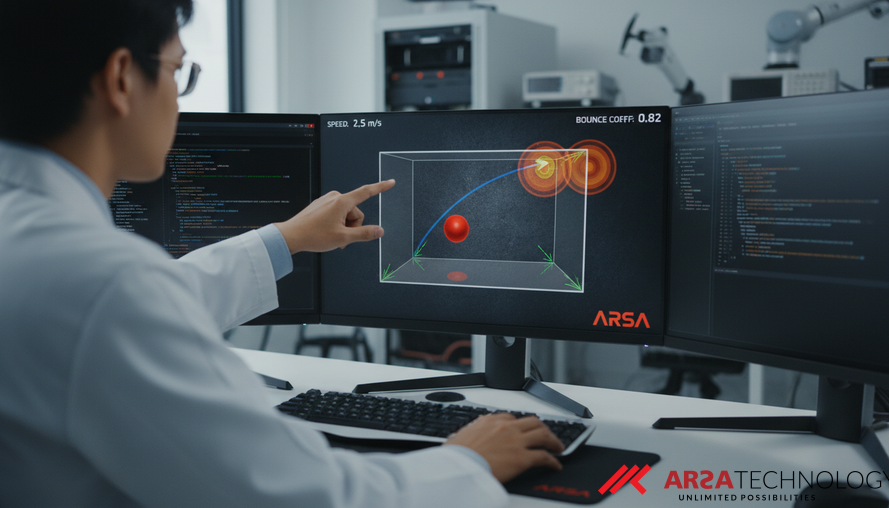
In the rapidly evolving landscape of artificial intelligence, a new frontier is emerging that seamlessly integrates the power of deep learning with the immutable laws of physics. One such innovation, Physics-Informed Tracking (PIT), stands out as a groundbreaking framework poised to redefine how we track objects in video. This approach, which blends neural network autoencoders with a deep understanding of physical dynamics, promises not just improved accuracy but also a richer, more insightful understanding of object motion in complex environments.
The Evolution of Object Tracking in Computer Vision
Tracking objects in video has long been a foundational challenge in computer vision. Early advancements saw the rise of sophisticated deep learning architectures like Faster R-CNN and YOLO, which efficiently detect objects within frames. Concurrently, networks featuring skip connections, such as ResNet and U-Net, revolutionized dense prediction tasks by enabling more detailed and localized feature extraction. More recently, keypoint-based or landmark methods have gained prominence. These approaches localize objects by identifying specific points (peaks) in heatmaps, offering a precise way to pinpoint objects. For instance, CenterNet identifies objects as keypoint triplets, while other methods simplify this by representing objects as central points within heatmaps. This focus on heatmap peaks for precise localization forms a critical foundation for advanced tracking systems like PIT.
Traditional autoencoders have been instrumental in learning compact, efficient data representations without the need for extensive labels, while denoising autoencoders enhance robustness by reconstructing clean data from noisy inputs. These principles, combined with skip connections and landmark designs, have paved the way for more sophisticated tracking solutions. However, the true innovation often lies in adding a layer of intelligence that goes beyond mere pattern recognition.
Introducing Physics-Informed Tracking (PIT): A Paradigm Shift
Physics-Informed Tracking (PIT) represents a significant leap forward by embedding known physical laws directly into the neural network's learning process. Developed by Emil Hovad and Allan Peter Engsig-Karup at the Technical University of Denmark, PIT is a video-based framework designed for meticulously tracking a single particle. The core idea is to fuse an autoencoder – a type of neural network that learns to encode and decode data – with a differentiable physics module. This module isn't just a static set of rules; it's a dynamic component capable of constraining a particle's trajectory over time to ensure it adheres to real-world physics, such as gravity and collision dynamics.
This approach offers a novel solution to a long-standing problem: how to achieve highly accurate object tracking, especially when faced with noisy video data or when detailed physical characteristics of motion are crucial. By incorporating physics, PIT doesn't just guess an object's next position; it predicts it based on how it should move according to physical laws. This integration of a "physics brain" within the AI system makes the tracking process far more robust and reliable.
How PIT Works: The Ingenious Design
PIT's innovation lies in several key architectural and methodological contributions. Firstly, it employs a sophisticated autoencoder with a "split bottleneck." Imagine the bottleneck as the narrowest part of a funnel where the network compresses information. In PIT, this bottleneck is split into two pathways:
- Pathway A (Tracking-related structure): This path focuses solely on generating landmark heatmaps, where the brightest points precisely indicate the particle's location. This separates the essential tracking information from other visual noise.
- Pathway B (Background noise and reconstruction): This pathway handles the remaining visual data, including background elements and noise, crucial for reconstructing the original image later.
This separation ensures that the AI learns to distinguish the object of interest from its environment more effectively. The landmark outputs from this process are referred to as Autoencoder Landmark Outputs (AELO), or AELOS when supervised with ground-truth data.
Secondly, PIT introduces a novel loss function called the Physics-Informed Landmark Loss (PILL). In machine learning, a "loss function" measures how far off a prediction is from the target, guiding the network to improve. PILL is an unsupervised loss, meaning it doesn't require manually labeled data to learn. Instead, it compares the trajectory predicted by the physics module against the landmarks identified by the autoencoder. This comparison forces the AI to ensure that its detected landmarks follow a physically consistent path over time.
For scenarios where ground-truth data is available (e.g., from simulations), PIT offers a supervised variant: PILL Supervised (PILLS). Here, the network's predicted landmarks are fed into the differentiable physics module, which then simulates the system's dynamics. A "differentiable physics module" means that the physics equations are integrated into the AI's computational graph in such a way that the network can learn from the errors in its physical predictions. PILLS compares these physics-projected predictions against the actual ground-truth positions, velocities, and even bounce characteristics, enabling comprehensive end-to-end learning. This allows the system to learn not just where an object is, but also how it's moving and reacting to its environment.
Unlocking Deeper Insights: Beyond Position
A significant advantage of the physics-informed approach, particularly with PILL and PILLS, is its ability to extract far more than just a particle's position. From a single forward pass through its differentiable physics module, PIT can also provide:
- Velocity predictions: Knowing an object's speed and direction is crucial for predictive analytics.
- Bounce timing and position: This detail is invaluable for analyzing collisions and rebounds, offering insights into material properties or event dynamics.
These rich physical state predictions are often unavailable from standard heatmap-based tracking methods, which typically only output position. The ability to automatically infer these additional physical parameters from video streams provides a powerful tool for various applications. For enterprises, this means more comprehensive data for decision-making, from predicting equipment wear in manufacturing to optimizing player performance in sports.
In real-world tests involving simulated ball trajectories under both clean and noisy conditions, PILLS consistently achieved sub-pixel tracking accuracy. This means it can locate objects with a precision greater than a single pixel, even when the visual data is imperfect. The research concluded that physics-informed landmark constraints reliably enhance tracking performance compared to traditional heatmap training methods.
Real-World Implications and Future Potentials
The capabilities of Physics-Informed Tracking extend across a multitude of industries, promising enhanced accuracy, efficiency, and safety. For instance, in industrial automation, precise tracking of components on a production line, even under challenging lighting or with minor visual obstructions, could significantly improve quality control and robotic guidance. Manufacturing facilities can deploy ARSA AI Box Series systems to apply these principles for real-time monitoring.
In smart cities and traffic management, PIT could enable highly accurate vehicle tracking, speed estimation, and collision prediction, leading to optimized traffic flow and reduced accident rates. Imagine traffic cameras providing not just counts, but detailed trajectories and predictive models of congestion. ARSA Technology's AI Video Analytics solutions already leverage advanced computer vision for such tasks, and integrating physics-informed approaches could further refine their capabilities.
For scientific research, particularly in fields like microfluidics or biological microscopy, tracking microscopic particles with sub-pixel accuracy and deriving their physical properties (velocity, interaction forces) without manual labeling could accelerate discovery. Even in sports analytics, understanding the precise trajectory, spin, and bounce of a ball or athlete could revolutionize training and performance analysis.
The unsupervised nature of PILL is particularly compelling for applications where labeled data is scarce or expensive to obtain. This reduces the barriers to entry for deploying advanced AI solutions, making them more accessible and adaptable to niche problems. For organizations looking to implement cutting-edge AI for specific operational challenges, a custom AI solution can be tailored to incorporate these sophisticated tracking mechanisms.
The development of Physics-Informed Tracking signifies a critical step in bridging the gap between theoretical physical laws and practical AI deployment. By teaching AI to "understand" physics, we are creating more intelligent, robust, and insightful systems that can operate effectively in the complexities of the real world.
Source: "Physics-Informed Tracking (PIT)" by Emil Hovad and Allan Peter Engsig-Karup (Technical University of Denmark), available at arxiv.org/abs/2604.16895.
Ready to harness the power of physics-informed AI for your enterprise? Explore ARSA Technology's advanced AI and IoT solutions, and contact ARSA today for a free consultation.