Real-time Intelligence: How AI and IoT are Transforming Passenger Experience and Operational Efficiency in Aviation
Explore how leading airlines leverage AI for predictive wait times, real-time navigation, and IoT for advanced luggage tracking, enhancing passenger journeys and operational efficiency.

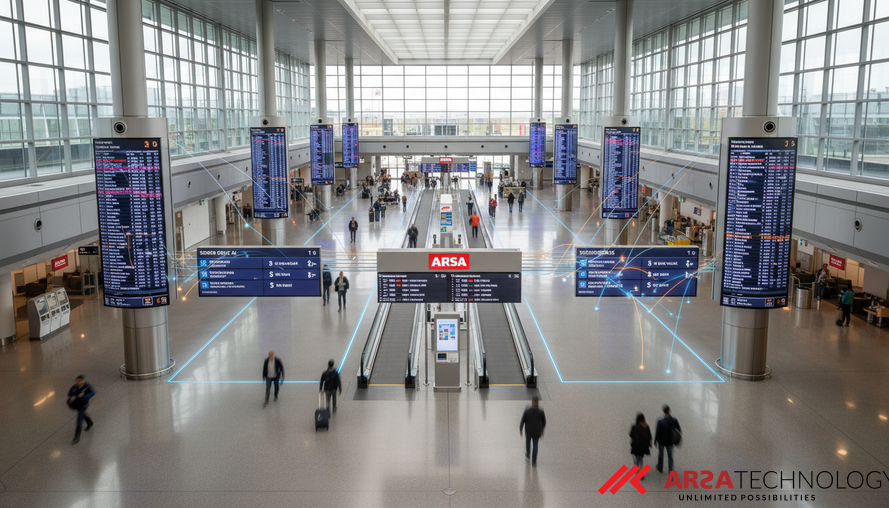
In today's fast-paced travel landscape, the integration of advanced technologies like Artificial Intelligence (AI) and the Internet of Things (IoT) is fundamentally reshaping the passenger experience and enhancing operational efficiency for airlines and airports worldwide. Beyond simple booking and check-in, modern mobile applications are now becoming comprehensive digital travel companions, offering real-time insights and personalized services. A prime example of this evolution is United Airlines' recent enhancements to its mobile application, which introduces features designed to drastically improve the travel day experience, as reported by Andrew Liszewski for The Verge (Source: The Verge). This shift highlights a broader trend among enterprises to leverage intelligence for greater agility and customer satisfaction.
Revolutionizing the Airport Journey with Predictive AI
Navigating an airport can often be a source of stress, particularly with unpredictable security wait times. United Airlines has addressed this challenge by integrating estimated security wait times into its iOS and Android mobile apps for all its major U.S. hub airports, including Chicago, Denver, Houston, Los Angeles, New York/Newark, San Francisco, and Washington D.C. This functionality covers both standard security and TSA PreCheck lanes, providing passengers with crucial information to plan their arrival and mitigate anxiety. The initial impetus for this feature, as noted in the source, stemmed from operational disruptions caused by government shutdowns impacting staffing.
This capability underscores the power of AI in predictive analytics. By processing historical data, real-time sensor information, and current operational statuses, AI algorithms can forecast queue lengths with remarkable accuracy. This goes beyond mere information; it’s about providing actionable intelligence that reduces passenger stress and allows for more efficient airport management. Similar AI-powered insights can be delivered across various sectors, such as optimizing retail queue management or monitoring crowd density in public spaces using solutions like ARSA AI Video Analytics Software.
Streamlining Navigation and Proactive Communication
Beyond security checkpoints, the journey to the gate can also present challenges, especially in large, unfamiliar airports. United's app now offers personalized turn-by-turn walking directions to gates, complete with estimated walk times. This feature transforms complex airport layouts into easily navigable paths, helping passengers arrive at their flights punctually. Such real-time wayfinding systems, often powered by indoor positioning technologies and AI, represent a significant leap in enhancing user experience in expansive environments like smart factories, convention centers, or large healthcare campuses.
Furthermore, the app enhances communication with proactive "heads up" notifications if the airline can hold a flight for passengers with tight connections, or texts providing radar maps to show how weather might affect travel plans. These automated, context-aware communications are critical for managing expectations and improving customer satisfaction during potential disruptions. This level of personalized, real-time interaction is a benchmark for modern enterprise applications, emphasizing the importance of robust Custom Web Application Solution development that integrates diverse data streams to support dynamic operational needs.
The Power of IoT: Advanced Luggage Tracking for Peace of Mind
One of the most common anxieties for travelers is the fear of lost luggage. United Airlines has significantly advanced its bag tracking capabilities, offering a "package-delivery-style bag tracker." This feature, combined with enhanced support for Apple’s Share Item Location technology, which United first integrated in December 2024, allows passengers to seamlessly share and monitor the real-time location of their checked bags with Apple AirTag trackers. This granular visibility provides unprecedented transparency, fostering trust and reducing the operational burden of handling lost or delayed baggage inquiries.
This implementation highlights the transformative potential of IoT devices for asset tracking across various industries. From monitoring high-value equipment in logistics and manufacturing to tracking patient assets in healthcare, the ability to pinpoint an item's location in real-time offers immense operational advantages. Companies seeking to implement similar robust tracking and monitoring systems at the edge, ensuring data privacy and low latency, could benefit from pre-configured solutions like the ARSA AI Box Series, which enables on-device processing and real-time insights for various IoT applications.
Strategic Imperative: Integrated AI & IoT for Enterprise Agility
The functionalities introduced by United Airlines are more than just isolated features; they represent a holistic approach to digital transformation driven by integrated AI and IoT solutions. By providing predictive insights, real-time navigation, and transparent tracking, airlines can not only enhance the passenger experience but also optimize their internal operations, leading to improved efficiency and reduced costs. The ability to deploy AI that works in the real world, providing measurable impact, has been a core principle for ARSA Technology, which has been experienced since 2018 in developing such production-ready systems.
For global enterprises across various industries, the lesson is clear: investing in integrated AI and IoT platforms is no longer optional but a strategic imperative. These technologies empower organizations to turn passive infrastructure into intelligent decision engines, reduce operational complexity, and unlock new business value. Whether it’s through custom AI solutions tailored to unique operational challenges or robust IoT frameworks for comprehensive asset management, the future of enterprise efficiency lies in leveraging real-time intelligence.
To explore how advanced AI and IoT solutions can transform your enterprise operations and enhance customer experiences, we invite you to connect with our experts. Discover tailored strategies that deliver measurable financial outcomes and build a competitive advantage for your organization.
Ready to engineer your competitive advantage with cutting-edge AI and IoT? contact ARSA for a free consultation.