Retail Intelligence: How AI People Counting Transforms Customer Analytics
In the competitive landscape of modern retail, understanding customer behavior is no longer just an advantage — it’s a necessity…
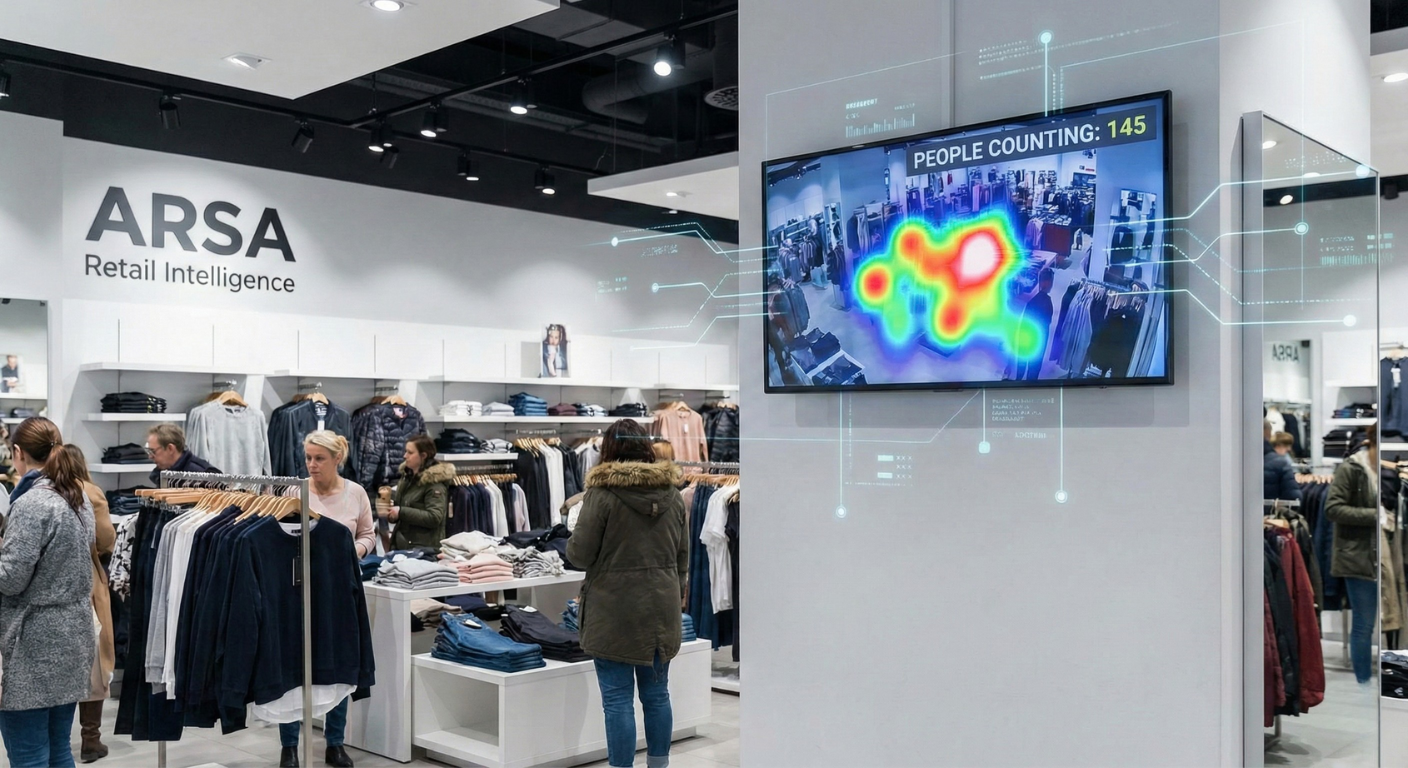
In the competitive landscape of modern retail, understanding customer behavior is no longer just an advantage , it’s a necessity. Traditional methods of gathering customer insights have significant limitations, often providing incomplete or delayed data that hampers timely decision-making. ARSA Technology’s People Counting & Analysis API represents a paradigm shift in retail analytics, leveraging advanced AI to deliver comprehensive, real-time insights that transform how retailers understand and respond to customer behavior.
Beyond Basic Counting: The Evolution of Retail Analytics
Traditional people counting solutions have been available for decades, from simple infrared beam counters to thermal sensors. However, these technologies offered only the most basic metric: how many people entered or exited a space. While valuable, this limited data point fails to address the nuanced questions that drive retail success:
- How do customers move through the store?
- How long do they spend in different sections?
- What demographic groups are shopping at different times?
- How do customers interact with displays and merchandise?
- Which customers are returning visitors versus first-time shoppers?
ARSA’s People Counting & Analysis API addresses these questions and more through advanced computer vision and AI algorithms that extract rich, multi-dimensional data from standard security cameras already installed in most retail environments.
Core Capabilities of the People Counting & Analysis API
1. Comprehensive Customer Counting
Beyond simple entry/exit counts, our system provides:
- Zone-based counting: Track customer numbers in specific store areas
- Directional flow analysis: Understand movement patterns between zones
- Queue measurement: Monitor checkout lines and service counters
- Conversion tracking: Compare visitors to purchasers by zone
2. Demographic Insights
Our system can anonymously analyze customer demographics including:
- Estimated age ranges
- Gender distribution
- Group detection (individuals, couples, families)
These insights enable retailers to understand who their customers are at different times and locations, without collecting or storing personally identifiable information.
3. Behavior Analysis
The API goes beyond counting to understand what customers do:
- Dwell time analysis: How long customers spend in each area
- Engagement detection: Interaction with displays or products
- Path analysis: Common customer journeys through the store
- Heat mapping: Visual representation of high-traffic areas
4. Appearance Attributes
For deeper segmentation without personal identification, the system detects:
- Clothing types (top and bottom wear)
- Clothing colors
- Accessories (bags, backpacks, hats)
- Seasonal items (umbrellas, outerwear)
5. Return Customer Recognition
Without identifying specific individuals, the system can determine:
- First-time vs. returning visitors
- Visit frequency patterns
- Cross-location visitation (for multi-store retailers)
From Data to Decisions: Actionable Retail Intelligence
The true value of advanced people counting lies not in the raw data but in the actionable insights it generates. Here’s how retailers are translating these capabilities into tangible business improvements:
1. Staff Optimization
By understanding customer traffic patterns with precision, retailers can align staffing levels with actual need:
- Time-based scheduling: Adjust staff numbers based on historical traffic patterns
- Real-time response: Deploy staff to busy areas during unexpected traffic spikes
- Service point optimization: Ensure adequate coverage at checkout lanes and service counters
- Expertise allocation: Position product specialists in relevant departments during peak times
A department store implementing this approach reported a 14% reduction in labor costs while simultaneously improving customer satisfaction scores related to staff availability.
2. Store Layout Optimization
Heat maps and path analysis reveal how customers actually navigate the store, enabling data-driven layout decisions:
- High-value product placement: Position key merchandise in high-traffic areas
- Complementary product adjacency: Arrange related items based on observed customer journeys
- Dead zone revitalization: Identify and address underutilized store areas
- Bottleneck elimination: Redesign layouts to improve flow in congested areas
A specialty retailer used these insights to redesign their store layout, resulting in a 23% increase in per-visitor sales and significantly improved customer flow during busy periods.
3. Marketing Effectiveness Measurement
Beyond traditional sales metrics, people counting provides critical context for evaluating marketing initiatives:
- Promotion impact analysis: Measure increased foot traffic from specific campaigns
- Display effectiveness: Compare engagement levels between different displays
- A/B testing: Quantify the impact of different window displays or store layouts
- Demographic targeting validation: Confirm whether campaigns attracted intended audience segments
A fashion retailer used these capabilities to assess storefront displays, finding that a specific display style increased store entry rates by 34% among their target demographic.
4. Real Estate Optimization
For multi-location retailers, comprehensive people counting data informs critical real estate decisions:
- Location performance comparison: Evaluate stores based on traffic, conversion, and engagement
- Site selection insights: Identify successful store characteristics to inform new location selection
- Lease negotiation leverage: Use accurate traffic data in rent negotiations
- Space utilization analysis: Determine optimal store sizes based on customer density patterns
A retail chain used cross-location analytics to develop a new store format that reduced their average footprint by 15% while maintaining sales performance.
5. Enhanced Customer Experience
Perhaps most importantly, these insights enable retailers to create more satisfying shopping experiences:
- Checkout optimization: Reduce wait times by predicting checkout demand
- Service area enhancement: Design more effective customer service points
- Personalized timing: Encourage loyalty program members to shop during less crowded times
- Environment adaptation: Adjust lighting, music, and temperature based on current shopper demographics
A luxury retailer implemented these approaches and saw a 27% increase in customer satisfaction scores and a significant improvement in repeat visit frequency.
Implementation Approach: Non-Invasive and Privacy-Focused
A key advantage of ARSA’s People Counting & Analysis API is its non-invasive implementation approach:
1. Leveraging Existing Infrastructure
The system works with standard security cameras already installed in most retail environments, typically requiring no additional hardware. This approach:
- Minimizes implementation costs
- Reduces deployment time
- Eliminates the need for disruptive installation
- Provides immediate coverage across the entire store
2. Privacy by Design
Unlike facial recognition systems, our People Counting & Analysis API is designed with privacy as a fundamental principle:
- No personal identification: The system does not identify specific individuals
- No biometric data storage: No facial templates or biometric information is retained
- Attribute-based analysis: Only general attributes like clothing color or approximate age range are analyzed
- Anonymized aggregation: Data is aggregated for analysis without maintaining individual-level details
This approach ensures compliance with privacy regulations while still providing valuable business intelligence.
3. Flexible Deployment Options
Organizations can choose from several deployment models based on their specific requirements:
- Cloud-based processing: Video feeds are securely processed in the cloud with results returned to the retailer’s analytics platform
- Edge computing: On-premises processing for environments with limited connectivity or enhanced privacy requirements
- Hybrid approaches: Combining local processing with cloud-based analytics
4. Integration Capabilities
The API is designed for seamless integration with existing retail systems:
- POS integration: Correlate traffic with sales data
- Staff management systems: Optimize scheduling based on traffic predictions
- Marketing platforms: Measure campaign impact on store traffic
- Business intelligence tools: Incorporate traffic data into broader analytics dashboards
Case Study: Multi-Brand Retail Group Implementation
A retail group managing multiple brands across 50+ locations implemented ARSA’s People Counting & Analysis API to address several business challenges:
Challenges
- Inconsistent performance across locations with no clear understanding of causative factors
- Ineffective staffing leading to both overstaffing and understaffing during different periods
- Limited understanding of cross-shopping behavior between their different brands
- Poor conversion rates in specific departments despite strong traffic
Implementation
The group deployed the API across all locations, integrating the data with their existing business intelligence platform. The implementation included:
- Utilization of existing security camera infrastructure
- Creation of custom analytics dashboards for different management levels
- Integration with their workforce management system
- Specialized zone definition around high-value merchandise areas
Results
After six months, the retail group reported:
- Optimized Operations: 18% reduction in staffing costs while improving customer service metrics
- Enhanced Marketing: Ability to measure marketing campaign impact on specific demographic segments
- Improved Layout: Store redesigns based on path analysis resulting in 16% average conversion improvement
- Cross-Brand Insights: Discovery of significant cross-shopping patterns leading to new co-marketing initiatives
- ROI Achievement: The entire system paid for itself within four months through operational savings alone
Future Directions: The Evolving Retail Intelligence Landscape
As AI technology continues to advance, several emerging trends will further enhance the value of people counting and analysis systems:
1. Predictive Analytics
Moving beyond descriptive analytics to predictive capabilities:
- Traffic forecasting: Increasingly accurate predictions of future customer traffic
- Behavior prediction: Anticipating how certain customer segments will respond to changes
- Trend identification: Early detection of shifting customer preferences
2. Integrated Omnichannel Insights
Bridging the gap between online and offline behavior:
- Online-offline correlation: Connecting website traffic patterns with physical store visits
- Channel journey mapping: Understanding how customers move between digital and physical touchpoints
- Unified customer journey: Creating a comprehensive view of the customer experience across all channels
3. Emotional Analysis
Adding another dimension to customer understanding:
- Sentiment detection: Analyzing facial expressions to gauge customer satisfaction
- Emotional response measurement: Assessing reactions to displays, products, or store elements
- Experience quality indicators: Developing metrics for the emotional quality of the shopping experience
4. Environmental Adaptation
Creating responsive retail environments:
- Dynamic merchandising: Automatically adjusting digital displays based on current audience
- Adaptive atmospherics: Modifying lighting, music, and even scent based on traffic patterns and demographics
- Real-time personalization: Tailoring the in-store experience to the current customer mix
Conclusion
The retail landscape continues to evolve at an unprecedented pace, with customer expectations rising and competition intensifying. In this environment, advanced people counting and analysis is no longer a luxury , it’s a competitive necessity.
ARSA Technology’s People Counting & Analysis API represents a significant advancement in retail intelligence, providing retailers with deeper insights, more accurate data, and actionable intelligence without compromising customer privacy or requiring extensive new infrastructure.
By transforming existing security cameras into powerful analytics tools, retailers can unlock the value of data they’re already collecting but not utilizing. The resulting insights enable more informed decisions about staffing, store design, marketing effectiveness, and overall strategy.
As the technology continues to evolve, the gap between retailers who leverage these insights and those who don’t will only widen. Forward-thinking retailers are already using these capabilities not just to count customers, but to truly understand them — creating better shopping experiences and stronger business results in the process.
This article is part of Machine State — ARSA Technology’s official publication exploring intelligent systems and future tech.
Written by Hilmy Izzulhaq
Founder @ ARSA Technology — 7 years building AI Vision & IoT solutions in heavy industry, parking, and smart city.