Revolutionizing Agriculture: Lightweight AI for Rapid Plant Disease Detection
Discover how lightweight Multi-View Convolutional Neural Networks (MV-CNNs) are transforming plant disease identification, offering fast, accurate, and cost-effective solutions for sustainable agriculture, even in remote areas.

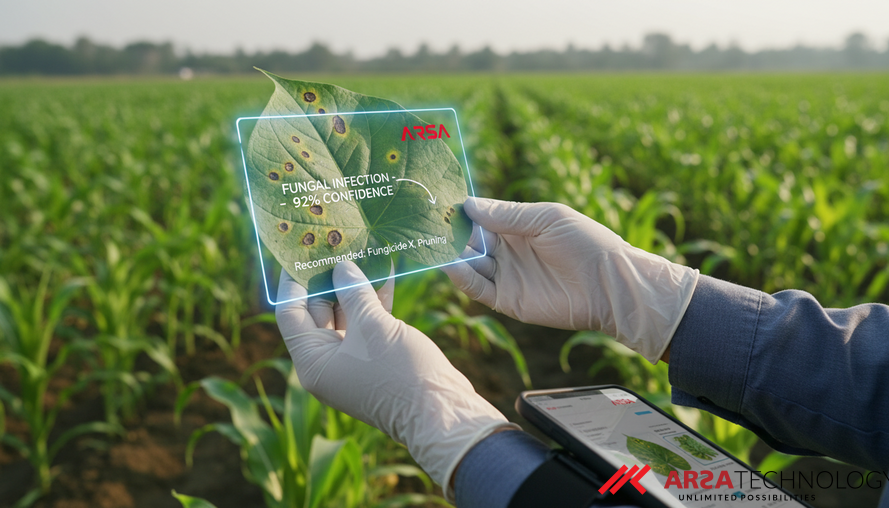
The Critical Need for Early Plant Disease Identification
Agriculture forms the backbone of many economies worldwide, providing sustenance for billions and employment for vast rural populations. However, this vital sector faces a persistent threat: plant diseases and pests. Annually, a substantial portion of global crops is lost to these issues, leading to significant economic repercussions and food insecurity. Traditional methods of disease detection, relying on manual field visits by agricultural experts, are inherently labor-intensive and time-consuming. This delay in identification often results in late interventions, diminishing their effectiveness and necessitating the excessive use of harmful pesticides. These chemical interventions not only pose risks to farmer and consumer health but also disrupt ecosystems and inflate product costs.
The imperative for timely and accurate plant disease prediction is clear. In a study, it was found that despite using millions of tons of pesticides and employing non-chemical control measures, over 40% of crops are still destroyed each year due to ill-timed pest and disease predictions (Source: "A Light Weight Multi-Features-View Convolution Neural Network For Plant Disease Identification"). This highlights a critical gap in current agricultural practices, underscoring the urgent need for more efficient and proactive solutions that can detect issues before they escalate.
AI's Promise and the Challenge of Computational Intensity
The rise of smart farming has introduced advanced technologies to tackle these challenges. Machine vision and image processing, powered by Artificial Intelligence (AI), have emerged as powerful tools for monitoring plant health. Deep Convolutional Neural Networks (DCNNs), a type of AI algorithm particularly adept at processing images, have revolutionized computer vision. These complex networks automatically learn intricate patterns and features directly from images, enabling them to classify and identify objects with remarkable accuracy. In the realm of plant disease identification, DCNNs have shown significant promise, achieving high accuracy in various studies.
However, the widespread adoption of state-of-the-art DCNNs in agriculture faces a significant hurdle: their computational intensity. These models often comprise numerous layers and millions of trainable parameters, demanding substantial processing power and memory. This makes them difficult to deploy in resource-constrained environments, particularly in the rural areas where they are most needed. Imagine trying to run a sophisticated AI model on a simple mobile device or an edge computing unit with limited power; the computational burden becomes a major bottleneck. This challenge limits the accessibility and scalability of advanced AI solutions for farmers who could benefit most from early disease detection.
Introducing Lightweight Multi-View CNNs for Agricultural Intelligence
To overcome the limitations of traditional DCNNs, researchers have developed innovative approaches focused on efficiency without sacrificing accuracy. One such advancement is the Lightweight Multi-View Convolutional Neural Network (MV-CNN). This novel approach enhances traditional CNNs by incorporating additional image information, such as image gradients, alongside standard Red, Green, and Blue (RGB) color data. Image gradients essentially capture the directional changes in image intensity, highlighting edges, textures, and structural details that might be less apparent in a simple color view.
By providing the network with these "multi-view" features, the MV-CNN can learn and converge faster, even with a significantly reduced number of layers and parameters. This is akin to giving an observer multiple angles and types of information about an object, allowing them to understand it more quickly and comprehensively. The result is a model that is less computationally demanding, requiring shorter training and inference times, making it ideal for deployment on edge devices and in remote agricultural settings. This efficiency ensures that advanced AI analytics can be brought directly to the field, supporting farmers with real-time insights.
How Multi-View AI Enhances Plant Disease Detection
The core innovation of the MV-CNN lies in its ability to extract more meaningful features from less data, or rather, from multiple types of data from the same image. Instead of relying solely on the color information (RGB) of a plant leaf, which might be subtle or obscured by lighting conditions, the inclusion of image gradients provides the AI with critical structural and textural cues. For example, the precise shape of a lesion, the texture of a fungal growth, or the distinct edges of discoloration can be more clearly identified through gradient analysis.
This multi-faceted input allows the model to achieve comparable, if not superior, accuracy to much deeper and computationally heavier DCNNs. On the benchmark PlantVillage dataset, the proposed MV-CNN demonstrated a 2.9% improvement in classification accuracy compared to a baseline CNN model trained only on RGB images. Furthermore, with only seven convolutional layers, it is significantly less complex than many state-of-the-art deep learning architectures. This balance of high accuracy and reduced computational cost positions MV-CNNs as a transformative technology for practical, on-the-ground plant disease identification.
Practical Deployment and Business Impact
The development of lightweight AI models like MV-CNNs has profound implications for the practical deployment of intelligent solutions in agriculture. For enterprises in the agricultural sector, this means the ability to implement sophisticated AI at the edge, directly within farms or remote processing units, without heavy investment in cloud infrastructure or high-end computing devices. This localized processing minimizes latency, ensures data privacy by keeping sensitive information on-premise, and maintains operational reliability even in areas with limited internet connectivity.
Solutions like ARSA's ARSA AI Box Series, which integrates AI-ready hardware with advanced video analytics software, are perfect examples of how this lightweight AI can be deployed. These plug-and-play systems can transform existing CCTV cameras into real-time operational intelligence platforms, detecting diseases as they emerge. Similarly, ARSA offers robust AI Video Analytics software that can be self-hosted, providing enterprises with full data ownership and flexible deployment options on existing servers or edge compute resources. This empowers organizations to achieve significant ROI through reduced crop loss, optimized pesticide use, and improved resource allocation.
The Future of Smart Agriculture with Efficient AI
The ability to deploy accurate, lightweight AI models for plant disease identification marks a significant step forward in smart agriculture. It addresses critical challenges related to cost, accessibility, and speed, making advanced agricultural intelligence available to a broader range of farmers and enterprises globally. Beyond disease detection, the principles of multi-view and lightweight CNNs can be extended to other agricultural applications, such as yield prediction, crop health monitoring, and pest identification, further enhancing food security and sustainable farming practices.
ARSA Technology, being experienced since 2018 in developing AI and IoT solutions, understands the nuances of deploying practical AI that delivers measurable impact. Our expertise in computer vision and industrial IoT aligns perfectly with the need for robust, real-world solutions that tackle complex problems like plant disease identification. By leveraging technologies that are optimized for performance and efficiency, we help organizations transform operational complexity into competitive advantage. For challenges requiring unique solutions, our team can also develop custom AI solutions tailored to specific agricultural needs and environmental conditions.
The future of agriculture is intelligent, interconnected, and efficient. Innovations like lightweight multi-view CNNs pave the way for a more resilient and productive global food system.
To explore how ARSA Technology's AI and IoT solutions can help transform your agricultural operations and enhance crop health management, we invite you to contact ARSA for a free consultation.
**Source:** Khan, Muhammad Kaleem Ullah. "A Light Weight Multi-Features-View Convolution Neural Network For Plant Disease Identification." arXiv preprint arXiv:2605.00903 (2026).