Revolutionizing Robotics: Concurrent Design of Structure, Material, and Control with COSMIC
Explore COSMIC, a groundbreaking AI-powered framework that concurrently optimizes robotic structure, materials, and control. Learn how this integrated approach, leveraging differentiable simulation and neural networks, leads to more autonomous and adaptive robots, mirroring nature's co-evolution for

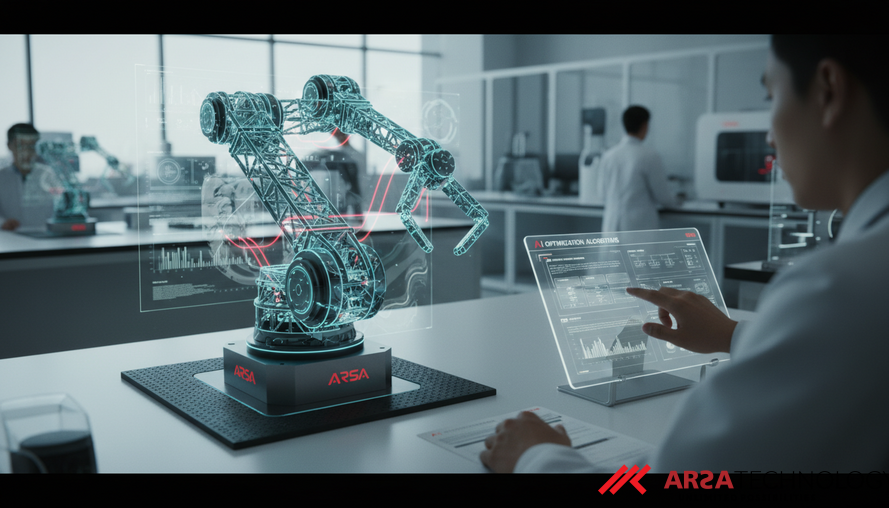
The Grand Challenge of Robotic Autonomy
For decades, humanity has aspired to create robots that rival the adaptability and versatility of living organisms. From intricate insect movements to the complex coordination of human limbs, nature presents an unparalleled blueprint for autonomous systems. While significant strides have been made in individual robotic components—from robust structures and advanced materials to sophisticated control algorithms—the full potential of robotics remains untapped when compared to its biological counterparts. Modern robots often struggle with the same level of adaptability and diversity seen in nature, indicating a fundamental disconnect in their design philosophy.
This gap stems from a crucial difference in how artificial and natural systems evolve. In biology, an organism's physical structure, the properties of its tissues and organs, and its behavioral control strategies are not developed in isolation. Instead, they co-evolve, influencing each other to produce highly specialized and efficient forms. This intricate interplay allows organisms to adapt seamlessly to dynamic environments and perform complex tasks with remarkable efficiency. Replicating this co-evolutionary process in robotics is the next frontier for achieving truly autonomous and adaptive machines.
The Flaw in Traditional Robot Design
Historically, robotic systems have followed a sequential design paradigm: engineers first define a robot's physical structure, then select appropriate materials, and finally develop control policies to make it move. This segmented approach often leads to suboptimal outcomes. Imagine designing a car where the chassis, engine, and steering system are conceived by different teams without integrated communication – the final product would likely be inefficient and clumsy. Similarly, in robotics, separating the design of structure, materials, and control prevents the emergence of collective effects and synergistic benefits.
This "separated design" limits the exploration of the vast potential design space. Minor structural alterations, for instance, can drastically change a robot's dynamics, rendering a pre-designed control policy ineffective or requiring extensive re-calibration. The lack of a unified design process also hinders our understanding of how these different elements individually and collectively contribute to a robot's overall performance. Overcoming this fragmentation is key to unlocking the next generation of highly capable and autonomous robots.
Introducing COSMIC: A Nature-Inspired Co-Design Approach
Addressing these limitations, a groundbreaking framework called COSMIC (Concurrent Optimization of Structure, Material, and Integrated Control for Robotic Systems) has been proposed. COSMIC champions a paradigm shift by advocating for the simultaneous optimization of a robot's topology (its shape and connectivity), material distribution, and control policy. This approach mirrors nature's co-evolutionary process, where form and function develop hand-in-hand to achieve superior adaptive capabilities.
The core idea behind COSMIC is to treat these traditionally separate design elements as intrinsically linked, optimizing them together within a single computational framework. By considering their interdependencies from the outset, the framework can discover novel and more effective design solutions that would be inaccessible through sequential design. This concurrent optimization promises to unlock new levels of performance, efficiency, and adaptability for robotic systems, paving the way for machines that are far more dynamic and responsive than current models.
How COSMIC Works: Unifying Design Through AI
COSMIC leverages advanced computational techniques, particularly in Artificial Intelligence (AI) and differentiable simulation, to achieve its concurrent optimization goals. At its heart, the framework employs a gradient-based co-design approach. This means it intelligently navigates the complex design landscape by continuously adjusting design parameters in the direction that promises improved performance, much like a hiker finding the fastest route down a hill by always moving downwards.
To make this possible, COSMIC introduces a continuous, differentiable design representation. This innovative approach translates mixed-type variables – like the discrete choices of where to place structural elements (topology) and what materials to use – into a smooth, mathematical space. This allows the framework to integrate a neural network controller directly within a differentiable simulator. A "differentiable simulator" is a sophisticated physics engine that can not only predict how a robot will behave but also calculate how sensitive that behavior is to tiny changes in its design (structure, material, or control). This sensitivity information, known as "gradients," is efficiently computed via "automatic differentiation," a technique that automatically calculates these complex derivatives, making the optimization process far faster than traditional trial-and-error or brute-force methods.
By capturing the intricate physical interactions among structural components, material properties, and control signals within this simulator, COSMIC can efficiently evaluate a robot's dynamic performance in complex scenarios, including contact, friction, and large deformations. This integrated approach is critical for optimizing systems that must operate reliably in real-world conditions, providing a robust computational foundation for advanced robotic development. For organizations seeking to implement or customize such sophisticated AI-driven systems for specific operational needs, solutions like custom AI solutions become invaluable for tailoring these complex frameworks to achieve precise outcomes.
Unlocking Deeper Insights and Superior Performance
The application of the COSMIC framework in case studies has yielded compelling results, demonstrating its ability to consistently discover diverse and superior locomotion strategies for truss-lattice robots. These designs significantly outperform baselines derived from traditional, separated design methods, showcasing the profound impact of a concurrent optimization approach. The framework's flexibility also allows it to adapt to various functional requirements and environmental constraints, making it a versatile tool for a wide range of robotic applications.
Beyond simply creating better robots, COSMIC also serves as a powerful research tool. By systematically exploring the intertwined design space, it enables researchers to extract critical design insights. These insights illuminate the individual and collective contributions of different design entities – structure, material, and control – to the overall system performance. This deeper understanding is crucial for refining future robotic designs and developing more intuitive design principles. For example, insights into optimal material distribution or control strategies could inform the development of edge AI systems, such as the ARSA AI Box Series, by optimizing the deployment of intelligence for specific dynamic tasks. Such real-time insights can be further augmented by advanced AI Video Analytics, providing a feedback loop for continuous improvement in physical deployments.
The Future of Autonomous Systems with Co-Design
The COSMIC framework provides a robust computational foundation for the autonomous co-design of robotic systems, pushing the boundaries of what is possible in robotics. This includes robots capable of sophisticated behaviors such as self-reconfiguration (changing their shape dynamically), complex locomotion across varied terrains, and other highly autonomous actions. By enabling robots to be designed holistically, with structure, materials, and control evolving together, we can anticipate a new generation of machines that are far more robust, adaptable, and intelligent.
As ARSA Technology, an AI & IoT solutions provider experienced since 2018, continues to develop and deploy cutting-edge AI and IoT solutions, frameworks like COSMIC underscore the importance of integrated, intelligent design. The ability to manage complex data streams, run powerful AI models at the edge, and ensure precision in autonomous operations aligns perfectly with the principles that drive such advanced co-design research. This work promises to bridge the gap between theoretical AI research and practical, deployable robotic systems, accelerating the arrival of truly intelligent machines in various industries.
The COSMIC framework, detailed in the preprint by Qinsong Guo and Liwei Wang (May 14, 2026, Source: arXiv:2605.12654), offers a glimpse into a future where robots are designed with an unprecedented level of integration, making them more resilient, efficient, and autonomous. This holistic approach is essential for solving mission-critical challenges where performance, privacy, and adaptability are paramount.
Ready to explore how advanced AI and IoT can transform your operations? Discover ARSA Technology's innovative solutions and contact ARSA for a consultation tailored to your enterprise needs.