Securing the AI Frontier: Why Identity Management for AI Agents is the Next Enterprise Imperative
Okta CEO Todd McKinnon addresses the "SaaSpocalypse" threat, emphasizing the critical need for robust identity management for AI agents. Explore the evolving landscape of enterprise security in the age of AI.

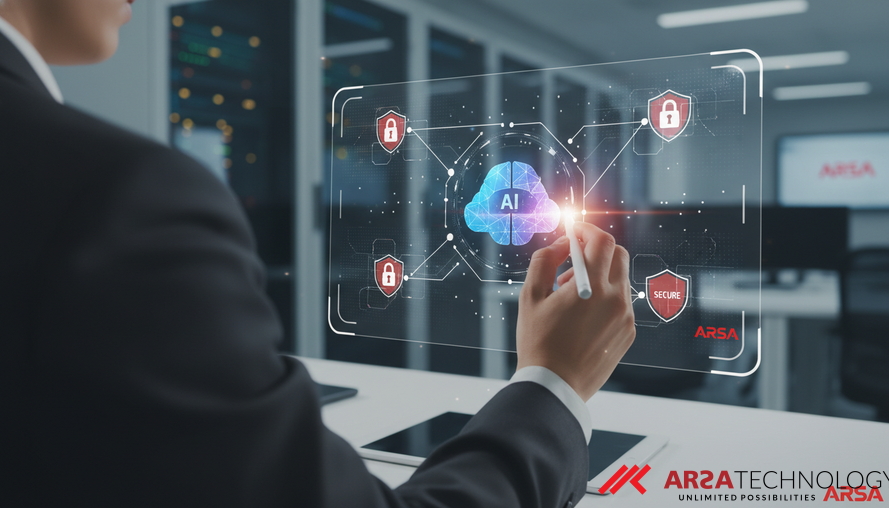
The rapid advancement of Artificial Intelligence (AI) is redefining how businesses operate, creating unprecedented opportunities while also introducing complex challenges. One of the most significant shifts is the emergence of AI agents, autonomous software entities capable of performing tasks and making decisions within enterprise systems. This new paradigm is forcing technology leaders to rethink fundamental aspects of enterprise architecture, most notably, identity and access management. Todd McKinnon, co-founder and CEO of identity management giant Okta, articulates a “healthy paranoia” about this transformation, particularly regarding the potential for what he terms the "SaaSpocalypse"—a future where companies might "vibe-code" their own solutions, undermining traditional Software-as-a-Service (SaaS) models. This perspective highlights a crucial foresight: preparing for a future where AI agents require their own secure identities is no longer optional but an immediate necessity.
The "SaaSpocalypse" and AI's Disruptive Force
McKinnon’s "SaaSpocalypse" isn’t merely a hyperbolic term; it reflects a genuine concern about how accessible AI development tools could empower enterprises to build internal applications that mimic or even replace external SaaS offerings. With advanced AI tools, such as sophisticated code generation platforms, the barriers to creating custom productivity software are significantly lowered. This capability directly challenges established SaaS providers, including those like Okta, which boasts a substantial market cap and a strong foothold in enterprise identity management.
While some might dismiss the idea of companies fully replicating complex enterprise software in-house, McKinnon stresses that ignoring this potential is naive. The fundamental nature of software development is undergoing a revolution. Tools that can rapidly generate and iterate code are transforming the build-versus-buy equation, compelling SaaS companies to demonstrate deeper, undeniable value. Yet, McKinnon also sees this as an immense opportunity, believing that the overall "pie" for technology—the total addressable market—is expanding dramatically due to AI, potentially surpassing the impact of cloud computing itself.
The Emergence of AI Agent Identity
Historically, identity management has focused on human users and, to a lesser extent, system accounts. However, the rise of sophisticated AI agents, which operate with varying degrees of autonomy, introduces an entirely new class of digital entities requiring identity verification and access control. These agents might interact with sensitive data, execute transactions, or manage critical infrastructure. The central challenge, as McKinnon notes, is that an AI agent’s identity exists "somewhere in between a person and a system." It's not a human with inherent accountability, nor is it a static, predefined system with limited permissions. Instead, it’s a dynamic entity that needs granular, auditable access.
Consider a scenario where an AI agent, leveraging tools like OpenClaw (a hypothetical advanced AI platform), is given credentials and permission to execute tasks across various corporate applications. Without proper identity management, this could quickly become a security nightmare. The ability to track, authenticate, and revoke access for individual AI agents becomes paramount, preventing misuse, data breaches, and unauthorized operations. This new layer of complexity requires enterprises to develop sophisticated frameworks for AI governance and security, ensuring that every AI action is traceable and controllable.
Why Robust Identity Management for AI Agents is Essential
Even with the ability for enterprises to build custom solutions, the core tenets of identity and security management remain incredibly complex and mission-critical. McKinnon emphasizes that while the "features" of an identity platform might be replicated, the true value lies in its ability to securely connect to thousands of diverse applications and services, maintain 100% uptime, and adapt continuously to an ever-evolving digital ecosystem. For ARSA Technology, which specializes in real-world AI and IoT deployments, understanding this complexity is foundational. Our expertise lies in delivering practical, proven solutions that account for integration challenges and operational reliability in demanding environments.
Enterprises choosing to manage identity internally would need to shoulder immense liability and invest heavily in specialized expertise to ensure their custom solutions meet the stringent requirements of scalability, privacy, and regulatory compliance. This is where established providers and expert integrators demonstrate their worth. Solutions like ARSA AI Video Analytics, for instance, can provide the foundational intelligence for monitoring AI-driven operations within secure environments, identifying anomalies and ensuring compliance without external cloud dependencies. The trust factor in cybersecurity and infrastructure software is paramount; a proven track record and robust engineering discipline differentiate enterprise-grade solutions from experimental, in-house projects.
Implementing AI Agent Security: Challenges and Solutions
Implementing robust identity management for AI agents involves several practical considerations. Firstly, defining the scope of an AI agent's permissions is crucial. Unlike humans, whose access might be role-based, AI agents require context-sensitive permissions that dynamically adjust based on the task at hand and the data being accessed. Secondly, establishing mechanisms for oversight and control, such as a "kill switch" for agents, becomes a non-negotiable security feature. This allows human operators to immediately halt an agent's activities if a rogue behavior or security threat is detected.
Furthermore, deploying AI solutions in sensitive sectors like government and critical infrastructure necessitates strict control over data flow and processing. ARSA’s commitment to on-premise deployments and data sovereignty directly addresses these concerns. For instance, the ARSA AI Box Series offers pre-configured edge AI systems that process video streams locally, ensuring data remains within the enterprise network and minimizing latency. This approach aligns perfectly with the need for secure, localized AI operations where data privacy and compliance are paramount. For highly specialized requirements, ARSA also offers custom AI solutions, allowing enterprises to design bespoke security frameworks that seamlessly integrate AI agent identity management into existing infrastructure.
The challenges of integrating AI agents into an organizational structure also extend to managing hybrid teams of human employees and autonomous agents. This requires new organizational charts and workflows that account for agent-human collaboration, oversight, and accountability. The foundational identity infrastructure must be flexible enough to encompass both, providing a unified view of all entities operating within the enterprise.
The Future of Secure Enterprise Operations
The conversation around AI agent identity underscores a critical truth: as AI becomes more integrated into enterprise operations, the principles of security, access, and accountability must evolve. Far from being a niche concern, managing AI agent identities is poised to become a central pillar of enterprise security, ensuring that AI-driven advantages are realized without compromising data integrity or operational resilience. Companies that proactively address this will be better positioned to harness AI's full potential, transforming what McKinnon views as a "huge challenge" into a "huge opportunity."
To fully capitalize on the AI revolution, enterprises must adopt a strategic approach to identity management that extends beyond human users to encompass every autonomous agent within their digital ecosystem. This requires a partner with deep technical expertise and a proven track record in deploying secure, scalable, and compliant AI solutions. ARSA Technology has been experienced since 2018 in delivering such systems, bridging advanced AI research with practical operational realities.
Source: Patel, Nilay. “Okta’s CEO is betting big on AI agent identity.” The Verge, March 30, 2026. https://www.theverge.com/podcast/902264/oktas-ceo-is-betting-big-on-ai-agent-identity
Ready to secure your AI-driven future and explore robust identity management solutions for your enterprise? Contact ARSA today for a free consultation.