Seeing Through Smoke: AI Transforms Surgical Vision in Robot-Assisted Procedures
Explore how advanced AI desmoking models are revolutionizing robot-assisted surgery by clearing surgical smoke, enhancing visual perception, and improving precision. Learn about the technology and its impact.

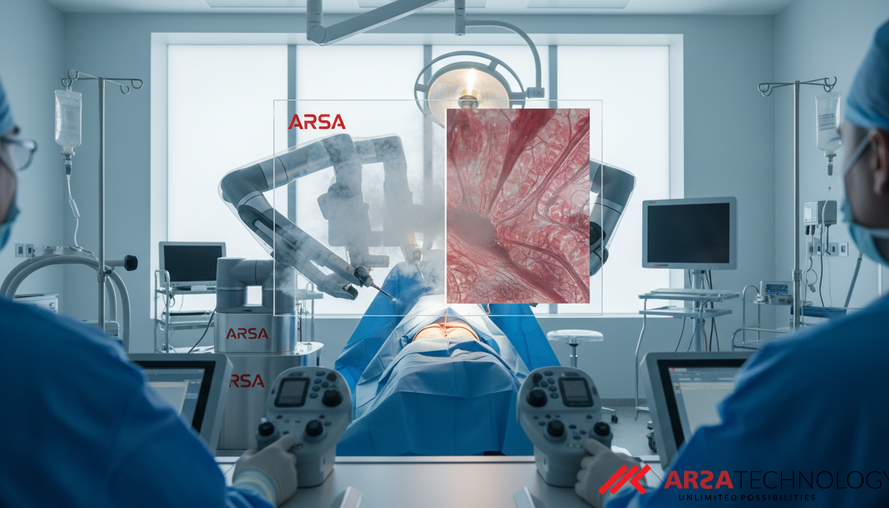
The Challenge of Surgical Smoke in Minimally Invasive Procedures
Minimally invasive and robot-assisted surgeries have transformed patient care, offering benefits like smaller incisions, reduced infection risks, and faster recovery times compared to traditional open surgery. However, these advanced procedures introduce unique challenges, primarily revolving around visibility. When high-energy instruments such as electrocautery and vessel sealers are used, rapid tissue heating produces surgical smoke. This smoke, a byproduct of vaporized water and organic components, can severely obscure the endoscopic view, making precise movements and accurate diagnoses difficult.
The degradation of visual perception by surgical smoke is not merely an inconvenience; it significantly prolongs operative time and elevates the risk of errors by hindering informed intraoperative decision-making. Beyond human perception, these smoke artifacts also cripple critical computer-assisted functionalities integral to modern robotic surgery. Features like instrument segmentation, tool tracking, and 3D reconstruction—which are vital for guiding the surgeon and automating certain tasks—can become unreliable, undermining the very advantages of robotic assistance.
Limitations of Traditional Smoke Evacuation
Historically, surgical teams have relied on various physical methods to manage smoke, including instrument-tip suction, port-side evacuation, and specialized valveless trocar systems. While these methods offer some relief, each comes with its own set of trade-offs. For instance, valveless insufflation systems, designed to maintain abdominal pressure, can inadvertently draw room air into the sterile field during suction, complicating the delicate balance of smoke clearance, pressure control, and gas composition. These physical interventions often require interruptions to the surgical flow, demanding manual lens cleaning or frequent smoke-evacuation maneuvers, thereby adding complexity and time to already intricate procedures.
The limitations of these conventional approaches highlight the pressing need for alternative solutions that can maintain optimal visibility without disrupting the surgical process. Digital smoke removal presents an appealing alternative, promising to enhance clarity in real time. This innovation could potentially reduce reliance on specialized hardware, leading to lower device costs and greater surgical autonomy, ultimately benefiting both patients and healthcare providers.
The Promise of Digital Desmoking Through AI
Digital smoke removal, or desmoking, offers a revolutionary path to overcoming visibility challenges in surgery. By processing endoscopic video streams in real-time, AI can clear smoke digitally without physical intervention, allowing surgeons to "see through the smoke" and maintain a continuous, clear view of the surgical field. This not only improves the surgeon's ability to discern fine tissue details but also enhances the reliability of various computer-assisted functions that depend on clear visual input.
The development of effective desmoking solutions is, however, a complex technical challenge. Surgical smoke is highly variable in density and motion, and the non-uniform scattering it causes can often resemble actual anatomical textures, making it difficult for algorithms to differentiate between smoke and tissue. Early digital methods, often inspired by atmospheric dehazing techniques, struggled because surgical smoke behaves differently from natural fog or haze. Modern AI approaches, particularly those leveraging deep learning, are better equipped to tackle these nuances, offering a path to robust and clinically reliable desmoking.
Understanding AI-Powered Desmoking Models
Recent breakthroughs in AI, particularly in computer vision, have paved the way for advanced surgical desmoking models. One such innovative approach utilizes a transformer-based model, which is a sophisticated type of neural network capable of understanding complex contextual relationships within an image, similar to how a human brain processes a scene. This model is paired with a physics-inspired desmoking head, a component that grounds its predictions in the actual physical principles of light interaction with smoke.
The core idea is to reverse the process of how smoke obscures vision. Imagine light from a surgical site being scattered by smoke particles before it reaches the endoscope's camera – this is akin to an "atmospheric scattering model." The desmoking head, inspired by this physical model, learns to predict not just a smoke-free image but also a "smoke map," which indicates the density and distribution of smoke. This dual prediction helps the AI more accurately isolate and remove the smoke, providing a clearer and more realistic image. Such advanced AI Video Analytics systems demonstrate the immense potential of intelligent processing for mission-critical applications.
Overcoming Data Scarcity with Synthetic and Curated Datasets
A major hurdle in developing robust AI models for surgical desmoking is the scarcity of high-quality, paired training data. It is exceptionally challenging and costly to collect images of a smoky surgical scene alongside a perfectly identical, smoke-free version (the "ground truth"). To address this, researchers have developed innovative strategies, including the creation of vast synthetic datasets. A synthetic data generation pipeline can blend artificial smoke patterns into real, smoke-free endoscopic images, creating tens of thousands of paired samples for supervised training. This process often incorporates techniques like alpha blending, RGB channel correction, and illumination enhancement to ensure visual realism.
To further bridge the "sim-to-real" gap—the difference between synthetic and real-world data—domain randomization is applied, varying parameters like smoke color, transparency, and blending coefficients. Beyond synthetic data, the creation of large, carefully curated datasets from actual surgical environments is crucial for benchmarking and validation. The recent collection of over 5,800 paired smoky-to-smoke-free images captured with robotic surgical systems represents a significant step forward, enabling rigorous testing and validation of AI models on high-resolution endoscopic images, confirming state-of-the-art performance against existing dehazing and desmoking methods.
Real-World Impact and Future Directions
The success of AI-powered surgical desmoking extends beyond merely producing clearer images; it has a profound impact on downstream computer vision algorithms that are essential for advanced surgical assistance. By providing a desmoked input, these AI models can significantly improve the accuracy of tasks such as stereo depth estimation (judging distances within the surgical field) and instrument segmentation (identifying and tracking surgical tools). These improvements directly translate to enhanced precision and safety in robot-assisted procedures.
While the benefits are clear, ongoing research continues to explore the nuances and limitations of digital smoke removal. As AI models become more sophisticated, they will further refine their ability to accurately distinguish between smoke and subtle anatomical features, leading to even more reliable and robust surgical guidance. The integration of such capabilities within edge AI systems, like the ARSA AI Box Series, could enable real-time processing directly within the operating room, minimizing latency and ensuring data privacy by performing analytics on-device without cloud dependency.
This technology marks an important stride towards more intelligent and autonomous computer-assisted robotic surgery, ultimately improving patient outcomes and empowering surgical teams. ARSA Technology, leveraging expertise from being experienced since 2018 in developing cutting-edge AI and IoT solutions, is ideally positioned to partner with enterprises and institutions to implement and customize such advanced vision AI capabilities for diverse medical and industrial applications.
To learn more about how intelligent vision systems can enhance your operations and explore bespoke custom AI solutions, we invite you to connect with our experts.
Source: Lu, J., Jiang, F., Zhang, X., Jin, L., & Mohareri, O. (2026). Seeing Through Smoke: Surgical Desmoking for Improved Visual Perception. arXiv preprint arXiv:2603.25867. https://arxiv.org/abs/2603.25867
Ready to transform your surgical or industrial operations with cutting-edge AI vision technology? Discover how ARSA Technology’s innovative solutions can provide clearer insights and enhanced precision. Contact ARSA today for a consultation.