Smart Wearables for Young Innovators: How Gamified AI & Data Drive Activity and Safety
Explore how smart wearables like the Fitbit Ace LTE leverage AI and data to engage children in physical activity while ensuring safety. Discover the underlying tech principles and their relevance to enterprise AI/IoT solutions.

The Rise of Smart Wearables for Youth Engagement
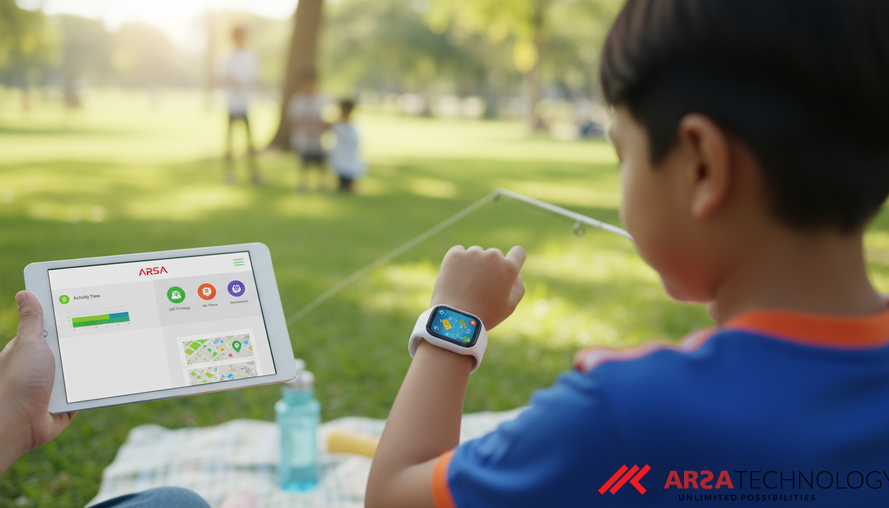
In an era dominated by screens, the challenge of encouraging children to engage in physical activity is more pressing than ever. Smart wearables have emerged as a compelling solution, transforming exercise into an interactive and enjoyable experience for younger users. Devices like the Fitbit Ace LTE exemplify this trend, combining advanced technology with playful design to motivate children aged 7 to 11. This innovative smartwatch, recently noted for matching its all-time low price of $99.95, turns movement into an adventure, offering a blend of gamified fitness and robust safety features (Source: The Verge). This approach highlights how subtle applications of AI and data analytics can drive positive behavioral outcomes, a principle that also holds significant value in enterprise-level solutions.
Gamified Activity: Leveraging Data for Dynamic Engagement
The core appeal of modern kids' smartwatches lies in their ability to gamify physical activity. The Fitbit Ace LTE integrates step-activated games and a unique digital companion, 'Eejie,' to encourage continuous movement. As children play these games, the smartwatch tracks their steps and activity levels, translating this raw data into points that can be used to customize their Eejie companion with new outfits, rooms, and accessories. This feedback loop, driven by implicit AI processing of activity data, creates a rewarding experience that directly links physical effort to digital progress.
Examples of these interactive games include a fishing challenge, where arm movements simulate casting and reeling, and a Mario Kart-inspired racing game that responds to arm tilts. These activities are designed to be simple yet engaging, ensuring children remain motivated. The underlying data analytics engine continuously processes motion sensor inputs, providing real-time feedback that makes exercise feel less like a chore and more like a captivating game. The successful implementation of such gamified experiences on compact edge devices demonstrates the power of local processing and intelligent design.
Prioritizing Safety and Communication for Peace of Mind
Beyond fostering active habits, parental peace of mind is a critical component of kid-friendly wearables. The Fitbit Ace LTE addresses this with comprehensive safety and communication functionalities. It operates in a secure environment, free from advertisements and third-party app stores, minimizing exposure to inappropriate content or data privacy risks. Parental controls are integrated, allowing guardians to manage approved contacts, monitor activity goals, and even disable games during school hours to ensure focus on education.
Furthermore, the device offers advanced communication and location-sharing capabilities. With an optional monthly data plan, children can call or text pre-approved contacts, and their location can be tracked via Google Maps, all without requiring a separate smartphone. This effectively positions the smartwatch as a secure smartphone alternative for young users. The inclusion of Tap to Pay via Google Pay also enables children to make purchases independently in a controlled manner, enhancing their autonomy while retaining parental oversight. Such features underscore the importance of reliable data transfer and robust access control in any smart system.
The Role of Data and Privacy in Smart Device Ecosystems
The functionality of smart wearables, whether for consumer or enterprise use, fundamentally relies on the collection and intelligent processing of data. For a device like the Fitbit Ace LTE, activity metrics, location data, and communication logs are constantly generated. Managing this data responsibly, especially when dealing with children's information, is paramount. This necessitates robust data encryption, clear privacy policies, and secure storage solutions. The ability to perform real-time analytics on the device (edge computing) helps maintain privacy by minimizing the need to transfer raw data to the cloud, aligning with principles often prioritized in enterprise deployments.
The principles of data handling, privacy-by-design, and secure communication that are vital for consumer products extend directly to enterprise AI and IoT solutions. Enterprises in sectors such as public safety, industrial operations, and healthcare require stringent data sovereignty and compliance. Solutions that offer on-premise deployment, where all data remains within the client's infrastructure, are crucial for sensitive environments. ARSA Technology, for instance, specializes in enterprise-grade AI and IoT solutions that prioritize data control, privacy, and regulatory compliance. Our Face Recognition & Liveness SDK is an example, designed for self-hosted deployment to give organizations full ownership over their biometric data.
From Consumer Wearables to Enterprise AI & IoT Solutions
While the Fitbit Ace LTE caters to a consumer demographic, the underlying technological advancements – particularly in edge AI, data processing, and secure communication – mirror those driving innovation in the enterprise sector. The device's capacity for real-time activity monitoring and behavioral analysis, for instance, finds parallels in enterprise AI Video Analytics. In industrial settings, our AI BOX - Basic Safety Guard can monitor Personal Protective Equipment (PPE) compliance or detect intrusions into restricted areas, leveraging computer vision to analyze live video streams and trigger real-time alerts.
Similarly, the location tracking and communication features of a child's smartwatch reflect the critical need for asset tracking, personnel safety, and secure operational communications in large-scale enterprises. Whether it’s monitoring traffic flow in smart cities using our AI BOX - Traffic Monitor or analyzing crowd density in retail environments, ARSA Technology's solutions transform passive data into actionable intelligence. Our flexible deployment models, including the ARSA AI Box Series for plug-and-play edge processing and robust software platforms for centralized analytics, ensure that organizations can choose the architecture that best fits their operational reality, scale, and compliance needs.
Making Smart Technology Work for You
The Fitbit Ace LTE brilliantly demonstrates how smart technology, powered by intelligent algorithms and efficient data processing, can significantly enhance daily life by promoting healthy habits and ensuring safety for the younger generation. It's a testament to the power of integrating AI and IoT capabilities into everyday devices. These same foundational principles – real-time insights, secure data management, and actionable intelligence – are precisely what ARSA Technology delivers to global enterprises. By transforming complex data into clear business outcomes, ARSA helps organizations achieve greater efficiency, enhanced security, and new revenue streams across various industries.
Ready to explore how advanced AI and IoT can transform your operations? Discover ARSA Technology’s innovative solutions designed for precision, scalability, and measurable ROI.
To discuss your specific enterprise needs and learn how ARSA can engineer your competitive advantage, we invite you to contact ARSA for a free consultation.