Tesla's Autonomous Driving Evolution: Unpacking the Hardware 3 Limitation for FSD
Elon Musk confirms millions of Tesla vehicles with Hardware 3 won't receive unsupervised Full Self-Driving (FSD) due to technical limitations, prompting significant upgrade challenges.

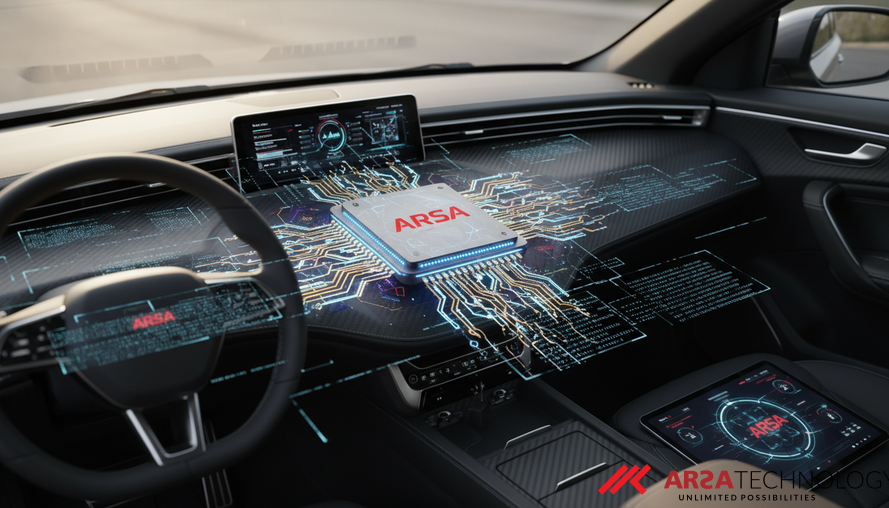
Elon Musk recently revealed that approximately four million Tesla vehicles currently equipped with Hardware 3 (HW3) will not be capable of running the company's "unsupervised" Full Self-Driving (FSD) system. This announcement, made during a Q1 2026 earnings call, clarifies a long-standing point of speculation and presents a significant challenge for existing Tesla owners who have invested in the FSD feature. The core issue, according to Musk, lies in the fundamental hardware differences between HW3 and the newer Hardware 4 (HW4) platform.
The Crucial Role of AI Hardware in Autonomous Driving
The distinction between HW3 and HW4 highlights the relentless pace of innovation and the stringent demands placed on computing power for truly autonomous systems. Musk elaborated that HW3 possesses only one-eighth of the memory bandwidth of HW4, a critical factor for unsupervised FSD. This limitation underscores that advanced artificial intelligence capabilities, particularly in areas like real-time computer vision and complex decision-making required for self-driving, are heavily dependent on robust underlying hardware. Without sufficient memory bandwidth, processing the vast amounts of sensor data needed for autonomous navigation and object recognition becomes a bottleneck, impeding the system's ability to operate without human intervention.
Navigating the Upgrade Pathway for FSD Owners
For the millions of Tesla customers who purchased FSD with their HW3 vehicles, Tesla is now proposing solutions that involve significant hardware modifications. These options include a discounted trade-in for new vehicles equipped with HW4, or an upgrade path for existing cars. The hardware upgrade, however, is not a simple software patch; it requires replacing not only the vehicle's core computer but also its camera systems to be compatible with HW4. This revelation points to the inherent challenges of retrofitting complex AI systems into existing infrastructure.
Musk acknowledged the logistical hurdles, stating that current service centers are ill-equipped to handle such extensive upgrades efficiently. To manage the scale of these conversions, Tesla plans to establish "microfactories" or small production lines in major metropolitan areas. This approach aims to streamline the process, transforming what would otherwise be a slow and inefficient service center operation into a more factory-like assembly line for hardware integration. The company had previously hinted at the necessity of such upgrades back in January 2025, a sentiment echoed by reports from frustrated owners, such as a Dutch Tesla owner who was advised to "just be patient" while awaiting FSD functionality on their HW3 car, as reported by Electrek.
Broader Implications for AI and IoT Deployments
The challenges faced by Tesla in upgrading its FSD hardware offer valuable insights for any enterprise venturing into advanced AI and IoT solutions. It demonstrates that the long-term viability and scalability of AI-driven systems are deeply tied to hardware planning and a realistic assessment of technological evolution. Organizations deploying AI for real-time video analytics, industrial automation, or smart city infrastructure must consider the computational demands of future capabilities.
For instance, systems requiring sophisticated AI video analytics to monitor safety compliance or manage traffic, like those offered by ARSA Technology, demand careful selection of processing units. Similarly, edge AI solutions, such as ARSA AI Box Series, are specifically designed to perform complex computations locally, reducing latency and reliance on cloud connectivity, but their capabilities are still bounded by their internal specifications. The need for flexible, scalable, and upgradeable architecture from the outset is paramount to avoid similar hardware-induced limitations down the line. ARSA, with its custom AI solutions, assists enterprises in strategizing for these long-term considerations.
The Path Towards Truly Unsupervised Autonomy
Despite the current setback for HW3 owners, Musk remains committed to the vision of a fully autonomous future. He believes that converting all HW3 cars to HW4 is essential for them to eventually integrate into Tesla’s planned robotaxi fleet and to fully achieve unsupervised FSD. This long-term objective underscores the continuous investment required in AI research and development, where hardware improvements are as crucial as software advancements. As AI models become more complex and demand more data processing, the underlying hardware must evolve in tandem to meet these escalating computational requirements.
The transition from HW3 to HW4 serves as a powerful reminder that cutting-edge AI requires equally cutting-edge hardware. While the prospect of upgrading millions of vehicles is a substantial undertaking, it highlights the commitment to pushing the boundaries of autonomous technology. For companies deploying mission-critical AI, this scenario emphasizes the importance of understanding hardware limitations and planning for future scalability to ensure their solutions remain viable and effective.
Source: Peters, J. (2026, April 22). Elon Musk admits that millions of Tesla vehicles won’t get unsupervised FSD. The Verge. https://www.theverge.com/transportation/917167/elon-musk-tesla-hw3-fsd
To learn how robust AI and IoT solutions can transform your enterprise operations with future-proof hardware and software, explore ARSA Technology's offerings and contact ARSA for a free consultation.