Tesla's Cybercab Rolls Out: Why Elon Musk is Pumping the Brakes on Autonomous Ambitions
As Tesla's Cybercab begins production, Elon Musk reveals unexpected caution. Explore the complex realities of achieving full autonomy, regulatory hurdles, and the need for rigorous AI validation for enterprise solutions.

Tesla's Cybercab Rolls Out: Why Elon Musk is Pumping the Brakes on Autonomous Ambitions
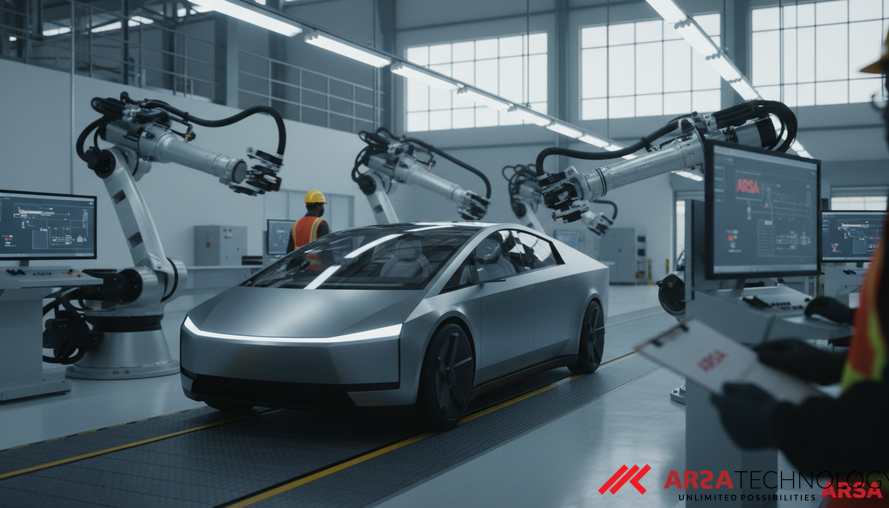
The future of transportation, long envisioned as a landscape populated by self-driving vehicles, continues to unfold with both breathtaking innovation and pragmatic challenges. Tesla's highly anticipated Cybercab, a purpose-built robotaxi designed for complete autonomy, has officially entered continuous production at the company's Gigafactory in Austin, Texas. While this marks a significant milestone, recent statements from CEO Elon Musk reveal an uncharacteristic degree of caution, prompting industry watchers to question the pace and practicalities of widespread autonomous deployment. This nuanced approach highlights the intricate complexities of bringing AI-driven mobility to scale, emphasizing the critical need for robust validation, regulatory navigation, and unwavering safety.
The Unsteady Road to Full Autonomy: A Reality Check
Despite the Cybercab’s entry into production, the rollout of Tesla’s robotaxi service has been notably slower than once predicted. Initial units of the Cybercab were first produced in February, with continuous, high-volume manufacturing commencing in April 2026. However, during a recent earnings call, Elon Musk expressed an unusually somber tone regarding the expansion plans for Tesla’s robotaxi ventures. He underscored the paramount importance of "rigorous validation," stressing the commitment to ensuring absolute safety without a "single accidental injury" as the service expands. This measured rhetoric starkly contrasts with his previously bombastic pronouncements of a "hyper exponential" expansion that would grant 50% of the US population access to Tesla's Robotaxi service by the end of 2025.
The current reality paints a different picture, with the service operating in only a handful of cities like Austin, Dallas, and Houston, where expansion has been minimal, with just two vehicles added per city a week after launch. This cautious pace, while understandable from a safety perspective, reflects the profound technical and operational hurdles inherent in achieving true, unsupervised autonomy. For enterprises considering integrating advanced AI and IoT solutions, such insights are crucial, reminding them that practical deployment often requires a methodical approach, thorough testing, and scalable infrastructure. ARSA Technology, for instance, focuses on delivering edge AI systems that are proven in real-world environments, ensuring reliability from concept to deployment.
Navigating Regulatory Landscape and Hardware Realities
One of the most immediate challenges facing the Cybercab's widespread deployment is its radical design, which lacks traditional driver controls such as a steering wheel, pedals, and mirrors. These features are mandated by Federal Motor Vehicle Safety Standards, and while exemptions can be granted, they are typically capped at 2,500 vehicles per company. Legislation aimed at lifting this cap, crucial for mass production of purpose-built autonomous vehicles, has languished in Congress for years. Tesla’s Vice President of Vehicle Engineering, Lars Moravy, has suggested the company believes its vehicles are not subject to this cap, implying a strategy of self-certification similar to Amazon’s Zoox. However, such claims have drawn scrutiny from regulatory bodies, highlighting the complex legal and compliance considerations that advanced autonomous vehicle manufacturers must navigate.
Beyond regulatory hurdles, the evolution of Tesla's Full Self-Driving (FSD) software reveals significant technical complexities. Musk hinted at a "complete overhaul of the software architecture" with Version 15 of FSD, expected by the end of this year or early next. Yet, he also conceded that millions of Tesla vehicles equipped with Hardware 3 computers, sold between 2019 and 2023, would likely require substantial retrofits to achieve unsupervised driving capabilities. This admission contradicts earlier promises and emphasizes the rapid evolution of AI hardware and software, where today's cutting-edge can quickly become tomorrow's legacy. For businesses investing in AI infrastructure, this underscores the importance of future-proofing and partnering with providers that offer flexible, hardware-agnostic solutions, like ARSA's AI Video Analytics software, which can be deployed on existing infrastructure.
Strategic Shifts and the Future of AI-Driven Mobility
Musk's recent tempered outlook, balancing caution with long-term aspirations, reflects a maturation in the approach to autonomous technology. He now projects that unsupervised FSD or robotaxi revenue will "not be super material this year," but anticipates it becoming "material probably in a significant way next year." This revised timeline acknowledges the immense engineering effort required to bridge the gap between advanced prototypes and mass-market, failsafe autonomous operations. The hundreds of crashes and dozens of fatalities linked to Tesla vehicles using FSD and Autopilot, coupled with ongoing government investigations and potential recalls, serve as stark reminders of the high stakes involved.
The shift towards rigorous validation and a more gradual ramp-up signifies a pragmatic turn for a company often associated with audacious deadlines. It highlights that the successful deployment of AI and IoT solutions, especially in critical applications like public transportation, depends heavily on meticulous testing, transparent reporting, and continuous improvement. Organizations looking to leverage AI in their operations need partners who possess deep engineering expertise and a track record of delivering reliable systems in demanding environments. ARSA Technology, experienced since 2018, is committed to building production-ready AI and IoT systems designed for accuracy, scalability, privacy, and operational reliability.
Beyond the Hype: Building Trust in Autonomous Solutions
The Cybercab saga serves as a compelling case study for the broader AI and IoT industry. It illustrates that while technological breakthroughs can be rapid, the journey from innovation to widespread, trusted deployment is often a marathon, not a sprint. The emphasis on safety, data integrity, and regulatory compliance is not merely a corporate responsibility but a fundamental prerequisite for public acceptance and commercial viability. Companies that prioritize these elements will be better positioned to build trust and achieve sustainable growth in the autonomous future.
For enterprises aiming to harness the power of AI and IoT to reduce costs, enhance security, or create new revenue streams, the lessons from the autonomous vehicle sector are invaluable. It reinforces the importance of choosing solutions that offer robust validation, flexible deployment models (including on-premise options for data control), and a clear path to measurable business outcomes.
Source: Andrew J. Hawkins, The Verge, April 24, 2026. https://www.theverge.com/transportation/918106/tesla-cybercab-production-robotaxi-elon-musk-earnings
Ready to transform your operations with practical, proven AI and IoT solutions? Explore ARSA Technology’s offerings and request a free consultation today.