The AI Data Center Gold Rush: Promises vs. Reality in Rural Communities
As AI data centers expand into rural areas globally, explore the economic promises versus the actual impact on jobs, resources, and local communities. Learn about sustainable AI infrastructure and edge computing solutions.

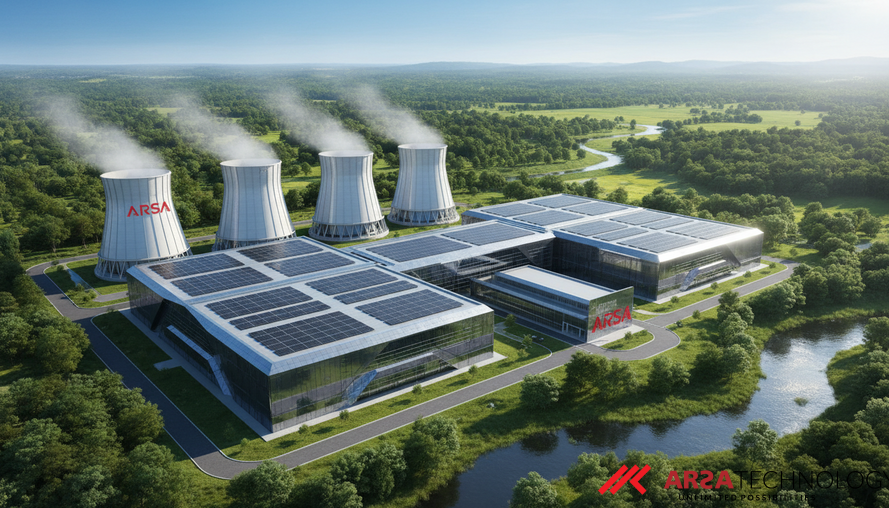
The rapid advancement of artificial intelligence (AI) and machine learning (ML) is fueling an unprecedented demand for computational power, driving a global surge in the construction of massive data centers. Increasingly, these vast digital infrastructure projects are setting their sights on rural communities, promising significant economic revitalization through job creation and investment. However, as documented in a recent report by Abigail Bassett for The Verge on May 13, 2026, the reality of this "data center gold rush" often diverges sharply from the initial promises, raising critical questions about long-term sustainability, local economic impact, and resource management.
The Strategic Appeal of Rural Locations for AI Infrastructure
Rural areas across the globe present a compelling proposition for data center developers. Their primary allure lies in abundant, affordable land, often accompanied by less restrictive land-use regulations compared to densely populated urban centers. Furthermore, many rural regions boast cooler climates, which significantly reduces the energy required for data center cooling – a major operational cost. Access to renewable energy sources, such as hydropower, wind, or solar farms, is another key draw, appealing to companies aiming for green credentials. For instance, the state of Maine, as highlighted in The Verge's report, is particularly attractive due to its cool year-round temperatures and a renewable energy mix that ranks among the highest in the United States.
Developers frequently approach local governments in these areas with compelling narratives: bring in these advanced facilities, grant necessary permissions, and offer some tax incentives, and a wave of high-paying jobs and economic prosperity will follow. This message resonates deeply in towns that have experienced the decline of traditional industries, such as the former Androscoggin paper mill in Jay, Maine, which closed permanently after an explosion in 2020, leaving a community eager for new opportunities.
Debunking the Job Creation Myth
While the prospect of new jobs is a powerful incentive for struggling communities, empirical evidence suggests that the long-term employment benefits from large-scale data centers are often overstated. Construction phases undeniably bring a temporary boom, with many skilled workers engaged for weeks or months. Local hotels might fill up, and related services see a temporary uptick. However, once a data center is operational, the number of permanent, full-time positions required to manage these highly automated facilities is surprisingly low.
Michael Hicks, an economist at Ball State University, conducted one of the first causal analyses of data center employment effects in the United States, studying 254 counties in Texas. His research, published in November, revealed effectively zero net job creation in the long term. Any permanent positions created within the data center sector were often offset by job losses elsewhere, indicating a redistribution rather than a net increase in employment. Even a large facility comparable to a proposed $550 million project in Jay, Maine, which promises 125 to 150 permanent roles, would ultimately employ about as many people as a mid-sized restaurant. Furthermore, a significant portion of these permanent roles typically consists of maintenance staff and backup generator technicians, with high-tech roles making up a smaller percentage (around 10%). The practice of counting remote workers in other states as local employees further inflates job promises without delivering local economic impact.
The Hidden Costs: Resource Consumption and Public Burden
Beyond the job disparity, these industrial-scale facilities place immense demands on local resources. Data centers, particularly "neocloud" facilities specialized for high-performance GPU computing in AI and machine learning workloads, are voracious consumers of both energy and water. Such advanced centers can require over 100kW of energy per rack and necessitate sophisticated cooling solutions like direct-to-chip or immersion cooling, both of which are highly water-intensive. This scale of consumption can strain local power grids and deplete precious water reserves, impacting residential and agricultural users.
The national trend reveals substantial public subsidies for data centers, often exceeding $2 million per permanent job. In extreme cases, companies have received tens of millions in tax breaks for facilities creating only a handful of positions. Anthony Elmo of Good Jobs First, a non-profit focusing on corporate accountability, highlights that rural towns are often "outgunned" in negotiations. Lacking the governmental expertise, legal resources, and perceived leverage, they may inadvertently agree to unfavorable terms that result in minimal local benefit while bearing significant environmental and financial costs. A bill in Maine, for instance, attempting an 18-month moratorium on data center permits consuming over 20 megawatts, was vetoed by the governor, prioritizing promised jobs over a comprehensive study of impacts.
Navigating the Future: Towards Sustainable and Localized AI Infrastructure
The experience of communities grappling with large data center proposals underscores the need for a more strategic and localized approach to AI infrastructure development. While hyperscale data centers serve critical functions, not all AI workloads require such colossal, centralized facilities. The rise of edge AI offers a compelling alternative, allowing processing to occur closer to the data source, significantly reducing latency, bandwidth needs, and the environmental footprint of data transmission.
For organizations prioritizing data sovereignty, low latency, and efficient resource use, deploying AI directly on-premise or at the edge can provide significant advantages. Solutions like ARSA Technology's ARSA AI Box Series offer pre-configured edge AI systems that integrate with existing CCTV infrastructure for real-time video analytics, performing AI inference locally without cloud dependency. This approach not only provides instant insights for applications like AI BOX - Basic Safety Guard for industrial safety but also ensures full control over data, crucial for privacy-sensitive environments.
ARSA also offers AI Video Analytics software for deployment on existing servers, private data centers, or virtualized infrastructure. This software-only approach empowers enterprises and governments with full data ownership and flexible scalability, transforming passive CCTV feeds into actionable intelligence without requiring new hardware appliances. This contrasts sharply with the "all or nothing" proposition of giant data centers and highlights a path toward integrating AI capabilities in a manner that respects local infrastructure and community needs.
Strategic Considerations for Global Enterprises
As the global demand for AI and IoT solutions continues to expand, enterprises must carefully consider the full spectrum of deployment models. The lessons from rural America’s encounter with data center development offer valuable insights:
- Long-Term Economic Impact: Evaluate beyond initial construction jobs to understand sustained employment and revenue generation.
- Resource Management: Assess the environmental footprint, particularly energy and water consumption, and its impact on local ecosystems.
- Data Sovereignty and Privacy: Prioritize solutions that offer control over data flow and storage, aligning with regulatory requirements like GDPR and HIPAA.
- Deployment Flexibility: Consider hybrid models that combine centralized cloud services with distributed edge processing, optimizing for performance, cost, and compliance.
For global enterprises, the objective should be to leverage AI effectively while ensuring ethical deployment, sustainable operations, and tangible benefits for all stakeholders. This requires a consultative approach that maps value chains, identifies high-impact intervention points, and engineers solutions that deliver measurable financial outcomes and societal value. ARSA Technology, founded in 2018, is dedicated to this principle, building production-ready systems that move beyond experimentation into measurable impact, engineered for accuracy, scalability, privacy, and operational reliability.
The future of AI infrastructure is not solely about building larger, more centralized data centers in remote locations. It's about intelligently deploying AI where it matters most, with consideration for local economies, environmental sustainability, and robust data governance. Businesses must advocate for and invest in solutions that truly serve their operational realities and long-term strategic goals.
To explore how ARSA Technology’s flexible AI and IoT solutions can meet your enterprise’s unique needs, we invite you to contact ARSA for a free consultation.
**Source:** Abigail Bassett. "Data centers are coming for rural America And the jobs they promise don’t really exist." The Verge, May 13, 2026. https://www.theverge.com/ai-artificial-intelligence/928963/data-center-rural-america-jobs-jay-maine