The AI Paradox: Why Graduates Are Booing Commencement Speeches
Explore why artificial intelligence is becoming a sensitive topic at graduation ceremonies, reflecting deep concerns about job displacement, ethics, and responsible deployment.

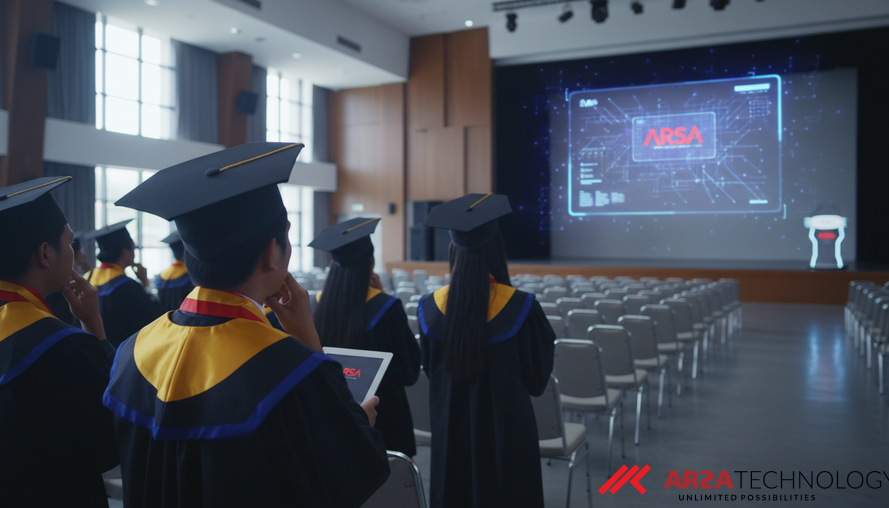
The annual commencement season is a time for celebration, reflection, and looking towards the future. However, recent graduation ceremonies have highlighted a surprising and somewhat uncomfortable truth: discussing Artificial Intelligence (AI) in an optimistic light can strike a jarring chord with graduating students. While tech leaders often herald AI as the next industrial revolution, many young people approaching the job market view its rise with palpable apprehension, sometimes manifesting in boos and protests. This growing disconnect underscores a critical need for organizations to consider the human element and ethical implications as they integrate AI into their operations.
The Uncomfortable Reception of AI on Stage
Recent events have put this sentiment into stark relief. At the University of Central Florida, Gloria Caulfield, an executive from a real estate development firm, experienced firsthand the audience's discomfort. She described the current era as one of "profound change," calling the emergence of AI "the next industrial revolution." Her words were met with immediate and sustained booing from the students. When she attempted to continue, noting that "only a few years ago, AI was not a factor in our lives," the crowd erupted in cheers and applause, indicating a strong desire to rewind the clock to a pre-AI reality, as reported by TechCrunch.
A similar incident unfolded at the University of Arizona, where former Google CEO Eric Schmidt faced a vocal backlash. Beyond pre-existing controversies related to a lawsuit (which he has denied), Schmidt encountered significant booing when he addressed the future of AI. His assertion that students "will help shape artificial intelligence" and that they could "assemble a team of AI agents to help you with the parts that you could never accomplish on your own" was met with persistent negativity. Even his motivational line, "When someone offers you a seat on the rocket ship, you do not ask which seat, you just get on," failed to quell the unrest, highlighting a deep skepticism toward the promises of an AI-driven future.
Beyond the Boos: Unpacking Graduate Concerns
The widespread negative reactions aren't merely random acts of discontent. They stem from a complex mix of anxieties impacting the younger generation. A recent Gallup poll revealed a significant drop in optimism among Americans aged 15 to 34 regarding local job prospects, falling from 75% in 2022 to 43%. While AI isn't solely responsible for this economic pessimism, it has become a prominent symbol of a rapidly changing landscape. Journalist and tech critic Brian Merchant aptly characterized AI as "the cruel new face of hyper-scaling capitalism" for many students, who fear being relegated to menial tasks like "entering prompts into an LLM" rather than pursuing meaningful careers.
This sentiment reflects a deeper concern about the fundamental shift AI is bringing to the workforce and society. Graduates are inheriting a world grappling with significant challenges, including climate change, political fragmentation, and economic instability. Against this backdrop, the narrative of AI as an unstoppable force that will fundamentally reshape jobs—potentially eliminating many—fuels fears about their ability to thrive. Even when AI isn't explicitly mentioned in commencement speeches, themes of "resilience" have become increasingly common, implicitly acknowledging the difficult and uncertain future these graduates face. For many, the perception is that the future is already being written, and it might not be in their favor.
The Nuance of AI Adoption and Deployment
It's important to note that not all discussions of AI are met with such strong opposition. Nvidia CEO Jensen Huang, for instance, spoke at Carnegie Mellon’s commencement and seemingly avoided audible pushback when he stated that AI has "reinvented computing." This suggests that the issue isn't AI itself, but rather how it is presented and what implications it carries for the audience. When AI is framed as an evolution of technology or a tool for innovation, it may be received differently than when it's positioned as an inevitable, overwhelming force that dictates the future of work without human agency.
For enterprises considering AI solutions, this graduate sentiment offers a critical lesson. Successful AI integration requires a human-centered approach that prioritizes ethical considerations, data privacy, and a clear understanding of impact on human roles. It's not enough to simply deploy cutting-edge technology; organizations must also address the anxieties and practical concerns of their workforce and the wider society. This means focusing on solutions that augment human capabilities, create new opportunities, and ensure transparent, secure data handling.
Building a Future with Trust: The ARSA Approach
At ARSA Technology, we recognize that true innovation in AI and IoT extends beyond technical prowess to encompass responsible deployment and measurable human impact. Our approach focuses on engineering AI solutions that address critical enterprise needs while upholding principles of privacy, scalability, and operational reliability. For instance, our AI Video Analytics Software and AI Box Series are designed for on-premise deployment, ensuring that all video streams, inference results, and metadata remain entirely within the client's infrastructure. This full data ownership is crucial for industries and governments with stringent compliance and privacy requirements.
Furthermore, solutions like our Face Recognition & Liveness SDK offer enterprise-grade biometric capabilities that run entirely on the client's servers or private cloud, with no external network dependency. This approach directly tackles concerns about data sovereignty and external control, allowing organizations to maintain full ownership of their biometric systems. By offering flexible deployment models—cloud, on-premise software, or turnkey edge systems—ARSA empowers clients to choose the architecture that aligns with their operational reality and regulatory needs, providing full control over data, privacy, and performance. We believe that by delivering practical, proven, and profitable AI solutions, we can bridge the gap between technological advancement and societal trust, fostering an environment where AI enhances human capability rather than sparking fear.
(Source: TechCrunch)
Ready to explore AI and IoT solutions that deliver real-world impact with an emphasis on security, privacy, and tangible ROI? We invite you to explore ARSA's enterprise-grade products and services, and contact ARSA for a free consultation.