The Digital Crossroads: Unpacking Amazon's Logistics Stance and the Future of Postal Services with AI
Explore the Amazon-USPS dispute over last-mile delivery, the financial challenges facing postal services globally, and how AI and IoT solutions are vital for modernizing logistics and ensuring future viability.

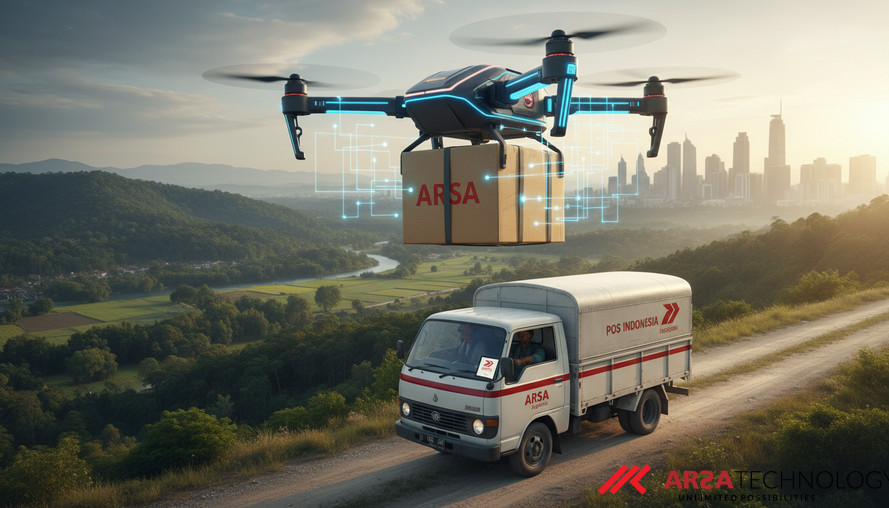
The Shifting Sands of E-commerce Logistics
The rapid expansion of e-commerce has fundamentally reshaped global supply chains and delivery ecosystems. While consumers enjoy unprecedented convenience, the underlying infrastructure, particularly traditional postal services, faces immense pressure. A recent report from March 2026 by The Wall Street Journal, highlighted by The Verge, brought to light a significant dispute between e-commerce giant Amazon and the United States Postal Service (USPS), serving as a potent illustration of these evolving dynamics. Amazon's decision to drastically reduce its shipments with the USPS, coupled with the postal agency's dire financial warnings, underscores a critical juncture for both private enterprises and public service providers in the digital age.
The Heart of the Amazon-USPS Standoff
At the core of the conflict lies a breakdown in contract negotiations. Amazon has gone on the defensive, asserting that it did not wish to scale back its reliance on the USPS. According to the company's statement, negotiations for a new, multi-billion dollar contract stalled when the USPS "abruptly walked away" in December of the previous year, at what Amazon describes as the "eleventh hour." This move compels Amazon to prepare for alternative delivery solutions to meet customer demand, independent of the USPS. The e-commerce behemoth plans to cut its package volume handled by the USPS by at least two-thirds by fall, coinciding with the expiration of their current contract.
On the other side, the USPS has openly stated its financial precariousness, indicating it could run out of funds within a year if it cannot secure increased borrowing authority from Congress and adjust postage prices. Postmaster General David Steiner articulated this urgency, explaining to Reuters that maintaining the status quo would lead to financial collapse. He emphasized that the agency must "test the market on this price to find out if it’s a fair price." While Amazon claims it submitted a bid in February 2026 as part of the USPS's new auction concept and hopes to continue a partnership, even at a reduced level, it cites a lack of response from Steiner regarding their proposal. Steiner, however, expressed a desire to continue the relationship with Amazon, but crucially, "at a fair price," acknowledging that the USPS handles approximately 1.7 billion Amazon packages annually.
The Complex Economics of Last-Mile Delivery
The financial challenges faced by the USPS are deeply intertwined with its unique operational mandate and historical pricing structures. Unlike private carriers, the USPS is bound by a universal service obligation, requiring it to deliver mail and packages six days a week to every address in the United States, including costly, sparsely populated rural areas. Historically, large businesses like Amazon have benefited from discounted shipping rates for these last-mile deliveries, especially in remote locations where the USPS often performs 30 to 40 percent of Amazon's deliveries.
This combination of a widespread, mandated delivery network and volume-based discounts for major clients has placed a significant strain on the USPS's finances. The agency’s move to a new bidding process for last-mile deliveries is a direct response to this unsustainable model, aiming to secure more equitable compensation for its extensive services. This situation highlights a global challenge for many national postal services: balancing public service responsibilities with the commercial pressures of an increasingly demanding e-commerce landscape.
Leveraging AI for Optimized Logistics and Cost Efficiency
The dispute between Amazon and the USPS underscores a critical need for greater efficiency and dynamic pricing models in logistics. This is where advanced technologies like Artificial Intelligence (AI) and the Internet of Things (IoT) can play a transformative role. For any postal service or logistics provider, implementing AI-powered solutions can lead to significant operational improvements and cost reductions. For instance, AI can optimize delivery routes in real-time, considering traffic, weather, package density, and even predicted demand spikes. This minimizes fuel consumption, reduces vehicle wear, and improves delivery times, directly addressing the high costs associated with last-mile operations in diverse geographical terrains.
Furthermore, AI can power sophisticated demand forecasting models, allowing postal services to anticipate package volumes more accurately and allocate resources proactively, avoiding bottlenecks and unnecessary expenditures. Predictive analytics, driven by AI, can also monitor equipment health for delivery fleets, scheduling maintenance before failures occur and reducing unexpected downtime. Technologies like AI Video Analytics can monitor loading docks and sortation centers for efficiency, identify potential safety hazards, or even track package flow in real-time. For enterprises building robust logistics, Custom AI Solutions can be tailored to unique operational complexities, transforming raw data into predictive intelligence that drives cost savings and enhances service. Moreover, compact, powerful edge AI devices like the ARSA AI Box Series can bring processing power closer to the source, enabling real-time decision-making in warehouses or at remote depots, further reducing latency and reliance on centralized cloud infrastructure.
Strategic Implications for Enterprise Supply Chains
Amazon’s extensive investments in building its own logistics network—from warehouses and fulfillment centers to air cargo planes and last-mile delivery vans—signal a broader trend among large enterprises. By taking greater control over their supply chains, companies aim to reduce dependency on third-party carriers, gain more flexibility, and mitigate risks associated with price disputes or service disruptions. This vertical integration allows for customized delivery experiences, faster shipping speeds, and tighter cost controls, especially for high-volume operations.
This strategy empowers enterprises to architect solutions precisely to their operational workflows, rather than being confined by off-the-shelf offerings or the limitations of external providers. Such a shift demands advanced technological capabilities to manage complex, distributed networks. Companies are increasingly seeking partners who can deliver integrated AI, IoT, and web ecosystems that unify operations and compound value across their entire operational stack, as ARSA Technology does across various industries including transportation and logistics.
A Global Perspective on Postal Service Viability
The USPS's financial predicament and its standoff with Amazon are not isolated incidents. Many national postal services worldwide grapple with similar challenges: universal service mandates, declining traditional mail volumes, and intense competition from private logistics firms in the booming parcel delivery market. The long-term viability of these essential public institutions often hinges on their ability to modernize, adopt new technologies, and negotiate fair, sustainable commercial partnerships.
Successful modernization requires more than just technological upgrades; it demands a strategic re-evaluation of business models, pricing structures, and regulatory frameworks. Collaborative efforts between governments, postal agencies, and technology providers are crucial to developing adaptable solutions that serve both public interest and economic realities. The integration of advanced AI and IoT solutions, from automated sorting and predictive maintenance to smart routing and real-time operational dashboards, is no longer a luxury but a necessity for transforming these vital services into agile, data-driven entities.
Embracing the Future of Logistics
The Amazon-USPS scenario serves as a powerful reminder that the future of logistics is a complex interplay of market forces, public service obligations, and technological innovation. For enterprises and public institutions alike, adaptability and strategic investment in advanced solutions are paramount. By leveraging AI and IoT, organizations can not only navigate current challenges but also build resilient, efficient, and profitable logistics operations that meet the demands of an ever-evolving global market.
To explore how ARSA Technology's AI and IoT solutions can transform your logistics and operational challenges, we invite you to contact ARSA for a free consultation.
Source: The Verge