The Evolution of Smart Access: Exploring Retrofit Smart Locks, Matter-over-Thread, and Enterprise Security
Discover how retrofit smart locks, powered by technologies like Matter-over-Thread, are transforming home and enterprise access control, offering enhanced security, convenience, and data sovereignty.

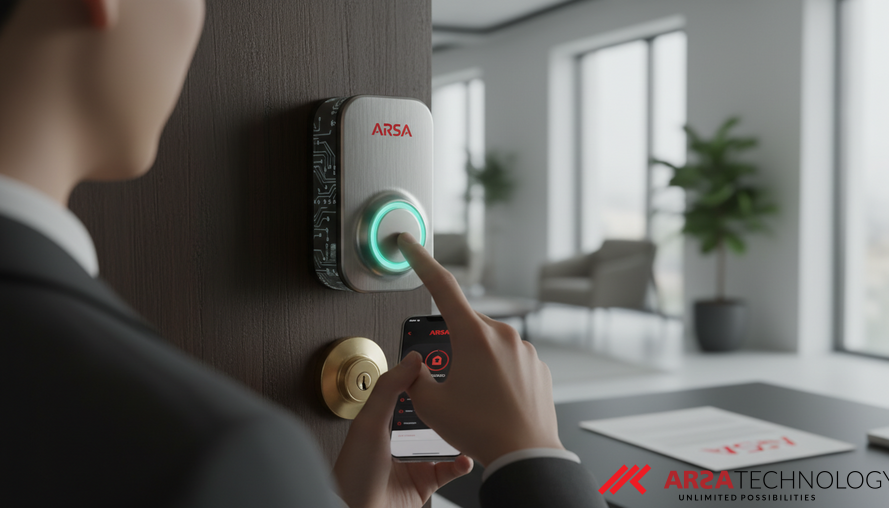
Enhancing Access Control with Retrofit Smart Locks
The landscape of physical security and access control has been dramatically reshaped by the advent of smart lock technology. While many solutions require a complete overhaul of existing door hardware, retrofit smart locks offer a compelling alternative, allowing property owners and enterprises to upgrade their security systems without extensive installation or replacement costs. These devices typically attach to the interior side of an existing deadbolt, motorizing its operation and integrating it into a broader smart home or building management ecosystem. This approach makes advanced security features accessible to a wider audience, simplifying the transition to intelligent access.
The core appeal of retrofit smart locks lies in their convenience and minimal disruption. Users can retain their traditional keys while gaining capabilities such as remote access, automated locking/unlocking, and digital key sharing. For residential users, this means granting temporary access to guests or service providers with ease. For businesses, it translates to more flexible and efficient management of entry points, enhancing operational flow while maintaining robust security protocols. The integration with various smart home platforms further amplifies their utility, offering a cohesive and interconnected security experience.
Matter-over-Thread: A New Era of Smart Home Interoperability
A significant advancement in smart lock technology, and smart home devices generally, is the adoption of protocols like Matter and Thread. Matter, an industry-backed connectivity standard, aims to simplify interoperability across different smart home ecosystems, allowing devices from various manufacturers to communicate seamlessly. This eliminates the compatibility headaches often associated with smart home setups. Thread, a low-power, mesh networking protocol, complements Matter by providing a robust, self-healing network that extends the reach and reliability of smart devices, particularly for battery-powered ones.
The combination of Matter-over-Thread offers substantial benefits. For smart locks, this means enhanced reliability, faster response times, and significantly improved battery life compared to traditional Wi-Fi connections. Thread-enabled devices create a mesh network where each device can relay signals, extending coverage and strengthening the overall network. This is particularly crucial for security devices where consistent connectivity is paramount. Furthermore, this open standard fosters greater competition and innovation, ultimately benefiting consumers and businesses by providing more choice and better-performing products.
The Nuki Smart Lock: A Case Study in Feature Evolution
A prime example of a leading retrofit smart lock embracing these advancements is the Nuki Smart Lock. This device has garnered attention for its minimalist design, feature-rich offering, and strong smart home compatibility. Initially launched with a price point around $159.99, it demonstrated early potential but faced criticism regarding a mandatory paid subscription for remote unlocking and activity notifications. This limitation presented a barrier for users seeking full functionality without recurring costs, a common challenge in the evolving smart device market.
However, the company addressed these concerns by making subscriber-only features, such as remote access and activity notifications, free to all users by late 2025. This strategic move significantly enhanced the value proposition of the Nuki Smart Lock. Subsequently, the device saw its first-ever price discount, selling for $149 during Amazon’s Big Spring Sale 2026, making it an even more attractive option for those seeking an advanced retrofit solution. Its integration with Matter-over-Thread further solidified its position, offering rapid unlocking speeds and broad smart home support, impressing reviewers with its advanced capabilities and efficiency in power consumption (Source: The Verge).
Beyond the Home: Enterprise Applications of Smart Access
While smart locks are popular in residential settings, their robust capabilities are increasingly valuable in enterprise environments. For commercial properties, factories, data centers, and critical infrastructure, advanced access control systems are non-negotiable. Retrofit smart locks, especially those supporting robust, secure protocols, can serve as a component within a larger, integrated security framework. This is where specialized AI and IoT solutions come into play, extending beyond simple door access to comprehensive security and operational intelligence.
Enterprises demand solutions that offer not only physical security but also granular access logs, real-time alerts, and seamless integration with existing IT infrastructure. For instance, in an industrial setting, personnel might require specific access rights to different zones, which can be dynamically managed and monitored. This level of control and insight is crucial for compliance, safety, and asset protection. Solutions like ARSA Technology’s AI BOX - Basic Safety Guard can complement these systems by providing AI-powered video analytics for restricted area monitoring and PPE compliance, further enhancing overall site security.
Data Sovereignty and On-Premise Deployment in Secure Environments
A critical consideration for enterprises, particularly in regulated industries or government sectors, is data sovereignty and control. Cloud-dependent solutions, while convenient, can raise concerns about data privacy, security, and compliance with local regulations. The shift towards making remote access features available without a cloud subscription, as seen with Nuki, aligns with a broader industry trend emphasizing user control over data. This also highlights the growing demand for solutions that can operate effectively on-premise or at the edge.
For organizations that require absolute control over their sensitive information, deploying AI and IoT systems within their own infrastructure is paramount. This ensures that all video streams, biometric data, and operational insights remain within the company's network, adhering to strict privacy and compliance requirements. ARSA Technology specializes in providing enterprise-grade solutions with flexible deployment models, including fully on-premise options. Our Face Recognition & Liveness SDK, for example, is designed for self-hosted deployment, offering comprehensive biometric identity management with full data ownership, ideal for government and critical infrastructure operators.
The Future of Integrated Security and Operational Intelligence
The evolution of smart locks, driven by advancements like Matter-over-Thread, signals a broader trend towards more intelligent, interconnected, and secure physical environments. These technologies are not just about opening doors; they are foundational elements of a comprehensive security and operational intelligence strategy. By integrating AI-powered analytics with robust access control, organizations can achieve unprecedented levels of oversight, efficiency, and safety. This holistic approach moves beyond reactive security measures to proactive threat detection and operational optimization across various industries.
For any enterprise looking to harness the full potential of AI and IoT for enhanced security and streamlined operations, selecting the right technology partner is crucial. ARSA Technology is dedicated to building production-ready systems that deliver measurable impact, ensuring accuracy, scalability, privacy, and operational reliability in real-world industrial constraints.
Ready to transform your access control and security infrastructure? Explore ARSA Technology's advanced AI and IoT solutions and contact ARSA for a free consultation to discuss your specific needs.