The Future of UX: AI Eye Tracking Predicts User Fatigue and Effort
Explore how advanced AI and eye-tracking technology can predict user internal states like fatigue, effort, and task difficulty from subtle gaze dynamics, revolutionizing UX and human-centered systems.

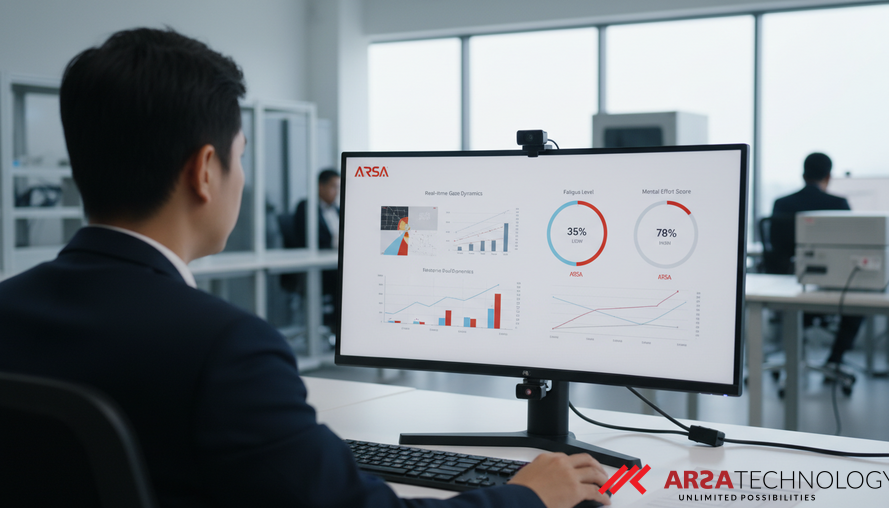
The integration of artificial intelligence (AI) with eye-tracking technology is opening new frontiers in understanding human-computer interaction. While eye-tracking has long been used to monitor where a user looks on a screen, recent advancements are shifting the focus to how a user feels during interaction. Internal states such as fatigue, mental effort, comfort, and perceived task difficulty significantly influence a user's performance and overall experience. Predicting these subjective states from objective eye movements promises to revolutionize user experience (UX) design, safety protocols, and personalized adaptive systems across various industries.
Traditionally, understanding a user’s internal state relied heavily on "subjective self-reports" – questionnaires or interviews where users describe their feelings. While these reports provide valuable insights, they are often costly, time-consuming, and prone to inconsistencies. Factors like memory effects, context, and individual differences in how people use rating scales can introduce variability, making it challenging to interpret data reliably, especially in long-term studies or across different individuals. This inherent variability and the burden of data collection necessitate a more objective and scalable approach to monitoring user well-being and cognitive load.
Beyond the Glare: The Limitations of Traditional User State Assessment
Eye-tracking (ET) technology has progressed significantly, moving from niche lab studies to widespread applications in augmented and virtual reality (AR/VR), gaze-based interaction, user authentication, and critical health and safety monitoring. As these systems become more prevalent in real-world environments, their performance and user adoption are increasingly tied to the user's internal state. An AR/VR system might become less effective if a user is experiencing high cognitive load, or a safety monitoring system could miss critical fatigue signs if it only tracks eye position without understanding the subtle dynamics.
The challenge lies in translating these subjective human experiences into quantifiable data. For decades, researchers have attempted to derive insights from objective gaze signals, but correlating subtle eye movements with abstract internal states has remained a complex task. The limitations of manual data interpretation and the lack of robust, automated methods have hindered the widespread application of real-time, objective user state prediction. This gap highlights a critical need for advanced computational approaches that can bridge the divide between objective oculomotor behavior (the physical movements of the eye) and subjective mental states, paving the way for more responsive and intuitive human-centered systems.
Bridging the Gap: AI for Predicting Internal Experiences
To address the inherent limitations of subjective reports, researchers are now proposing computational methods that connect objective eye movements directly to perceived internal states. A recent academic paper, "EYE FEEL YOU: A DenseNet-driven User State Prediction Approach" by Hasan and Komogortsev, outlines a novel deep learning framework designed to predict subjective states like fatigue, effort, and task difficulty from subtle gaze dynamics. This approach frames the problem as a "supervised multi-target regression task," meaning the AI learns to predict several continuous values (e.g., a fatigue score from 1-7, an effort score from 1-10) simultaneously, based on observed data.
The core innovation lies in leveraging advanced deep learning to extract predictive features directly from "gaze velocity signals"—the speed and direction of eye movements. Unlike older methods that relied on "hand-crafted features" (manually designed metrics like blink rate or fixation duration), this AI-driven approach allows the system to automatically identify and learn complex, subtle patterns in eye movements that humans might miss. This significantly enhances the system's flexibility and accuracy, making it more capable of uncovering the intricate relationships between how our eyes move and how we truly feel. The goal is to move beyond simply observing user behavior to truly understanding their underlying cognitive and emotional states, creating more intuitive and adaptive technologies.
DenseNet Explained: How AI Learns from Eye Movements
The study's proposed architecture utilizes a "pre-activation DenseNet-based deep learning framework." To simplify, imagine DenseNet as a highly efficient and interconnected neural network, a sophisticated type of AI. Its key characteristic is "dense connectivity," where each layer in the network receives input from all preceding layers. This design allows for extensive feature reuse, meaning the network can carry valuable information forward through many processing stages, promoting a stable flow of information and gradients during the learning process. This makes DenseNet particularly adept at learning robust and intricate representations from complex, continuous data streams like eye movements.
In practice, raw gaze positions (where the eye is looking on a screen) are first transformed into a "normalized velocity signal," essentially mapping the speed and direction of eye movement over time. This velocity signal is then fed into the DenseNet architecture, which acts as the "backbone" for "representation learning." This means the DenseNet analyzes these velocity patterns, identifying subtle changes and correlations that signify different internal states. Finally, a "regressor head module" takes these learned patterns and translates them into specific subjective scores for fatigue, effort, and task difficulty. This entire pipeline reduces the need for human experts to define what specific eye movement metrics are important, instead letting the AI discover the most relevant features autonomously.
Real-World Reliability: Generalizing Across Time and Individuals
For any AI solution to be truly valuable in real-world applications, it must prove its reliability and adaptability. The "Eye Feel You" study conducted two crucial experiments to validate the robustness of their DenseNet-driven approach:
- Cross-Round Generalization: This experiment assessed the model's ability to maintain accuracy when applied to data collected in later sessions, after being trained on earlier ones. In essence, it asks: can an AI model trained to recognize fatigue on a Monday morning still accurately detect it on a Friday afternoon, or even weeks later? This is vital for longitudinal studies and long-term deployments, ensuring the model can account for natural changes in user behavior and environmental conditions over time. Proving this ability means organizations can deploy such systems with confidence, knowing they will provide consistent insights without constant recalibration.
- Cross-Subject Generalization: This experiment tested the model's performance on new individuals it had never encountered during training. People exhibit significant individual differences in their eye movement patterns. A robust AI must be able to generalize its understanding of internal states across these variations. This experiment asks: can an AI trained on a group of users accurately predict the mental effort of a completely new user? Success in this area is critical for scalable solutions that can be deployed across a diverse user base without extensive personalized training. The findings clarify when a one-size-fits-all model is sufficient and when some degree of personalization might still be beneficial for optimal accuracy.
These rigorous generalization tests are fundamental to translating academic research into practical, deployable technologies that can provide reliable insights into subjective human experiences.
Transforming Industries: Practical Applications of Gaze-Driven Insights
The ability to accurately predict user states from eye movements holds immense potential for various industries. By providing objective, real-time insights into a user's fatigue, mental effort, or comfort, businesses can optimize operations, enhance safety, and create truly human-centric systems:
- Manufacturing & Industrial Safety: In high-stakes environments, monitoring operator alertness is paramount. AI-powered eye tracking could detect signs of fatigue or reduced attention in control room operators or individuals managing heavy machinery, triggering alerts before accidents occur. This complements existing solutions like ARSA's AI BOX - Basic Safety Guard, which focuses on PPE compliance and hazard detection, by adding a layer of human state monitoring.
- Automotive & Transportation: Driver fatigue is a major cause of accidents. Integrating such AI with in-vehicle cameras could provide real-time warnings to drivers, enhancing road safety. Similarly, for smart city traffic management, understanding human factors can lead to better infrastructure planning, a field where ARSA’s AI BOX - Traffic Monitor already provides crucial vehicle analytics.
- Healthcare: Early detection of subtle neurological changes or mental fatigue in patients could revolutionize diagnostic and monitoring processes. For healthcare professionals, monitoring mental workload during long shifts could prevent burnout and improve patient care, aligning with the preventative goals of solutions like ARSA's Self-Check Health Kiosk.
- User Experience (UX) & Product Design: For AR/VR developers, knowing when a user experiences discomfort or high cognitive load allows for dynamic adjustments to the virtual environment or interface, creating a more seamless and enjoyable experience. This leads to more intuitive and effective interactive systems, as user interfaces can adapt to an individual's real-time needs.
- Advertising & Retail: Understanding customer engagement, confusion, or attention levels while viewing digital signage or product displays can optimize marketing strategies and store layouts. This is a natural extension for solutions like ARSA's AI BOX - DOOH Audience Meter, which measures audience demographics and attention.
The shift from passive surveillance to active business intelligence through advanced AI Video Analytics means that enterprises can gain deeper, more actionable insights into human behavior and well-being, driving operational efficiency and safety.
By providing objective and consistent data on subjective states, this deep learning approach reduces the burden of manual self-reports and enables more accurate, scalable, and responsive AI-powered systems. As companies like ARSA Technology continue to innovate in AI and IoT, such advancements will be crucial in building intelligent solutions that truly understand and adapt to human needs.
To explore how ARSA Technology's cutting-edge AI and IoT solutions can help your business achieve digital transformation and enhance operational intelligence, we invite you to schedule a free consultation.
Source: Hasan, K., & Komogortsev, O. V. (2026). EYE FEEL YOU: A DENSENET-DRIVEN USER STATE PREDICTION APPROACH. https://arxiv.org/abs/2601.21045