The Global EV Landscape Shifts: Obstacles, Cancellations, and the Rise of Hybrids
Explore the challenges facing the electric vehicle industry, from policy changes and financial losses to model cancellations and the resurgence of hybrids, as global markets diverge.

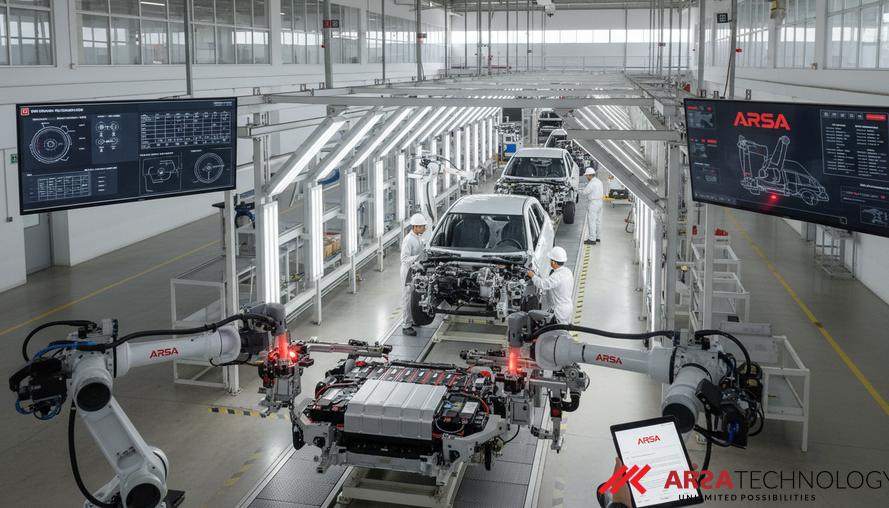
The global automotive industry is witnessing a significant recalibration in its ambitious push towards electric vehicles (EVs). What was once heralded as an unstoppable transition is now confronting a complex web of economic headwinds, policy reversals, and shifting consumer preferences, particularly in Western markets. While many automakers made substantial investments based on projections of rapid EV adoption, the reality of slower demand and escalating costs is forcing a strategic pivot, with hybrids emerging as a critical interim solution. This evolving landscape highlights a growing divergence in the global automotive future, as detailed in recent industry reports by The Verge.
Policy Shifts and Economic Headwinds Impact Western EV Adoption
A significant factor contributing to the "EV pullback" in the United States has been a series of policy shifts under specific administrations. The elimination of federal EV tax credits, alongside measures that have undermined clean energy initiatives and eased emissions rules, has directly impacted consumer incentives. These policy changes reduce the financial appeal of EVs, making them less competitive against traditional internal combustion engine (ICE) vehicles and more affordable hybrid options. Furthermore, tariffs have added another layer of complexity, increasing manufacturing costs and hindering market access for certain EV models.
The ripple effect extends beyond direct sales. The ambitious plan to build out EV charging infrastructure across the US has also faced hurdles. A proposed "Buy American" requirement for federally funded EV chargers, demanding up to 100% US-made components, threatens to dramatically curtail the build-out. While intended to boost domestic manufacturing, industry and environmental groups argue that such stringent requirements are currently impractical, risking a halt in crucial infrastructure development needed to support broader EV adoption. This combination of reduced incentives and infrastructure delays creates an inhospitable environment for EV growth.
Major Automakers Facing Billions in EV Losses
The enthusiasm for electric vehicles led to unprecedented investment, but the anticipated rapid returns have largely failed to materialize for many Western manufacturers. Automakers like General Motors, Ford, and Stellantis are now reporting substantial financial losses directly attributable to their EV divisions. General Motors, for instance, has recorded a $7.6 billion hit, while Ford has seen a staggering $19.5 billion washed off its books. Stellantis, the parent company of brands like Jeep, Dodge, and Chrysler, reported a titanic $26.5 billion charge on its EV investments, wiping away about 25% of its stock value overnight.
These colossal write-downs reflect a miscalculation in the pace of the energy transition, as noted by Stellantis CEO Antonio Filosa. He stated that the charges largely "reflect the cost of overestimating the pace of the energy transition that distanced us from many car buyers’ real-world needs, means and desires." This suggests that while the long-term vision for EVs remains, the market was not ready for such an aggressive and rapid shift, leading to unsold inventory, production cuts, and significant financial strain.
The Hybrid Resurgence and EV Model Cancellations
In response to decelerating EV demand and substantial financial losses, many automakers are strategically pivoting towards hybrid vehicles. Hybrids offer a bridge between traditional ICE cars and full EVs, appealing to consumers concerned about range anxiety, charging infrastructure availability, or the higher upfront cost of electric models. This shift is seeing a dramatic increase in hybrid production and development.
This strategic adjustment has also led to several high-profile EV model cancellations and postponements. Volvo, for example, has discontinued its compact EX30 and EX30 Cross Country EVs in the US market after the 2026 model year, despite its global availability. Honda has cancelled its Zero Series SUV and Saloon, along with the Acura RSX EVs, citing an "extremely challenging earnings situation" that could result in its first annual recorded loss in 50 years. General Motors is ending production of its affordable Chevy Bolt after the 2027 model year, replacing it with a gas-powered Buick model, and also ceased production of its BrightDrop electric delivery vans due to slow commercial market demand. These cancellations underscore the challenges automakers face in balancing ambitious electrification goals with market realities.
Ensuring Quality and Agility in Automotive Production
Beyond market demand and policy shifts, underlying operational challenges contribute to the EV pullback. Stellantis, in particular, has faced intense scrutiny not only for its EV losses but also for a substantial $16.7 billion charge related to warranty and recall claims. This includes a major recall of 320,000 Jeep 4xe plug-in hybrids due to battery-fire risks. Such issues highlight the critical importance of robust quality control and continuous technological innovation, especially as vehicle systems become more complex.
For manufacturers, the ability to adapt swiftly to evolving technological standards and consumer expectations is paramount. Integrating advanced solutions like AI-powered computer vision for quality inspection can significantly reduce defect rates and improve product safety, preventing costly recalls. Furthermore, deploying predictive maintenance systems across production lines can optimize operational efficiency and help prevent issues before they escalate, safeguarding investments and brand reputation. ARSA Technology, for instance, delivers custom AI solutions that can transform manufacturing processes through automated quality inspection and predictive analytics, turning raw data into actionable intelligence.
The Diverging Global Automotive Future: China's Lead
While Western automakers grapple with an EV pullback and pivot to hybrids, the narrative is strikingly different in China. The Chinese automotive market continues to outpace the rest of the world in electric vehicle development and adoption. This disparity is driven by a combination of robust government support, advanced manufacturing capabilities, and a large, rapidly evolving domestic market eager for new energy vehicles. China's continued dominance positions it to lead the global EV future, potentially turning America into an "automotive backwater" if US manufacturers fail to adapt more effectively.
The contrast underscores the need for strategic agility and sustained investment in core technologies. For any enterprise seeking to remain competitive in the global automotive or related sectors, leveraging cutting-edge AI and IoT solutions is no longer an option but a necessity. From optimizing supply chains to enhancing manufacturing precision and making data-driven market predictions, intelligent technologies are crucial for navigating volatile market conditions and securing future growth. Companies can explore ARSA's solutions across various industries, including transportation and logistics, to enhance operational intelligence.
Navigating the Future with Intelligent Solutions
The current slowdown in EV demand in some regions is not an indictment of electric technology itself, but rather a complex interplay of market readiness, policy support, and strategic execution by automakers. The pivot to hybrids provides a necessary transition period, allowing for further development of battery technology, charging infrastructure, and manufacturing processes. However, to truly succeed in any segment of the evolving automotive landscape, the integration of advanced Artificial Intelligence and Internet of Things technologies is indispensable.
AI-driven insights can help predict market shifts, optimize supply chains, enhance vehicle safety through sophisticated analytics, and improve manufacturing efficiency—all critical factors for reducing costs and increasing profitability across all vehicle types. For example, AI-powered video analytics can monitor traffic flow, assess infrastructure needs, and even assist in the intelligent management of charging networks. The robust capabilities of platforms like the AI BOX - Traffic Monitor can provide essential data for smart city planning and efficient transportation systems, benefiting both EV and hybrid infrastructure development. ARSA Technology is an experienced since 2018 provider of AI and IoT solutions, committed to delivering practical, proven, and profitable technologies that drive real industrial impact.
The "great EV pullback" serves as a powerful reminder that technological transitions are rarely linear. Success hinges on a blend of visionary innovation, practical implementation, and the ability to adapt intelligently to real-world constraints and opportunities.
Ready to engineer intelligence into your operations and navigate complex market shifts? Explore ARSA Technology's innovative AI and IoT solutions and contact ARSA today for a free consultation.
Source: The Verge - The great EV pullback: all the obstacles, cancellations, and delays (Updated March 18, 2026)