The Power of Small: How Lightweight AI Transforms Edge Devices for Real-Time Business Applications
Explore how lightweight transformer AI architectures enable real-time applications on edge devices, optimizing performance for industries like manufacturing, retail, and smart cities.

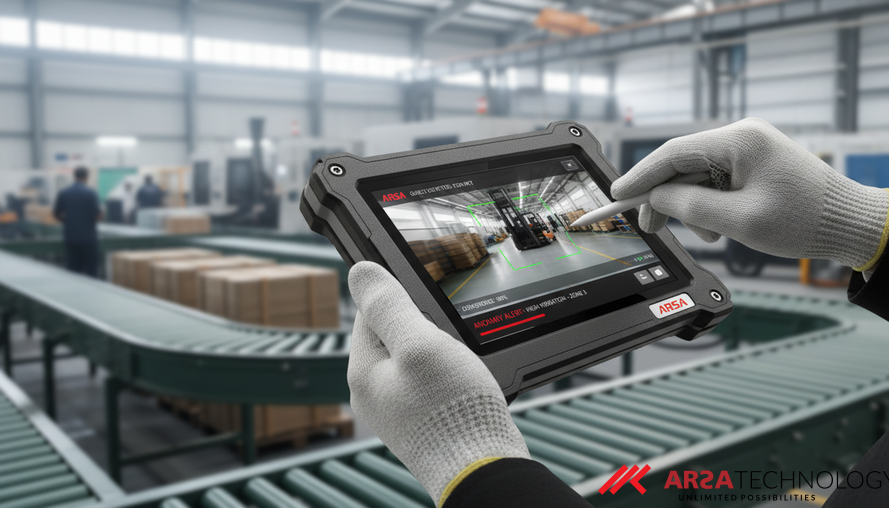
The Revolution of AI at the Edge
Artificial Intelligence (AI) has profoundly reshaped industries, driving breakthroughs from natural language processing to complex computer vision tasks. However, the immense computational power typically required by advanced AI models, particularly transformer architectures, has traditionally limited their deployment to powerful cloud servers or high-end data centers. This presents a significant challenge for businesses aiming to leverage AI in real-time at the operational edge – precisely where crucial data is generated and immediate decisions are needed. Imagine smart cameras that detect safety violations instantly on a factory floor, autonomous vehicles reacting in milliseconds, or retail systems analyzing customer behavior without any delay. This vision demands AI that is not only intelligent but also lean, efficient, and capable of operating directly on resource-constrained devices.
The shift towards deploying AI on edge devices is driven by the need for faster inference, enhanced privacy, reduced data transfer costs, and resilience to network outages. Edge devices — from smartphones and drones to industrial sensors and compact AI cameras — offer limited memory, processing power, and energy budgets. Bridging the gap between computationally intensive AI models and these constrained environments is a critical frontier in AI innovation. Companies like ARSA Technology are leveraging these advancements to deliver practical, impactful solutions that empower enterprises to transform their operations with AI.
The Challenge: Bridging the Gap Between Advanced AI and Edge Computing
Traditional transformer architectures, known for their exceptional performance in tasks like understanding language or analyzing images, are also notoriously demanding. These models can have hundreds of millions of parameters, requiring vast memory and processing capabilities. For instance, the self-attention mechanism, a core component of transformers, scales quadratically with the length of data it processes (e.g., words in a sentence or patches in an image). This means even a small increase in data size can lead to a disproportionate surge in computational requirements, making them impractical for edge deployment.
Edge devices, by their very nature, operate under strict limitations. They typically have modest RAM (often 512MB to 2GB for embedded systems), significantly lower computational throughput (5-200 TOPS compared to 300-2000 TOPS on data center GPUs), and tight power budgets (under 5W for battery-powered devices). Real-time applications across various industries, such as autonomous vehicles or industrial monitoring, demand inference latencies below 30-100 milliseconds and model sizes under 100 megabytes. Standard transformers, designed without these constraints in mind, simply cannot meet these requirements. Furthermore, deploying these complex models on diverse edge hardware (CPUs, GPUs, DSPs, AI accelerators) and ensuring compatibility with various software frameworks adds layers of technical complexity.
Pioneering Lightweight Transformer Architectures
To overcome these hurdles, researchers and developers have innovated a new breed of transformer architectures specifically designed for efficiency without sacrificing too much accuracy. These "lightweight" variants employ clever techniques to shrink model size and speed up inference.
One of the earliest and most influential approaches is Knowledge Distillation. This technique involves training a smaller, "student" model to mimic the behavior of a larger, more powerful "teacher" model. ARSA AI API offerings, for example, benefit from such optimized models. DistilBERT, for instance, achieves 97% of BERT-base performance with 40% fewer parameters and 60% faster inference by reducing the number of transformer layers. TinyBERT further refines this by using a two-stage distillation process, resulting in models up to 7.5 times smaller and 9.4 times faster than BERT-base, with only a marginal accuracy drop. MobileBERT, another innovation, uses an inverted-bottleneck architecture for efficient compression, delivering competitive accuracy with a model 4 times smaller than BERT-base.
In the realm of computer vision, where AI processes images and videos, Efficient Vision Transformers have emerged. EfficientFormer leverages dimension-consistent design and latency-driven optimization to achieve speeds comparable to highly optimized convolutional networks while retaining transformer performance. EdgeFormer combines convolutional strengths with transformers using global circular convolution for efficient image processing, reducing parameters and computation compared to earlier models. MobileViT, by treating transformers as convolutions, achieves strong image classification accuracy with significantly fewer parameters than traditional vision models, also showing substantial improvements in object detection tasks. These advancements lay the groundwork for high-performance AI video analytics solutions like those provided by ARSA AI Video Analytics, enabling capabilities from safety monitoring to behavioral analysis on local devices.
Innovations in Attention Mechanisms for Efficiency
A primary bottleneck in traditional transformers is the quadratic scaling of their self-attention mechanism. To address this, various efficient attention mechanisms have been developed:
- Sparse Attention: Instead of every token attending to every other token, sparse attention mechanisms limit the scope. For example, local attention restricts attention to only nearby tokens within a defined window. The Performer architecture, on the other hand, approximates full attention with linear (O(n)) complexity, maintaining high accuracy while drastically reducing computational load for long sequences.
- Linear Attention: Models like Linformer reduce complexity by projecting key and value sequences to lower dimensions. This significantly speeds up attention calculations, offering 2-3 times faster processing with minimal accuracy loss.
- Dynamic Token Pruning: More advanced techniques, such as those found in EdgeViT++, dynamically reduce the number of tokens (parts of data) processed during inference. By using attention-based gating, these models can prune 30-50% of tokens in intermediate layers, leading to substantial memory reduction and latency improvements on edge hardware without compromising accuracy. This kind of intelligent resource management is critical for enabling real-time applications such as ARSA AI BOX - Traffic Monitor, where efficient processing of continuous video streams is paramount.
Optimizing Deployment: Quantization and Pruning
Beyond architectural redesigns, two key optimization techniques further enhance edge deployment:
- Quantization Strategies: This involves reducing the numerical precision of the model's weights and activations. By converting detailed floating-point numbers (FP32) to less precise integer formats (like INT8 or FP16), models become much smaller and can perform calculations faster on specialized hardware. INT8 quantization reduces model size by 4x, while FP16 offers a good balance between size reduction (2x) and maintaining higher accuracy. Modern accelerators often support native FP16 arithmetic, delivering significant speedups. Mixed-precision quantization, using FP16 for sensitive layers and INT8 for dense computations, is a common strategy to balance speed and accuracy. Emerging FP8 formats promise even greater efficiency.
- Structured Pruning: This technique involves removing redundant parameters or entire components from the model. For example, some attention heads (sub-components responsible for different aspects of attention) can be pruned from transformer models with minimal impact on performance. Layer pruning takes this a step further by removing entire layers. This reduces model size and speeds up inference, making models more suitable for the memory and computational constraints of edge devices. These optimizations are crucial for robust edge solutions like ARSA AI BOX - Smart Retail Counter, ensuring that features like people counting and heatmap analysis run smoothly in real-world retail environments.
The Business Impact of Edge AI Transformation
The advent of lightweight transformer architectures and advanced optimization techniques is profoundly impacting enterprise operations across diverse sectors. For businesses, this translates into tangible benefits:
- Cost Reduction: By shifting AI inference from expensive cloud servers to local edge devices, companies can significantly reduce data transfer fees and cloud computing costs. Moreover, the lower power consumption of optimized models directly translates to energy savings.
- Increased Security & Privacy: Processing data locally on edge devices inherently enhances data privacy, as sensitive information does not need to be transmitted to the cloud. For applications like access control or safety monitoring, this is a critical advantage.
- Real-time Decision Making: Edge AI eliminates the latency associated with sending data to the cloud for processing and receiving results back. This enables instantaneous insights and reactions, crucial for applications in industrial automation, autonomous systems, and critical security scenarios. For example, ARSA's AI BOX - Basic Safety Guard can detect PPE non-compliance or intrusions in real-time, triggering immediate alerts and preventing incidents.
- Enhanced Operational Efficiency: Faster, on-site analytics lead to quicker identification of inefficiencies, defects, or safety risks, allowing for proactive interventions. From optimizing production lines in manufacturing to improving customer flow in retail, edge AI provides actionable intelligence precisely where it's needed.
- New Revenue Streams: The ability to deploy powerful AI in new form factors and locations unlocks opportunities for innovative products and services, creating competitive differentiation.
ARSA Technology, with its expertise in AI and IoT solutions, is at the forefront of this digital transformation. Leveraging cutting-edge techniques in model optimization and edge deployment, ARSA helps enterprises build smart systems that are not only powerful but also practical and sustainable. Our experienced team understands the complexities of deploying AI in real-world environments and focuses on delivering measurable ROI for our clients.
Ready to explore how lightweight AI can transform your business operations? Discover ARSA Technology's innovative solutions and contact ARSA for a free consultation.