The Strategic Imperative of Custom AI Chips: Why Tech Giants Are Building Their Own Hardware
Explore why tech leaders like Elon Musk are investing in custom AI chip manufacturing, the impact on AI and IoT development, and the future of edge computing for enterprises.

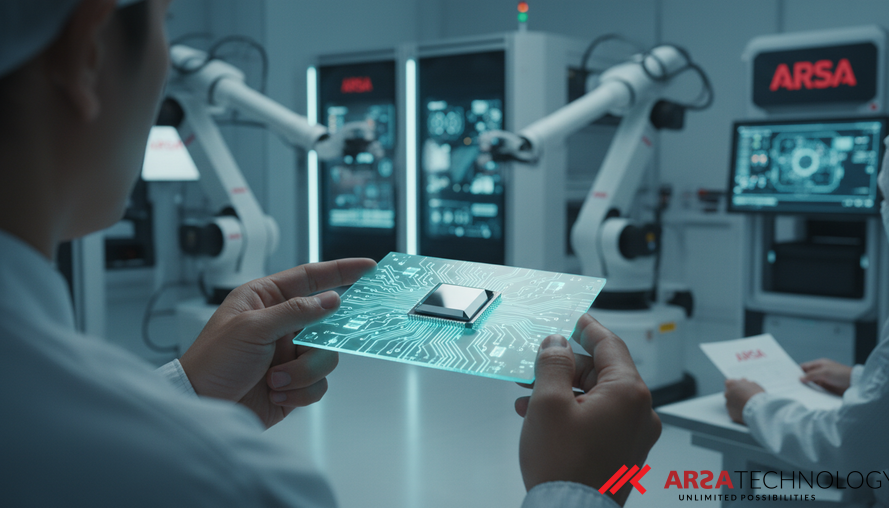
In an era defined by rapid technological advancement, the backbone of artificial intelligence and advanced computing lies squarely in semiconductor technology. As demand for specialized processing power escalates, major tech players are increasingly recognizing a strategic imperative: building their own custom chips. This shift, exemplified by recent announcements from industry leaders, underscores a move towards greater control over innovation, supply chain resilience, and optimized performance for mission-critical applications.
The Rising Demand for Specialized AI Hardware
The landscape of AI and robotics is evolving at an unprecedented pace, driving an insatiable demand for highly efficient and specialized processing units. Traditional general-purpose semiconductors, while versatile, often fall short of the unique requirements imposed by complex AI models and large-scale robotic operations. These applications demand immense computational power, often with specific architectural optimizations for tasks like neural network inference, real-time data processing, and machine learning acceleration. This growing gap between available commercial chips and specific enterprise needs is propelling leading technology companies to take direct control over their silicon supply, seeking to engineer hardware precisely tailored to their distinct operational contexts.
This trend is not merely about volume; it's about precision and efficiency. Custom silicon allows for the integration of unique accelerators, optimized memory hierarchies, and specialized instruction sets that can dramatically improve performance per watt and reduce latency for specific AI workloads. For companies pushing the boundaries of autonomous systems, advanced analytics, and immersive technologies, this level of hardware-software co-design becomes a critical differentiator.
Elon Musk's Bold Vision for Terafab Production
The strategic importance of proprietary chip manufacturing was recently highlighted by Elon Musk, who unveiled ambitious plans for a chip-building collaboration between his companies, Tesla and SpaceX. During an event in Austin, Texas, as reported by Bloomberg on March 22, 2026, Musk outlined his vision for a facility he termed "Terafab." This proposed advanced manufacturing plant, likely to be located near Tesla's Austin headquarters and gigafactory, aims to address a critical bottleneck: the slow pace at which semiconductor manufacturers are producing chips essential for his companies' advanced AI and robotics initiatives. According to the source, Musk emphatically stated, “We either build the Terafab or we don’t have the chips, and we need the chips, so we build the Terafab.”
The scale of this endeavor is considerable. Musk's stated goal is to produce chips capable of supporting an astounding 100 to 200 gigawatts of computing power annually for terrestrial applications, alongside a formidable terawatt for space-based operations. While a specific timeline for these plans was not provided, this announcement signifies a clear commitment to vertical integration in hardware development, echoing similar moves by other technology giants seeking to optimize their AI infrastructure. It also reflects a broader industry recognition that achieving unprecedented scale and performance in AI often requires custom silicon solutions.
Implications for AI and IoT Solutions
The movement towards custom chip manufacturing carries significant implications for the broader AI and Internet of Things (IoT) ecosystem. For enterprises, securing a reliable and optimized supply of semiconductors can mean the difference between leading innovation and lagging behind. Custom chips can provide:
- Performance Optimization: Tailored architectures accelerate specific AI algorithms, reducing processing times and increasing efficiency for demanding tasks like real-time video analytics or predictive maintenance.
- Energy Efficiency: Designing chips for precise workloads can drastically cut power consumption, a crucial factor for edge AI devices and large-scale data centers.
- Supply Chain Resilience: In-house production or dedicated foundry partnerships reduce reliance on a volatile global supply chain, mitigating risks of shortages and delays.
- Security & Data Privacy: Greater control over hardware design allows for the implementation of advanced security features at the silicon level, crucial for sensitive applications and ensuring data sovereignty, especially in on-premise deployments.
For companies developing advanced AI and IoT solutions, the ability to leverage such specialized hardware opens new possibilities. It allows for the deployment of more complex models at the edge, enabling real-time decision-making without constant cloud connectivity. This is particularly relevant for industrial IoT, smart cities, and defense applications where low latency and robust security are paramount. ARSA Technology, for instance, provides flexible deployment models including on-premise software and turnkey edge AI systems like the ARSA AI Box Series, which can integrate with and benefit from such purpose-built hardware, ensuring AI solutions operate optimally even in resource-constrained or air-gapped environments.
The Future of Edge AI and Deployment Flexibility
The quest for proprietary AI chips underscores a fundamental shift in how enterprises approach their digital transformation. While developing custom silicon may be an undertaking for only the largest tech giants, its implications ripple through the entire industry. It highlights the growing importance of edge computing, where AI processing occurs closer to the data source rather than solely in centralized cloud data centers. This paradigm minimizes latency, enhances privacy, and reduces bandwidth requirements, making AI solutions more responsive and resilient.
For the majority of enterprises, the focus remains on leveraging existing or commercially available infrastructure effectively, combined with powerful and flexible AI software. Companies like ARSA Technology excel in bridging this gap, offering comprehensive custom AI solutions that run on diverse hardware platforms. Whether it's deploying AI video analytics on existing CCTV networks or integrating advanced facial recognition into secure systems, the emphasis is on delivering practical, proven, and profitable AI that meets real-world operational demands, regardless of the underlying silicon provider. Our expertise, honed since 2018, lies in optimizing AI software for various deployment models, ensuring enterprises can achieve their objectives without needing to venture into semiconductor manufacturing themselves.
The strategic investments in custom AI chip manufacturing by companies like Tesla and SpaceX signal a future where hardware and software are increasingly co-designed for maximum performance and efficiency. For other enterprises, this means a continuous evolution in the capabilities of AI-powered solutions, offering more potent tools for enhancing security, optimizing operations, and driving new revenue streams.
**Source:** TechCrunch: Elon Musk unveils chip manufacturing plans for SpaceX and Tesla
To explore how ARSA Technology's AI and IoT solutions can transform your enterprise operations, we invite you to contact ARSA for a free consultation.