The Unseen Costs of AI: When Farmland Meets Hyperscale Data Centers
Explore the growing conflict between agricultural preservation and the demand for AI data centers, exemplified by a Kentucky farmer's $26M refusal. Learn about environmental impacts and the role of edge AI in sustainable development.

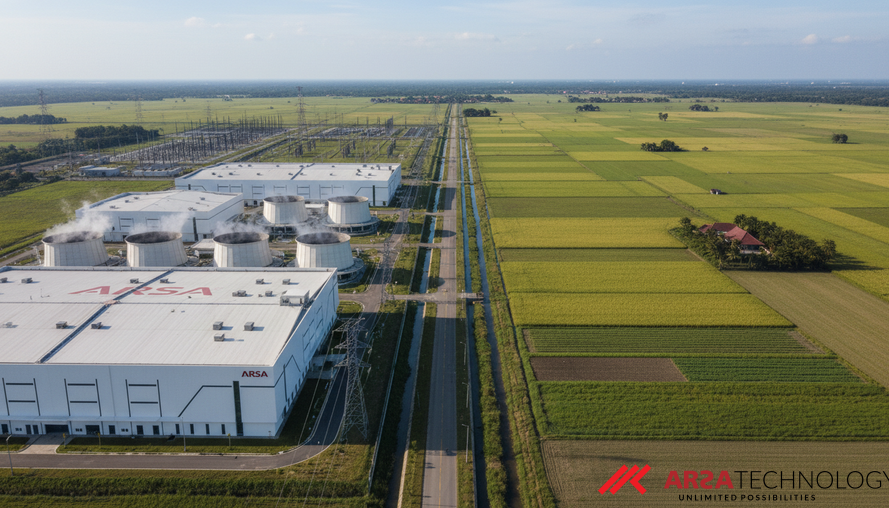
In a compelling real-world narrative that highlights the escalating tensions between technological advancement and environmental preservation, an 82-year-old Kentucky farmer, Ida Huddleston, recently garnered international attention for rejecting a substantial $26 million offer. This sum was proposed by an unnamed "major artificial intelligence company" intent on transforming part of her 1,200-acre ancestral farmland near Maysville into a hyperscale data center. Her firm refusal, originally reported by WKRC and highlighted by TechCrunch, underscores a critical global dialogue about the footprint of our digital future.
Huddleston's decision, rooted in deep concerns over land preservation, water scarcity, and potential environmental contamination, brings to light the often-overlooked implications of the rapidly expanding AI infrastructure. She eloquently dismissed the notion that such a development would bring genuine economic benefits to Mason County, labeling it a "scam" that disregards the fundamental value of agricultural land and natural resources. This incident serves as a poignant reminder that while AI promises innovation, its physical manifestation demands significant resources, leading to potential conflicts with local communities and ecosystems worldwide.
The Clash of Progress: Farmland vs. Data Centers
The story of Ida Huddleston is more than just a local anecdote; it's a microcosm of a global challenge. As AI technologies, from large language models to advanced computer vision systems, become increasingly sophisticated, their computational demands soar. This necessitates the construction of vast data centers – complex facilities designed to house thousands of servers, networking equipment, and cooling systems. These centers require immense tracts of land, reliable power grids, and, crucially, access to significant water supplies for cooling purposes.
The conflict arises when these industrial-scale facilities are planned for regions traditionally dedicated to agriculture or natural landscapes. Farmers like Huddleston view their land not just as property, but as a legacy, a source of food, and an integral part of their community's ecological balance. Her rejection of the $26 million offer illustrates a profound commitment to these values, prioritizing long-term environmental and community well-being over immediate financial gain. Her concerns about "disappearing lands" and "poison" near data centers reflect well-documented environmental issues associated with such developments, including increased strain on local water resources and potential groundwater contamination from byproducts or runoff.
The Unseen Environmental Footprint of Digital Infrastructure
The environmental impact of data centers is a growing concern for global enterprises and governments. These facilities are notoriously energy-intensive, consuming substantial amounts of electricity, often sourced from non-renewable fossil fuels, contributing to carbon emissions. Beyond energy, water consumption for cooling is staggering. A single large data center can use millions of liters of water daily, equivalent to the needs of a small town. This exacerbates water stress in already vulnerable regions, impacting agriculture, local ecosystems, and residential supply.
Furthermore, the sheer physical footprint required for these facilities can lead to habitat destruction and loss of valuable agricultural land. The transition of productive farmland into industrial zones permanently alters local economies and food security. While data centers are essential for modern digital operations, their unchecked proliferation in environmentally sensitive areas poses a significant risk. Companies like ARSA Technology, understanding these challenges, advocate for and develop solutions that mitigate environmental impact, emphasizing efficient, localized processing where appropriate.
AI's Growing Demand and Data Center Proliferation
The exponential growth of artificial intelligence applications is the primary driver behind the surge in data center construction. Training advanced AI models, performing real-time inference, and processing petabytes of data for tasks like predictive analytics, natural language processing, and computer vision all demand colossal computing power. This has led to an unprecedented demand for data center capacity globally.
However, simply building more centralized hyperscale data centers might not always be the most sustainable or community-friendly approach. While efficient for some workloads, it creates concentrated resource demands. This is where distributed computing, particularly edge AI, offers a compelling alternative. Edge AI solutions process data closer to its source, reducing latency, enhancing data privacy, and often lowering the need for vast, centralized infrastructure. For instance, technologies like the ARSA AI Box Series are designed for on-premise processing, transforming existing CCTV into real-time AI intelligence locally without cloud dependency or massive land acquisition. This approach can be particularly beneficial for industrial, retail, or smart city applications where real-time insights and data sovereignty are paramount.
Rethinking Deployment: The Promise of Edge AI
The resistance from communities like Maysville highlights the urgent need for more thoughtful and sustainable AI infrastructure deployment strategies. Edge AI, where processing occurs at or near the data source rather than in a distant central data center, presents a powerful solution. By performing AI inference directly on devices or local servers, organizations can significantly reduce data transmission needs, minimize latency, and maintain greater control over data privacy and security. This distributed model alleviates some of the pressures associated with hyperscale data centers, such as massive land acquisition and water consumption.
For example, implementing AI Video Analytics at the edge for tasks like industrial safety monitoring or traffic management allows for immediate detection and response without sending all video feeds to a remote data center. This not only optimizes performance but also adheres to stricter data sovereignty and compliance requirements, which are increasingly important for governments and enterprises. ARSA Technology has been experienced since 2018 in developing and deploying such practical AI solutions, demonstrating that high-performance AI doesn't always necessitate environmental compromise.
Balancing Innovation with Sustainable Development
The incident in Kentucky serves as a powerful reminder that technological progress, however promising, must be balanced with environmental stewardship and community considerations. The "major artificial intelligence company" in question, despite Huddleston's rejection, reportedly proceeded to file a zoning request to rezone over 2,000 acres adjacent to her land, indicating the persistent drive for expansion. This ongoing situation underscores the necessity for open dialogue, transparent planning, and innovative solutions that address both the demands of AI and the imperative of sustainable development.
Enterprises seeking to leverage AI for operational efficiency, security, or new revenue streams must consider not only the technical capabilities but also the ethical and environmental implications of their infrastructure choices. Partnering with solution providers who prioritize flexible deployment models—cloud, on-premise software, or turnkey edge systems—can ensure full control over data, privacy, and performance while minimizing environmental impact. Such strategic decisions are crucial for building trust with communities and ensuring the long-term viability of AI development.
Transforming complex operational challenges into intelligent solutions requires a partner that understands both the cutting-edge of AI and the practical realities of deployment. To explore how ARSA Technology’s AI and IoT solutions can meet your enterprise needs responsibly, we invite you to contact ARSA for a free consultation.
**Source:** TechCrunch. (2026, March 24). Kentucky woman rejects $26M offer to turn her farm into a data center. Retrieved from https://techcrunch.com/2026/03/24/kentucky-woman-rejects-26-million-offer-to-turn-her-farm-into-a-data-center/