Uber, Pony.ai, and Verne Set Sights on Europe's First Commercial Robotaxi Service
Uber partners with Pony.ai and Verne to launch Europe's inaugural commercial robotaxi service, starting with testing in Zagreb, Croatia, aiming for thousands of autonomous vehicles across the continent.

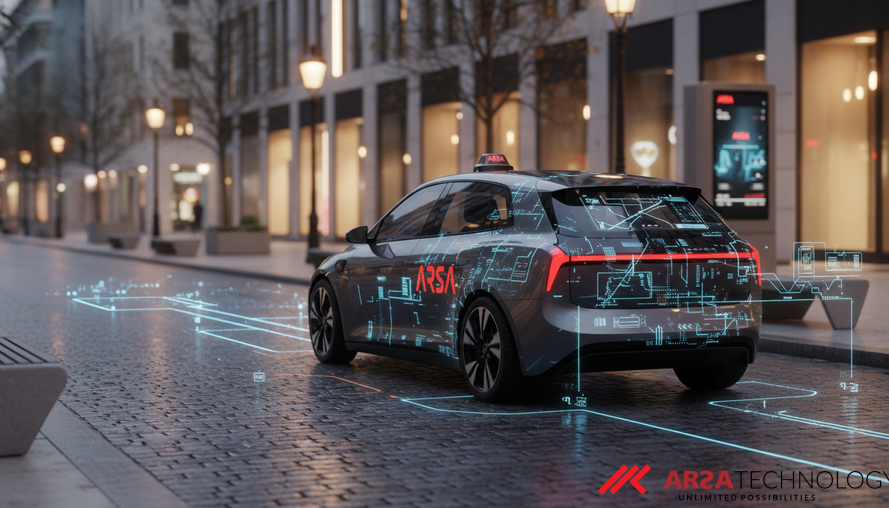
The Dawn of Robotaxis in Europe: Uber's Strategic Alliance
The landscape of urban transportation is on the cusp of a significant transformation, with autonomous ride-hailing services poised to become a commercial reality in Europe. Uber, a global leader in ride-hailing, has announced a landmark collaboration with China's autonomous driving technology firm Pony.ai and Croatia's Verne, a spin-off from supercar manufacturer Rimac. This alliance aims to launch what is being heralded as Europe's first commercially available robotaxi service. Initial testing is already underway in Zagreb, Croatia, where Verne is headquartered, with plans to integrate these self-driving vehicles into Uber's extensive network for customer use in the near future. This strategic move signals a concerted effort to scale autonomous fleet operations across European markets, ultimately targeting a deployment of "thousands of robotaxis" within the next few years.
This initiative is not merely about technological advancement; it represents a significant strategic pivot for Uber. The company has been actively forging partnerships with numerous autonomous vehicle developers globally, a clear indication of its intent to future-proof its business against the potential disruption posed by robotaxis. By integrating autonomous technology into its platform, Uber seeks to demonstrate to investors its ability to thrive in an era where self-driving cars may redefine the economics of ride-hailing. The shift towards autonomous fleets promises benefits such as reduced operational costs, enhanced safety protocols, and potentially new service models, which are critical for long-term growth and market leadership in a rapidly evolving industry.
Navigating the Autonomous Revolution: Uber's Playbook
Uber's decision to partner with Pony.ai and Verne is a calculated step in a competitive and highly regulated autonomous vehicle landscape. Pony.ai brings a wealth of experience, currently operating autonomous vehicles across several Chinese cities, demonstrating proven capabilities in real-world urban environments. Verne, originating from the innovative Rimac Group, contributes valuable expertise in fleet management and possibly custom vehicle design, given Mate Rimac's previous showcase of 60 prototype autonomous vehicles. The division of labor in this partnership is clear: Uber provides the essential ride-hail network and a vast customer base, Verne assumes responsibility for managing the physical fleet, and Pony.ai delivers the sophisticated autonomous driving technology. This multi-faceted approach aims to leverage each partner's strengths to accelerate deployment and ensure operational efficiency.
The European market presents both immense opportunities and unique challenges for robotaxi services. While the promise of reduced traffic congestion, lower emissions, and increased accessibility is compelling, navigating diverse regulatory frameworks, public acceptance, and complex urban infrastructures will be critical. The competition is also heating up, as other major players are eyeing the European market. Waymo, a leader in autonomous driving, has publicly stated its intention to launch a robotaxi service in London by 2026. Similarly, Uber itself is engaged in other pilot programs, testing self-driving cars with Momenta in Germany, while Volkswagen's subsidiary Moia also plans to introduce an autonomous ridesharing service in Germany. This intensifying competition underscores the urgency and strategic importance of Uber's partnership to establish an early foothold in the European robotaxi market, as reported by The Verge (Uber aims to launch Europe’s first robotaxi service with Pony AI and Verne).
Roles and Technologies Powering the Future Fleet
The technological backbone of this venture relies heavily on advanced AI and robust hardware. Currently, the companies are validating Pony.ai's 7th generation technology stack, integrated into their Arcfox Alpha T5 Robotaxi. This vehicle, jointly developed and manufactured with the state-owned Beijing Automotive Group Co (BAIC), represents a culmination of cutting-edge AI for perception, decision-making, and control. Such autonomous systems require real-time processing of massive amounts of sensor data—from LiDAR, radar, cameras, and ultrasonic sensors—to accurately understand the environment, predict behaviors of other road users, and navigate safely. The sophistication of this technology is paramount for achieving the reliability and safety standards necessary for commercial deployment in complex urban settings.
The journey from validation to widespread commercial operation involves more than just self-driving capabilities. It demands a sophisticated ecosystem for fleet management, monitoring, and maintenance. This includes systems for dispatching, dynamic routing, remote diagnostics, and ensuring the health and availability of hundreds, if not thousands, of autonomous vehicles. For enterprises managing such complex operations, advanced solutions like AI Video Analytics become indispensable for monitoring vehicle performance, identifying potential issues proactively, and ensuring adherence to safety protocols. Furthermore, the capacity to remotely update software, manage charging schedules, and respond to incidents in real-time is crucial for operational continuity and scalability.
The Edge of Autonomy: Deployment and Operational Realities
The deployment model for robotaxis often leans heavily on edge computing to ensure low latency and data privacy. Processing video streams and sensor data locally on the vehicle or at nearby edge infrastructure is critical for immediate decision-making, which is non-negotiable for safety-critical applications like autonomous driving. This "on-premise" approach for core AI processing also addresses concerns around data sovereignty and regulatory compliance, particularly important in European markets with stringent data protection laws such as GDPR. ARSA Technology, for instance, offers AI Box Series, pre-configured edge AI systems that process video streams locally, delivering instant insights without cloud dependency. This demonstrates the industry trend towards robust, localized AI processing for demanding environments.
Operationalizing a robotaxi service at scale involves intricate logistical and technological considerations. Beyond the vehicle's autonomous capabilities, effective fleet management requires dynamic resource allocation, predictive maintenance, and seamless integration with city infrastructure. This means having the ability to monitor the status of each vehicle, predict maintenance needs based on operational data, and optimize deployment based on demand patterns. Privacy-by-design principles must be embedded into every layer of the system, from how sensor data is collected and processed to how passenger information is handled. Ensuring secure, reliable operation without compromising user data or network integrity is a foundational requirement, especially as these services expand across diverse urban environments.
Beyond the First Ride: Business Implications for Enterprises
The successful launch and scaling of robotaxi services like Uber's proposed venture will have profound business implications across various sectors. For urban planners, it could lead to reimagined city layouts, reduced parking demand, and optimized public transport networks. For logistics and delivery companies, it offers the potential for significantly lower operational costs and increased efficiency. Moreover, for other enterprises, the underlying AI and IoT technologies powering these robotaxis present opportunities to develop custom solutions tailored to their specific operational needs. From custom AI solutions for internal fleet optimization to advanced analytics for behavioral monitoring, the capabilities honed in the robotaxi sector are broadly applicable.
Enterprises seeking to leverage similar intelligent technologies for their operations must consider comprehensive solutions that offer flexibility, scalability, and stringent data control. Whether it's enhancing security, optimizing workflow, or gaining actionable insights from operational data, the deployment of advanced AI and IoT systems can drive significant ROI. The future of autonomous services relies not only on breakthrough AI but also on the practical deployment strategies that ensure reliability, security, and compliance in real-world conditions.
To explore how AI and IoT solutions can transform your enterprise operations, we invite you to contact ARSA for a free consultation.