Unlocking Realistic AI Interaction: The Power of Semantically Grounded 3D Digital Twins
Discover KitchenTwin's innovative framework for creating metrically accurate, semantically rich 3D digital twins. Essential for advanced embodied AI, robotics, and smart environment development.

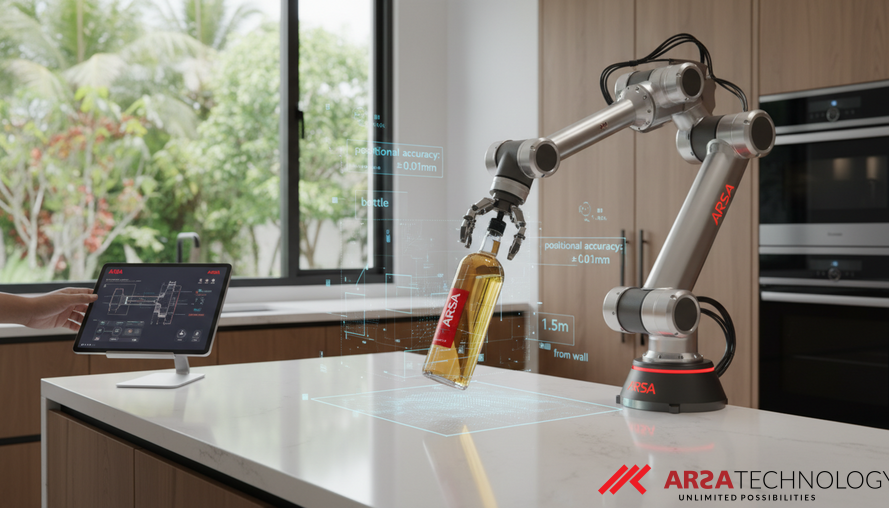
In the rapidly evolving landscape of artificial intelligence, a critical challenge for developing truly intelligent systems, particularly those designed to interact with the physical world, lies in the accuracy and realism of their training environments. These systems, often referred to as "embodied AI" – think autonomous robots navigating complex spaces or performing delicate manipulations – rely heavily on digital representations of our world. However, traditional methods for creating these 3D virtual environments often fall short, struggling to reconcile the abstract digital with the concrete physical.
A groundbreaking academic paper, "KitchenTwin: Semantically and Geometrically Grounded 3D Kitchen Digital Twins" by Quanyun Wu, Kyle Gao, Daniel Long, David A. Clausi, Jonathan Li, and Yuhao Chen from the University of Waterloo, tackles this fundamental problem head-on. The research proposes a novel framework designed to build highly accurate, real-world scale 3D digital twins that are not only geometrically precise but also semantically meaningful. This is a significant step towards enabling AI to move beyond mere observation to truly informed, physically plausible interaction. The full paper can be found at arXiv:2603.24684.
The Foundational Challenge: Bridging the Real and Virtual
For embodied AI to operate effectively, it needs virtual environments that faithfully mirror real-world conditions. This means objects must be represented as distinct, manipulable entities with accurate real-world dimensions – known as metric geometry – and a clear understanding of what they are – semantic grounding. Imagine a robot tasked with picking up a bottle from a kitchen counter; it needs to know the bottle's actual size, its precise location relative to the counter, and that it is a bottle, not just a random collection of pixels or merged geometry.
Current 3D reconstruction techniques, especially advanced AI models that quickly generate global 3D scenes from videos, often produce "dimensionless" representations. This means they capture shapes and structures but lose the real-world scale. Attempting to combine these global, unscaled scenes with accurately reconstructed individual objects leads to chaos: scale ambiguities, inconsistent coordinate systems, and physically impossible overlaps. Objects might appear too big or too small, or clip through surfaces, severely limiting the usefulness of these digital twins for practical applications like autonomous navigation, object manipulation, or even virtual training.
KitchenTwin's Innovative Approach to Digital Twin Construction
To overcome these significant hurdles, the KitchenTwin framework introduces a sophisticated three-stream fusion process, integrating various AI and geometric techniques to create physically plausible digital twins.
The first stream focuses on Global Scene Reconstruction. It utilizes advanced AI models to generate a foundational 3D point cloud of the environment. Crucially, the KitchenTwin framework then introduces a Vision-Language Model (VLM)-guided geometric anchor mechanism. A VLM is a type of AI that can understand both visual information (images) and language (text). By recognizing common objects within the scene and leveraging their known real-world dimensions, the VLM module helps resolve the inherent scale ambiguity, transforming the dimensionless point cloud into a metrically accurate representation. This step ensures the digital twin now corresponds to physical real-world measurements.
The second stream, Object Grounding and Mesh Generation, is dedicated to precisely identifying and reconstructing individual objects within the scene. Rather than simply capturing surfaces as a fused whole, this stream employs an open-vocabulary tracking-and-selection mechanism. This allows the system to track objects across multiple camera views, select optimal viewpoints that minimize obstructions, and then reconstruct each object as a high-fidelity, structurally isolated 3D mesh. This ensures that objects like bottles or appliances are independent entities, not merged into the background. ARSA Technology implements similar object detection and tracking capabilities through its AI Video Analytics solutions, which are crucial for such precise object-centric understanding.
Finally, the Geometric Grounding stream addresses the critical task of seamlessly integrating these isolated, scaled object meshes into the larger, scaled scene. This is a complex registration pipeline that explicitly enforces physical plausibility. It incorporates gravity-aligned vertical estimation, ensuring objects sit upright as they would in the real world. It also leverages Manhattan-world structural constraints, a common assumption in indoor environments that most surfaces (like walls and floors) are orthogonal, helping objects align correctly. Additionally, a collision-free local refinement process ensures no objects penetrate or overlap unphysically, resulting in a coherent, stable 3D digital twin suitable for robust interaction. For enterprises requiring precise, real-time processing at the edge, solutions like the ARSA AI Box Series could be deployed to handle such computationally intensive tasks directly on-site.
Key Innovations for Real-World Impact
The core innovations of the KitchenTwin framework lie in its ability to bridge disparate AI architectures and overcome persistent problems in 3D digital twin generation:
- Metric Scale Recovery: The VLM-guided physical anchor mechanism is a significant breakthrough. By leveraging the semantic understanding of objects (e.g., knowing the typical size of a refrigerator or a coffee cup), the system can deduce the real-world scale of an entire scene, a capability often missing in direct 3D generative models. This is vital for any robotic system that needs to interact with objects of specific sizes.
- Geometry-Aware Registration: The cascade registration pipeline, with its emphasis on world-vertical alignment and collision resolution, ensures that the digital twin is not just visually appealing but also physically plausible. This is crucial for simulation accuracy, allowing embodied AI agents to learn and practice complex manipulation tasks without encountering unrealistic geometric anomalies.
- Object-Centric Representation: By representing individual objects as complete, manipulable meshes, the framework provides a foundation for advanced object-centric semantic reasoning. This means an AI can not only "see" a bottle but also understand its boundaries, weight (if simulated), and potential for interaction, which is a major leap from simply detecting its presence. ARSA Technology, with its expertise since 2018, often provides custom AI solutions tailored to such intricate object recognition and interaction requirements across various industries.
Practical Applications in the Age of Embodied AI
The implications of such a robust digital twin framework are vast, particularly for industries embracing embodied AI and intelligent automation:
- Robotics Training and Simulation: Robots can be trained in virtual environments that accurately reflect real-world kitchens, factories, or warehouses. This allows for safe, repeatable, and cost-effective testing of autonomous navigation, object grasping, assembly, and delivery tasks.
- Smart Environments: For smart cities and buildings, accurate digital twins can enhance predictive analytics, optimize resource management, and improve security by providing a precise context for sensor data and AI interpretations.
- Manufacturing and Logistics: Simulating production lines or warehouse layouts with metrically accurate digital twins can help optimize workflows, identify bottlenecks, and develop automated solutions with high precision.
- Healthcare: Digital twins of clinical environments could facilitate training for medical robots or help design more efficient hospital layouts, ensuring equipment and personnel can move and interact smoothly.
The KitchenTwin Dataset: Fueling Future Research
To further advance this field, the researchers have also released KitchenTwin, an open-source digital twin dataset. This dataset specifically captures a realistic North American kitchen environment, providing metrically scaled scenes with rich semantic and geometric annotations. Unlike other large-scale datasets, KitchenTwin includes detailed multi-view camera trajectories, precise semantic cataloging of items, and exact ground-truth scale verification through physical measurements. This rich resource provides RGB video sequences, 2D object masks, 3D point clouds, and explicitly registered 3D object meshes with per-object poses, offering an invaluable tool for researchers and developers working on the next generation of embodied AI.
The development of such highly accurate and semantically rich digital twins marks a pivotal moment for artificial intelligence. As AI systems become more sophisticated and integrated into our physical world, the ability to train them in environments that are both geometrically precise and meaningfully understood will be paramount.
Ready to explore how advanced AI and IoT solutions can transform your operations with precise digital insights?
We invite you to contact ARSA for a free consultation.