Unlocking Smarter 3D Vision: How Geometric AI Biases Enhance Scene Understanding
Explore GIBLy, a lightweight AI layer that dramatically improves 3D semantic segmentation by embedding geometric priors, making AI more accurate and efficient for real-world applications.

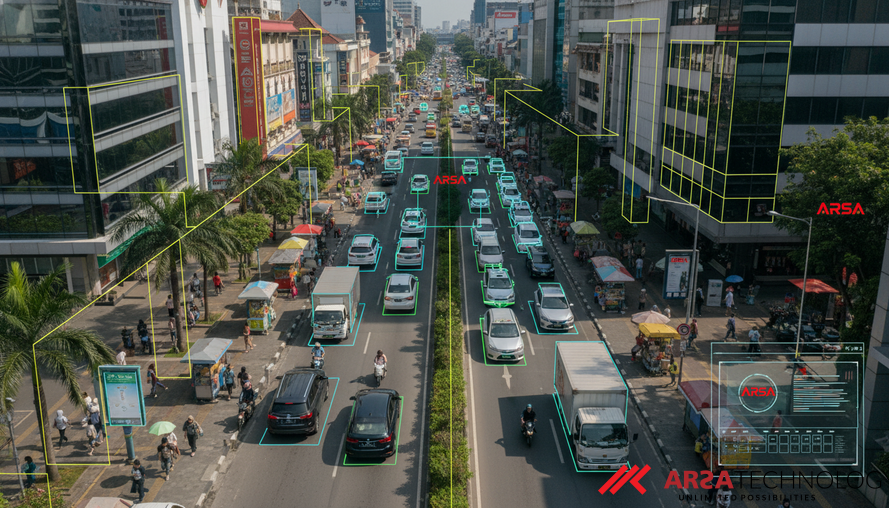
In the rapidly evolving landscape of artificial intelligence, particularly within the domain of 3D scene understanding, the quest for more efficient and accurate models is paramount. Applications ranging from autonomous driving and augmented reality to advanced robotics rely heavily on AI's ability to interpret complex 3D environments. Traditionally, deep learning models tackling these challenges have depended on vast datasets and computationally intensive training to implicitly grasp the fundamental geometric structures inherent in 3D data. This reliance often leads to hefty models, increased training costs, and potential limitations in how well these systems generalize to new, unseen scenarios.
However, a groundbreaking advancement introduces a new approach: GIBLy (Geometric Inductive Bias Layer). This innovative, lightweight, and architecture-agnostic layer directly integrates learnable geometric priors into 3D segmentation pipelines. By explicitly embedding an understanding of basic shapes—much like giving an AI a head start on what a flat surface or a cylinder looks like—GIBLy significantly boosts segmentation performance across various deep learning architectures. Its power lies in providing human-interpretable features with minimal computational overhead, marking a significant leap toward more practical and deployable AI solutions for complex 3D environments. The research paper, "GIBLy: Improving 3D Semantic Segmentation through an Architecture-Agnostic Lightweight Geometric Inductive Bias Layer," highlights this crucial innovation.
The Challenge of 3D Scene Understanding for AI
Unlike the organized, grid-like structure of 2D images, 3D data—often in the form of "point clouds"—presents a unique challenge. A point cloud is essentially a collection of data points in 3D space, representing the external surface of an object or environment. These points are scattered with varying density, lacking the uniform structure that traditional image processing techniques leverage. Consequently, standard convolutional neural networks (CNNs), which excel in 2D image analysis, cannot be directly applied to 3D point clouds without significant adaptation.
Current state-of-the-art methods for 3D scene understanding employ diverse strategies for feature extraction. Early innovators like PointNet used shared multilayer perceptrons (MLPs) to process raw point clouds directly. Convolution-based methods adapted by either converting point clouds into volumetric grids or by designing specialized convolutions that operate on irregular point sets. More recently, transformer-based architectures, leveraging attention mechanisms, have pushed the boundaries of point-wise feature extraction and overall performance. Despite their advancements, these methods largely depend on the network implicitly learning geometric relationships from sheer volume of data, rather than incorporating explicit geometric guidance. This implicit learning demands substantial computational resources, memory, and complex architectures to discover geometric patterns that could be intuitively "built-in," leading to inefficiencies and higher operational costs.
GIBLy: Injecting Geometric Intelligence
The core innovation of GIBLy lies in its ability to inject "geometric inductive biases" into deep learning models. An inductive bias is a set of assumptions that a learning algorithm uses to predict outputs of given inputs that it has not encountered. In simpler terms, it's like providing a child with a basic understanding of shapes (e.g., "a table has a flat top, a chair has legs that are somewhat cylindrical") before asking them to identify furniture. For 2D image processing, CNNs inherently benefit from inductive biases like locality and translation equivariance, which are assumptions about how visual patterns behave. In 3D, such universal geometric biases have been largely absent, especially for MLP-based and vanilla transformer architectures.
GIBLy addresses this gap by offering a lightweight, interpretable, and "architecture-agnostic" layer. "Architecture-agnostic" means it can be seamlessly integrated into almost any existing 3D deep learning model—whether it's based on MLPs, convolutions, or transformers—without requiring fundamental changes to the underlying architecture. This flexibility is critical for rapid adoption and enhancing current systems without a complete overhaul. The layer introduces "learnable parametric geometric priors," allowing the AI to essentially learn and adapt simple geometric shapes (like planes, cylinders, or spheres) that best describe local regions of the 3D scene. This explicit geometric understanding aids the network in efficiently extracting meaningful features, leading to improved segmentation performance.
Tangible Benefits and Performance Gains
The impact of GIBLy on 3D semantic segmentation is remarkable. Experiments have consistently demonstrated significant performance improvements across multiple benchmarks and backbone architectures. For instance, the GIBLy layer has been shown to boost mean Intersection over Union (mIoU) by up to +11.5% on the TS40K benchmark when integrated with Point-TransformerV3, a leading architecture in 3D scene understanding. This substantial gain in accuracy comes with a surprisingly minimal increase in computational resources, adding only about 58,000 trainable parameters to the model.
Such efficiency is a game-changer for enterprises. Higher accuracy means more reliable decision-making for AI systems, while reduced computational overhead translates directly into lower energy consumption, faster processing, and potentially less expensive hardware requirements. Moreover, by explicitly encoding geometric structure, GIBLy can help models generalize better from less training data, reducing the substantial costs associated with data acquisition and annotation. This lightweight add-on layer offers a practical pathway to more robust and cost-effective 3D scene understanding, making advanced AI more accessible and performant in demanding real-world scenarios.
Practical Applications Across Industries
The enhanced capabilities offered by technologies like GIBLy have profound implications for various industries relying on precise 3D data interpretation:
- Autonomous Driving: Vehicles can achieve more accurate and robust perception of their surroundings, better distinguishing between pedestrians, cyclists, other vehicles, and road infrastructure. This leads to safer navigation and more informed decision-making. ARSA Technology develops intelligent solutions like Smart Parking System, which benefits from such precise vehicle analytics.
- Robotics: Robots can perform tasks with greater precision in dynamic environments, whether it's manufacturing, logistics, or service robotics. Improved object recognition and scene segmentation enable safer human-robot collaboration and more complex manipulation tasks.
- Smart Cities: Urban planning and management can be optimized through better analysis of traffic flow, crowd density, and infrastructure integrity. Real-time monitoring enhanced by geometric understanding helps city operators make data-driven decisions. For instance, advanced AI Video Analytics can transform traditional CCTV into intelligent monitoring systems.
- Industrial Automation & Safety: In factories and construction sites, AI systems can monitor Personal Protective Equipment (PPE) compliance, detect restricted area intrusions, and identify potential safety hazards in real-time. A solution such as AI BOX - Basic Safety Guard leverages precise 3D understanding to enhance workplace safety.
- Augmented Reality (AR): AR applications can achieve more seamless and realistic integration of virtual objects into real-world environments by accurately understanding the geometry of surfaces and objects, leading to more immersive user experiences.
The ARSA Approach to Deploying Advanced AI
At ARSA Technology, our mission is to bridge advanced AI research with operational reality. While GIBLy represents a significant academic advancement, its principles align perfectly with our commitment to delivering practical, production-ready AI and IoT solutions. We recognize the value of injecting explicit geometric knowledge to create AI systems that are not only highly accurate but also efficient and robust enough for enterprise-grade deployments.
Our expertise, honed since 2018, lies in engineering converged AI, IoT, and web ecosystems that solve mission-critical challenges. By focusing on full-stack vertical integration, proprietary technology, and a consultative engineering approach, we ensure that our solutions—whether cloud-based, on-premise, or edge-deployed—provide full control over data, privacy, and performance. This mirrors the flexible and efficiency-driven approach that GIBLy champions.
For organizations demanding precision, scalability, and measurable ROI from their AI initiatives, the ability to deploy AI that intrinsically understands the geometry of its environment is invaluable. It reduces reliance on endless data, minimizes computational footprints, and accelerates the path to tangible business outcomes.
Ready to explore how advanced AI and IoT solutions can transform your operations with enhanced 3D scene understanding and efficiency? We invite you to explore ARSA's range of solutions and request a free consultation with our expert team to engineer your competitive advantage.