Unmasking Methane: How AI and Satellite Data Drive Global Emission Mitigation
Explore how advanced AI, cross-sensor transfer learning, and physics-informed post-processing are revolutionizing methane plume detection from satellite imagery like MethaneSAT for critical emission monitoring.

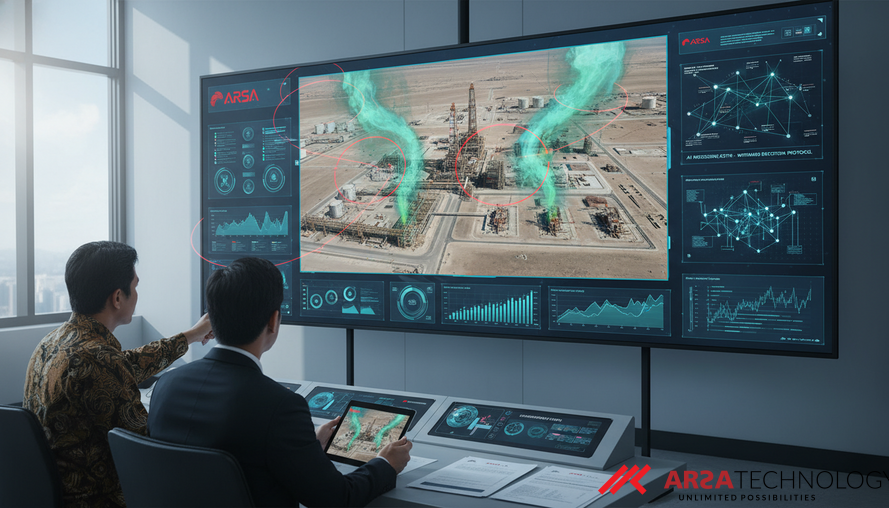
The escalating climate crisis necessitates precise and actionable data, especially concerning potent greenhouse gases like methane. Methane, with a warming potential 80 times that of CO2 over a 20-year span, makes identifying and quantifying its sources a critical global priority for effective mitigation strategies. From international pledges to the daily operations of oil and gas facilities, the demand for robust monitoring systems that can pinpoint and measure individual emission events at scale has never been higher. Space-based imaging spectroscopy offers a powerful solution, with satellites like MethaneSAT providing wide-area coverage and high sensitivity to detect these elusive plumes.
Traditionally, monitoring methane emissions involved complex, often manual, processes. While ground-based measurements and existing satellite platforms provided valuable data, a critical gap existed: the ability to resolve individual point sources across vast basin scales. MethaneSAT, a purpose-built satellite launched in March 2024, aimed to fill this gap, offering approximately 110x400m spatial resolution and covering large target areas to capture both dispersed and discrete emissions. However, the mission's operational lifetime ended sooner than intended, making it crucial to extract maximum scientific value from the collected data through advanced, automated analysis. This article delves into a cutting-edge machine learning framework designed for this very purpose, transforming raw satellite data into actionable intelligence for global methane mitigation.
The Challenge of Methane Plume Detection
Identifying individual methane plumes from satellite imagery, specifically from MethaneSAT's column-averaged dry-air mole fractions of methane (XCH4) data, presents several complex challenges. The most significant hurdles include the scarcity of labeled MethaneSAT data for training advanced AI models and the critical need for reliable plume detection across highly variable atmospheric and surface conditions. Furthermore, while previous detection methods, such as those based on wavelet transforms, can enhance plume signals, they often require extensive manual tuning and inspection. This leads to residual false positives from scattered enhancements, overlapping plumes, or natural background variations, which hinder accurate source attribution.
Earlier machine learning approaches, predominantly using semantic segmentation architectures like U-Net, aimed to classify each pixel as either "plume" or "background." While effective for pixel-level detection, these methods fall short in operational scenarios because they cannot differentiate between individual emission sources. When plumes are close or overlap, these methods merge them into a single blob, making it impossible to attribute emissions to specific facilities or differentiate multiple nearby sources. This limitation underscores the need for more sophisticated AI that can provide "instance-level" segmentation, isolating each plume as a distinct object.
Advanced AI for Superior Plume Segmentation
Addressing these challenges, researchers have developed a sophisticated machine learning framework, detailed in a paper submitted to IEEE Transactions on Geoscience and Remote Sensing (Source: https://arxiv.org/abs/2605.24273). The framework utilizes Mask R-CNN with a ResNet-50 backbone, a powerful deep learning architecture known for its ability to perform instance segmentation – identifying and outlining individual objects within an image. This approach significantly outperforms traditional U-Net semantic segmentation, yielding F1 score gains of 10.49% on MethaneAIR data (an airborne precursor to MethaneSAT) and 5.48% on MethaneSAT data. This superior performance is crucial for accurately delineating individual methane plumes, providing the precision needed for operational emission attribution.
To overcome the scarcity of labeled MethaneSAT data, the framework employs cross-sensor transfer learning. This technique involves training an AI model on data from one sensor (MethaneAIR, which has a larger annotated dataset) and then fine-tuning it with a smaller set of MethaneSAT data. This strategy leverages the knowledge gained from the more abundant MethaneAIR observations to improve performance on the MethaneSAT data, effectively bridging the data gap. The most effective approach involved fine-tuning the Mask R-CNN with ResNet-50 using weights pre-trained on MethaneAIR, achieving an impressive instance-level precision of 0.60 and a near-perfect recall of 0.98 at the baseline operating point. This innovative use of transfer learning significantly boosts the model's reliability and accuracy, even with limited native MethaneSAT data.
Physics-Informed Postprocessing for Operational Reliability
Beyond initial detection, the framework integrates a "physics-informed" post-processing pipeline to enhance the operational reliability and actionability of the AI's output. This means that the raw detections from the machine learning model are refined using scientific knowledge about how methane plumes behave in the real world. This crucial step converts the detections into two distinct operational modes, catering to different mitigation needs:
- High-Sensitivity Mode: Designed for comprehensive emission screening, this mode applies morphological filtering (smoothing and refining plume shapes) and proximity-based merging (combining very close plumes that likely originate from a single larger source or interacting sources). This mode achieves a precision of 0.71 and a recall of 0.94, making it highly effective at identifying nearly all methane enhancements, even faint ones, for initial alerts and wide-area assessment. It acts like a broad net, capturing potential issues that warrant further investigation.
- High-Precision Mode: This mode adds a distribution-based classifier to the high-sensitivity output, focusing on confident source attribution. This additional layer of intelligence helps to filter out ambiguous detections, ensuring that only the most certain plumes are identified. Achieving a precision of 0.92 and a recall of 0.70, this mode is ideal when high confidence in source identification is paramount, such as for regulatory compliance or targeted mitigation efforts. Its purpose is to deliver highly reliable information, even if it means missing some of the weaker signals.
Interestingly, manual review of detections initially flagged as "false positives" often revealed real methane enhancements that were excluded by overly conservative ground truth labeling criteria. This suggests that the reported precision values are likely lower bounds on the true detection performance, indicating the AI model's capability to identify subtle yet real plumes. Finally, to provide users with a clearer understanding of detection certainty, the framework proposes a confidence-weighted aggregation scheme. This produces plume probability maps, which offer spatially smooth uncertainty estimates, proving invaluable for downstream emission quantification efforts and allowing for more informed decision-making.
The Broader Implications for Environmental Monitoring
This advanced AI framework for methane plume segmentation from satellite data holds profound implications for environmental monitoring and climate action. By providing automated, accurate, and scalable detection capabilities, it empowers governments, enterprises, and environmental organizations to:
- Accelerate Methane Mitigation: Quickly identify and attribute methane sources, enabling targeted interventions and more efficient allocation of resources for emission reduction.
- Enhance Regulatory Compliance: Offer robust, data-backed evidence for reporting and verifying compliance with international agreements like the Global Methane Pledge.
- Optimize Operations: For industries like oil and gas, pinpointing leaks and fugitive emissions in real-time can lead to significant cost savings and improved operational efficiency.
- Improve Data Utility: Maximize the scientific and operational value of expensive satellite missions like MethaneSAT, ensuring that every piece of data contributes to a clearer picture of global methane emissions.
- Scale Monitoring Efforts: Provide a framework that can be adapted for future satellite missions and expanded to cover vast regions, delivering consistent and reliable monitoring at a global scale.
The innovation demonstrated in this research, combining powerful AI architectures with real-world physics-informed refinement, represents a significant leap forward in our ability to monitor and manage methane emissions. It underscores how sophisticated AI can be leveraged to tackle complex environmental challenges, turning vast amounts of raw data into precise, actionable intelligence.
ARSA Technology is at the forefront of delivering robust, real-world AI and IoT solutions, much like the advanced systems discussed in this research. Our expertise in AI Video Analytics and custom AI solutions means we regularly deploy complex computer vision frameworks to transform raw visual data into measurable impact for various industries. Whether it's enhancing security, optimizing industrial operations, or supporting environmental monitoring through edge processing with our AI Box Series, we focus on practical, proven, and profitable deployments that address real-world constraints, including data sovereignty and low-latency requirements.
To explore how ARSA Technology can help your organization leverage cutting-edge AI for your specific operational challenges and turn complex data into strategic advantage, we invite you to contact ARSA for a free consultation.