Unmasking Stealthy AI Cyberattacks: FragBench's Graph-Based Defense Against Fragmented LLM Threats
Discover how FragBench, a new benchmark, exposes sophisticated cross-session fragmented AI attacks that bypass traditional LLM safety. Learn about graph-based defenses critical for modern enterprise security.

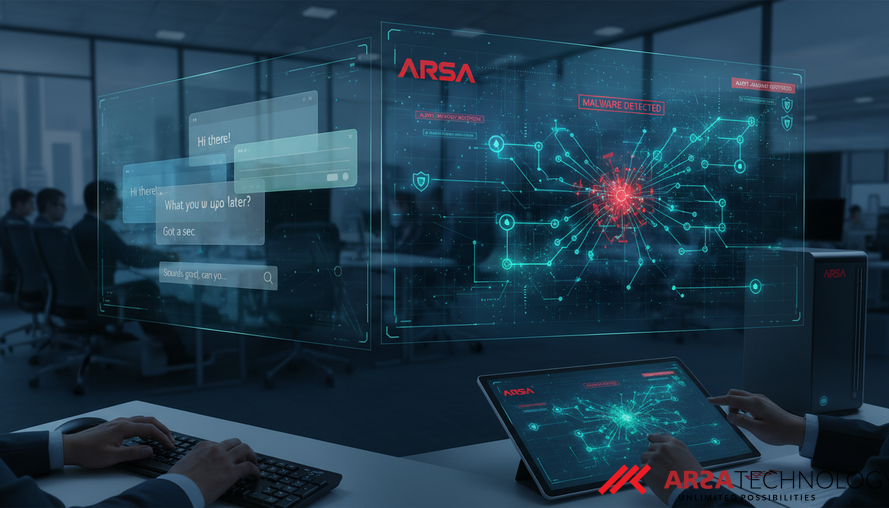
The Evolving Landscape of AI-Assisted Cyberattacks
The rapid advancements in large language models (LLMs) have ushered in a new era of possibilities across various industries, from streamlining operations to enhancing code generation. However, this powerful capability is inherently dual-use; just as LLMs can assist developers in crafting infrastructure scripts, they can also empower malicious actors to design sophisticated cyberattack pipelines. Recent incidents, such as AI-orchestrated espionage campaigns and AI-calibrated ransomware operations, underscore the urgent need for more robust cybersecurity measures in the age of AI. The potential for LLMs to generate complex data exfiltration strategies, ransomware workflows, or exploit tooling highlights a critical challenge for enterprise security worldwide.
As detailed in a recent academic paper, "FragBench: Cross-Session Attacks Hidden in Benign-Looking Fragments" by Mehta et al. Source, while sophisticated cyber watchdogs are increasingly utilizing LLM assistance for detection, attackers are simultaneously evolving their tactics. A recurring pattern observed in real-world LLM-assisted cyber incidents is "task decomposition." This involves an attacker breaking down a larger malicious objective into several smaller, seemingly innocuous sub-tasks. Each of these sub-tasks, when presented to an LLM, appears benign on its own, allowing it to bypass conventional safety filters, often referred to as "guardrails." The true malicious intent only becomes apparent when these fragments are considered in combination.
The Stealthy Threat: Cross-Session Fragmented Attacks Explained
Traditional LLM safety benchmarks primarily evaluate prompts one at a time or within the context of a single continuous chat session. This approach leaves a significant vulnerability: what happens when an attacker spreads a malicious signal across separate, unconnected sessions? This is the core problem of "cross-session fragmentation." Imagine an attacker who needs to compromise a system. Instead of asking the LLM directly for "ransomware code," which would likely be blocked, they might make several distinct requests: one for "a script to enumerate network shares," another for "a utility to encrypt files locally," and yet another for "instructions on covering digital tracks." Each fragment, in isolation, might appear harmless, but their combined effect constitutes a severe threat.
In a cross-session fragmented attack, each sub-prompt is sent as a standalone request with no shared conversational history. This means that even robust single-turn safety classifiers, designed to block explicit malicious content, see no dangerous context and thus approve each individual fragment. The malicious intent is not embedded in any single interaction, but rather emerges from the composition of these isolated requests at a higher, user-level. This gap in existing defense mechanisms necessitates a new approach that can identify and connect these disparate fragments into their true, harmful "kill chain."
Introducing FragBench: A Dual Approach to AI Security
To address this critical vulnerability, researchers have developed FragBench, a novel benchmark designed to evaluate and enhance defenses against cross-session fragmented attacks. FragBench is not just a dataset; it's a comprehensive framework that simulates and detects these advanced attack patterns. It comprises two main components: FragBench Attack, which hardens fragments against single-turn safety judges, and FragBench Defense, which uses graph-based techniques to detect the hidden malicious intent. This dual approach provides a crucial tool for understanding and mitigating the risks posed by sophisticated LLM misuse.
FragBench's malicious dataset is rooted in 24 real-world cyber-incident campaigns, drawing from reputable threat intelligence reports by organizations like Anthropic, Google GTIG, Microsoft, and OpenAI. These campaigns cover 22 MITRE ATT&CK techniques, providing a realistic and comprehensive foundation for the benchmark. Alongside this, a synthetically generated benign dataset, mirroring typical system administration, IT support, and data wrangling tasks, provides essential cover sessions to test the robustness of detection methods. This meticulous construction ensures that FragBench reflects the complexities of real-world operational environments.
FragBench Attack: Outmaneuvering Single-Turn Defenses
The "FragBench Attack" component focuses on emulating a more sophisticated adversary. Its primary goal is to generate and refine attack fragments that can successfully bypass current LLM safety guardrails. This is achieved through a reinforcement learning (RL)-style rewriter loop. In this process, the system continually modifies blocked fragments until they appear benign enough to pass a single-turn safety judge, yet still contribute to the overall malicious objective. This iterative refinement process ensures that the generated fragments are highly resistant to detection by conventional methods.
Furthermore, every candidate attack assembly generated by FragBench Attack is rigorously validated through a Model Context Protocol (MCP) sandbox environment. An MCP sandbox is a controlled, isolated setting where potentially dangerous code or commands generated by the LLM can be executed without posing a risk to actual systems. This validation step is crucial: an attack assembly is only included in the benchmark if its combined fragments successfully execute the intended malicious "kill chain" within the sandboxed environment. This ensures that the fragments are not just theoretically bypassable but are also practically effective in achieving their harmful goal. For enterprises looking to assess their own systems, understanding such attack vectors is key, and ARSA's expertise in developing robust custom AI solutions with security at their core can be invaluable.
FragBench Defense: Uncovering Hidden Malice with Graph Intelligence
The "FragBench Defense" component offers a powerful solution for detecting these stealthy, fragmented attacks. Since individual fragments evade detection, the defense mechanism shifts focus to the user-level interaction graph. This involves linking seemingly benign fragments together based on their co-occurrence across separate sessions, effectively piecing together the full attack trail. The system constructs a graph of tool-use events, incorporating user and session metadata, and then applies various graph-matching algorithms to identify suspicious patterns that would otherwise remain hidden.
The paper demonstrates that even though single-turn safety judges perform near-chance on the fragmented corpus, graph-based detection methods can effectively recover the cross-session malicious feature. Four different Graph Neural Network (GNN) variants (GCN, GraphSAGE, GAT, GIN) and three classical machine learning baselines achieved impressive aggregate event-level F1 scores ranging from 0.88 to 0.96. This highlights a critical insight: defending against fragmented LLM misuse requires modeling the complex relationships within the cross-session interaction graph, rather than solely focusing on isolated prompts. This capability aligns with ARSA's dedication to providing AI Video Analytics and other advanced intelligence systems that excel at identifying intricate patterns in diverse data streams.
The Broader Implications for Enterprise AI Security
The findings from FragBench have profound implications for enterprises deploying or relying on LLMs. As AI becomes more integrated into critical operations, the sophistication of potential attacks will continue to grow. Relying solely on single-turn safety measures is no longer sufficient. Organizations must consider the cumulative effect of seemingly harmless interactions and invest in solutions capable of detecting complex, multi-fragment attack patterns. This involves moving beyond basic prompt filtering to intelligent systems that can analyze user behavior, session correlations, and command execution traces across a broader operational context.
For industries ranging from finance and government to manufacturing and healthcare, the ability to detect such nuanced threats is paramount. Data sovereignty, compliance with regulations like GDPR/HIPAA, and maintaining operational reliability are non-negotiable. Therefore, deploying AI security solutions that offer full control over data, support on-premise deployments, and integrate robust detection capabilities is crucial. ARSA Technology, with its focus on delivering production-ready AI and IoT systems, emphasizes accuracy, scalability, privacy, and operational reliability in its deployments, recognizing the importance of such considerations for its various industries clients.
Building Resilient AI Systems Against Advanced Threats
The release of FragBench provides a valuable resource for the cybersecurity community, offering a dataset and methodology to drive the development of more resilient AI systems. It underscores that effective LLM security requires a multi-layered approach, combining immediate prompt-level filtering with advanced behavioral analysis and graph-based threat detection. As attackers continue to innovate, so too must our defenses. By focusing on the interconnectedness of user interactions and command executions, we can build a more secure future for AI.
For organizations navigating the complexities of AI adoption while safeguarding their digital assets, partnering with experts in AI and IoT is essential. ARSA Technology is committed to engineering intelligence into operations, offering end-to-end technology transformation with solutions designed for precision, scalability, and measurable ROI. From real-time video analytics to industrial sensor networks and enterprise-grade web platforms, ARSA architects integrated solutions that turn operational complexity into a competitive advantage.
Ready to secure your AI infrastructure against advanced cyber threats? Explore ARSA's innovative AI and IoT solutions and contact ARSA today for a free consultation to discuss your specific security needs.