Unseen Voices: How RadEar's AI and RF Backscatter System Redefines Covert Voice Eavesdropping
Explore RadEar, a novel RF backscatter system combining innovative analog circuit design with self-supervised AI for covert voice eavesdropping and separation through walls. Understand its technology, implications for privacy, and advanced signal processing.

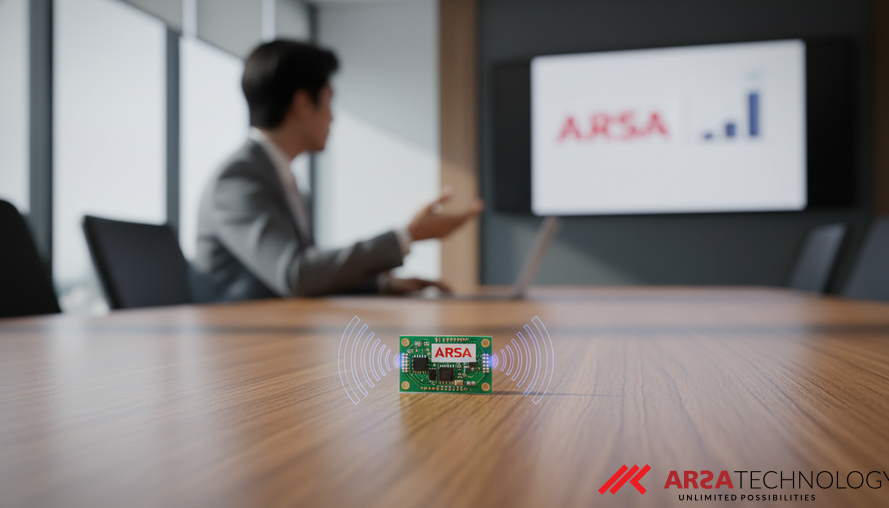
Eavesdropping on private conversations poses a significant threat to personal privacy and corporate security, particularly as voice-activated technologies become ubiquitous. Traditional acoustic eavesdropping is often thwarted by soundproof environments. However, a recent academic paper introduces RadEar, an innovative system that leverages Radio Frequency (RF) backscatter technology and advanced Artificial Intelligence to covertly listen to conversations through walls. This breakthrough not only highlights new vulnerabilities but also pushes the boundaries of AI-powered analog circuit design.
The Evolving Threat of Covert Surveillance
The digital age has brought unprecedented convenience, but with it, new avenues for unauthorized access to sensitive information. Voice eavesdropping is particularly insidious because it can happen passively and covertly, leaving no immediate digital footprint. While data breaches are well-documented, the silent capture of spoken words can lead to identity theft, the loss of intellectual property, or even national security breaches. Conventional methods of audio surveillance are often ineffective against modern soundproofing, prompting a shift towards more sophisticated, RF-based approaches.
Earlier attempts at RF-based voice detection, utilizing technologies like mmWave, RFID, and UWB, demonstrated potential but faced limitations. For instance, mmWave signals struggle with wall penetration due while RFID-based methods often require close proximity. These challenges highlight the need for more robust solutions capable of operating reliably in real-world, obstructed environments. The RadEar system addresses these limitations, presenting a new paradigm for through-wall audio capture and analysis.
RadEar's Innovative Dual-Component Architecture
The RadEar system is ingeniously designed around two core components: a passive RF backscatter tag and an intelligent RF reader. The tag, discreetly deployed within the target space, is batteryless and designed for covert, continuous operation. It harvests energy from ambient RF signals, allowing for permanent deployment without requiring maintenance. Its compact size, less than one inch, enables easy concealment under furniture or within objects.
The RF reader, positioned outside the room, plays the crucial role of capturing, demodulating, and processing the subtle signals bounced back by the tag. Unlike many existing RF backscatter systems, RadEar prioritizes continuous voice streaming and an extended eavesdropping range. This is achieved through a novel tag design that fundamentally mitigates "self-interference"—a common problem where the tag's own signal interferes with the reader's reception. By separating the excitation and reflection frequencies, RadEar dramatically improves signal clarity and detection range, allowing for clearer voice recovery even through obstacles like walls.
The Batteryless Backscatter Tag: An Analog Engineering Marvel
The heart of RadEar’s covert capability lies in its advanced backscatter tag. This small device integrates a piezoelectric sensor, a voltage-sensing resonator (VSR), a parametric resonator (PR), and a dipole antenna. Here's how it works:
- Piezoelectric Sensor: This component converts the subtle air pressure fluctuations from human speech into electrical voltage signals.
- Voltage-Sensing Resonator (VSR): The voltage from the piezoelectric sensor modulates the VSR's resonance frequency.
- Parametric Resonator (PR): Magnetically coupled with the VSR, the PR acts as an energy pump. Crucially, it introduces "spectral separation," meaning it processes the signal at different frequencies for excitation and reflection, preventing self-interference.
- Dipole Antenna: The modulated signal is then radiated outwards through this antenna towards the RF reader.
This sophisticated analog circuit design offers several key advantages. It enables analog frequency modulation (FM), establishing a direct, linear relationship between voice signal amplitude and the tag’s resonance frequency shifts. This simplifies voice recovery on the reader side. Operating at a low frequency of 915 MHz, the tag also benefits from superior wall penetration and propagation characteristics, making through-wall eavesdropping more effective. This careful blend of components ensures high reliability and range, all within a compact, easily concealable form factor.
The AI-Powered RF Reader: Separating Signals from Noise
While the tag is a hardware innovation, the RF reader’s intelligence is driven by a sophisticated learning-based system designed to overcome two primary challenges: weak signal reception and the inherent difficulty of separating overlapping voices. Even with the tag's improvements, signals received through walls are often faint and corrupted by noise.
The RadEar RF reader incorporates two cutting-edge AI components: a voice separation model and a voice denoising model. What makes these models particularly innovative is their "self-supervised" training approach. This means they learn without requiring "ground-truth labels"—explicitly labeled data for individual speakers, which would be impossible to obtain in a real eavesdropping scenario. Instead, these models leverage statistical regularities within mixed human speech.
Inspired by "remixing-based approaches," the models are trained by decomposing voice mixtures into multiple components, then recombining these components to reconstruct the original mixture. The training objective is to minimize the difference between the reconstructed mixture and the original, implicitly guiding the models to learn how to isolate individual voice elements. This allows the system to not only recover speech from weak, noisy RF signals but also to separate individual speakers' voices with high fidelity. Such advanced signal processing capabilities are critical for transforming raw data into actionable intelligence, a core offering found in advanced solutions like ARSA's Custom AI Solutions.
Real-World Implications and Future Security
The development of RadEar underscores the increasing sophistication of covert surveillance technologies and highlights a growing need for enhanced privacy and security measures in both public and private spaces. The system's ability to operate batterylessly, penetrate walls, and utilize self-supervised AI for voice separation opens new discussions about the vulnerabilities of our physical environments.
For enterprises and governments, understanding such capabilities is paramount. While RadEar exemplifies a potential threat, the underlying technologies—efficient edge AI, robust signal processing, and AI-driven analytics—are also vital for developing countermeasures. For instance, integrating specialized RF detection systems or deploying comprehensive AI Box Series devices with custom detection capabilities could help identify and mitigate such threats. Furthermore, the advancements in AI for voice separation and denoising could be adapted for legitimate security applications, such as improving communication clarity in noisy environments or enhancing forensic audio analysis. Businesses increasingly rely on intelligent monitoring, and understanding innovative methods of information capture can inform better strategies for protecting sensitive communications. Organizations seeking advanced security solutions or needing to analyze complex sensory data could benefit from integrating robust platforms like ARSA's AI Video Analytics, which can be tailored for various security and operational intelligence needs.
This research, presented in the paper "RadEar: A Self-Supervised RF Backscatter System for Voice Eavesdropping and Separation" (arxiv.org/abs/2603.12446), serves as a crucial reminder of the continuous need for innovation in cybersecurity and privacy protection. It challenges both researchers and policymakers to develop robust countermeasures that safeguard voice privacy against increasingly sophisticated attack methodologies.
To explore how ARSA Technology can help your organization implement advanced AI and IoT solutions for enhanced security, operational efficiency, and data intelligence, please contact ARSA for a free consultation.