Unveiling the Quantum Data Challenge: The Bottleneck in Quantum Machine Learning
Explore the critical data loading bottleneck in Quantum Machine Learning. Learn about amplitude and angle encoding challenges and how efficient data input is crucial for quantum advantage.

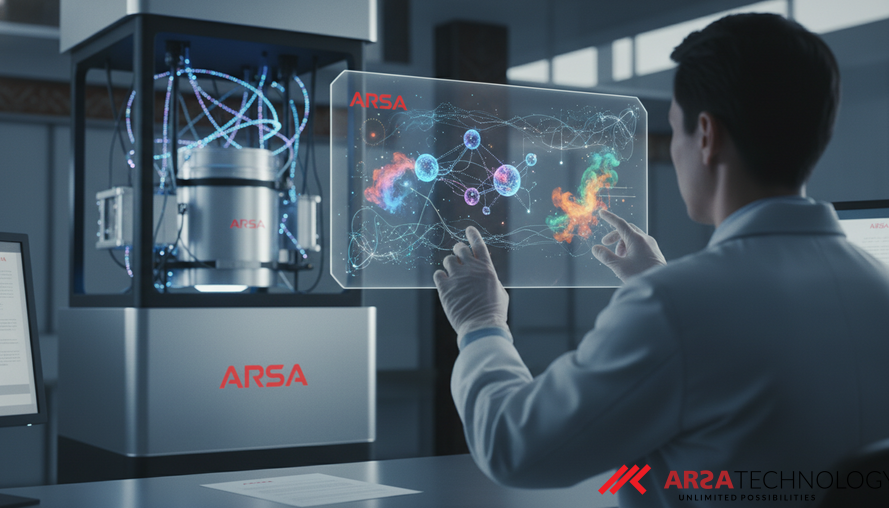
The advent of quantum computing promises to revolutionize numerous fields, with Quantum Machine Learning (QML) standing out as a particularly exciting frontier. QML aims to leverage the unique properties of quantum mechanics, such as superposition and entanglement, to process information in ways classical computers cannot, potentially leading to breakthroughs in complex data analysis and optimization. However, despite the significant strides in quantum algorithm development, a crucial yet often overlooked challenge threatens to bottleneck QML's real-world impact: efficiently loading classical data into quantum computers. This hurdle, analogous to slow data transfer in classical computing, could severely limit the practical application of even the most powerful quantum algorithms.
The Promise and the Problem of Quantum Machine Learning
Quantum Machine Learning merges the strengths of quantum computing with the principles of machine learning, offering the potential to tackle problems currently intractable for classical systems. From discovering new materials to optimizing financial models, the theoretical advantages of QML are vast. However, the path to realizing this potential is fraught with engineering complexities. While algorithms like the Variational Quantum Eigensolver (VQE) show promise for tasks like approximating the ground state energy of molecules, their performance hinges on how effectively classical data can be mapped onto quantum states. This data ingestion process, known as quantum data loading or QRAM (Quantum Random Access Memory), is not trivial and presents a significant constraint, especially with current noisy intermediate-scale quantum (NISQ) devices.
Understanding Data Encoding Methods
To perform machine learning on a quantum computer, classical data must first be encoded into quantum states. Two primary methods dominate current research: Amplitude Encoding and Angle (or Basis) Encoding. Each approach comes with its own set of advantages and inherent limitations, dictating the trade-offs between information density, circuit complexity, and error susceptibility.
Amplitude Encoding: High Density, High Complexity
Amplitude encoding is highly efficient in terms of information density. With this method, classical data points are encoded into the amplitudes of a quantum state. For instance, `N` qubits can store `2^N` distinct feature values. This exponential compression of information is a compelling feature, as it means a relatively small number of qubits can represent a vast dataset. Imagine a dataset with 256 features; amplitude encoding could represent this using just 8 qubits (2^8 = 256).
However, this efficiency comes at a considerable cost. Constructing an arbitrary quantum state with specific amplitudes is notoriously difficult. It often requires complex quantum circuits with a large number of gates or the use of many ancillary qubits to prepare the state, leading to deep circuits that are highly susceptible to noise on current NISQ devices. The overhead of precisely preparing these amplitude-encoded states can outweigh the computational benefits of subsequent quantum processing, making it a significant bottleneck for practical QML applications.
Angle Encoding: Simpler Circuits, Lower Density
Angle encoding (also known as basis encoding) offers a simpler alternative by mapping classical data points to the rotation angles of individual qubits. In this scheme, `N` qubits can only encode `N` features, meaning the information density is linear rather than exponential. For the same 256 features mentioned earlier, angle encoding would require 256 qubits, a much larger quantum resource compared to amplitude encoding.
The primary advantage of angle encoding lies in its implementation simplicity. The circuits required to perform rotations on qubits based on classical data are generally much shallower and involve fewer gates, making them more amenable to current noisy quantum hardware. This ease of implementation makes it a popular choice for early-stage QML experiments. However, the increased qubit requirement for larger datasets implies that the total circuit depth can still become prohibitive, as more qubits mean more opportunities for errors in current hardware.
The Business Impact of Quantum Data Bottlenecks
For enterprises exploring the potential of quantum computing, these data loading bottlenecks translate directly into practical challenges. The promise of quantum advantage – the point at which a quantum computer can solve a problem significantly faster or more efficiently than any classical computer – is elusive if the time and resources spent on data input negate the benefits of quantum processing. Businesses need solutions that offer clear, measurable ROI, and an inefficient data pipeline within QML could inflate operational costs and extend development cycles.
This underscores the importance of robust data management strategies, even for technologies on the horizon. Enterprises today face complex data challenges that demand sophisticated, real-time analytics. For example, in monitoring large-scale operations, like manufacturing or smart cities, managing and processing vast streams of data from sensors and cameras is crucial for immediate insights. ARSA Technology specializes in developing and deploying practical AI solutions, such as AI Video Analytics, that transform raw data into actionable intelligence on-premise or at the edge, mitigating latency and ensuring data privacy, which are critical considerations even for future quantum integrations.
Bridging the Gap: The Role of Edge AI and Practical Solutions
While quantum data loading is a challenge for the future, the principles of efficient, localized data processing are highly relevant today. Edge AI systems, for instance, are designed to process data closer to its source, reducing latency and bandwidth requirements while enhancing privacy and operational reliability. Solutions like the ARSA AI Box Series exemplify this approach by processing video streams directly at the edge, turning existing CCTV infrastructure into real-time AI intelligence platforms without cloud dependency. This demonstrates how effective data handling, even for classical data, forms the bedrock for any advanced computational paradigm, quantum or otherwise.
Moving forward, the development of scalable and fault-tolerant quantum computers will require parallel innovation in QRAM technologies. Research into specialized quantum hardware for data loading, such as those leveraging superconducting circuits or photonic systems, is critical. Furthermore, hybrid quantum-classical algorithms that minimize the amount of data requiring quantum encoding may offer a pragmatic pathway for near-term QML applications. For organizations seeking to address complex computational and data challenges with tailored solutions, leveraging Custom AI Solutions from an experienced provider like ARSA, a company experienced since 2018, ensures a foundation of scalable and adaptable technology.
The "hidden bottleneck" of getting data into a quantum computer is a formidable challenge, reminding us that theoretical quantum speedups are only as good as their practical implementation. Addressing this issue is paramount for QML to move beyond academic exploration and deliver on its promise of transformative industrial impact.
To explore how ARSA Technology's enterprise-grade AI and IoT solutions can help your organization leverage data effectively today and prepare for future technological advancements, do not hesitate to contact ARSA for a free consultation.