Volvo's Strategic Shift: Navigating Affordable EVs, Battery Safety, and the AI-Driven Future of Automotive
Explore Volvo's plans for a new affordable electric vehicle to replace the discontinued EX30, examining market challenges, battery safety concerns, and the transformative role of AI and IoT in shaping modern automotive innovation and production.

The Evolving Landscape of Affordable EVs
The quest for truly affordable electric vehicles (EVs) continues to be a defining challenge for the automotive industry. While consumer demand for greener, more economical transportation grows, car manufacturers often grapple with a complex interplay of production costs, supply chain volatility, and market tariffs that can erode profitability and accessibility. Volvo, a brand long synonymous with safety and Scandinavian design, recently found itself navigating these very waters with its compact EX30 electric SUV. Despite initial promise as an entry-level EV, the EX30 faced significant hurdles, including pricing adjustments due to tariffs and a notable battery recall, ultimately leading to its discontinuation in the U.S. market. This situation highlights a broader industry trend, dubbed the "great EV pullback," where automakers recalibrate their strategies in response to real-world economic and operational constraints.
The challenge of creating a desirable yet profitable affordable EV demands an intricate balance of scale, vertical integration, and a sophisticated understanding of the global supply chain. While some regions, particularly China, have demonstrated a robust mastery over these aspects, international automakers aiming for markets like North America must devise unique approaches. For companies like Volvo, which is owned by China's Geely, this necessitates strategic innovation, emphasizing intelligent systems and streamlined operations to deliver competitive pricing and build consumer trust. The strategic pivot away from the EX30 marks not an abandonment of the affordable EV segment, but rather a renewed commitment to solving these intricate challenges with an eye toward future solutions.
Lessons from the EX30: Battery Innovation and Operational Resilience
The journey of the Volvo EX30 offers valuable insights into the complexities of launching new EV models. Initially announced with an attractive starting price of $34,950 in 2023, the vehicle's U.S. market debut was delayed, and its eventual price climbed to $44,900 due to new tariffs impacting China-built vehicles. Beyond pricing, the EX30 also encountered a critical battery recall in February, stemming from a risk of overheating or fire. Such incidents underscore the paramount importance of robust quality control and advanced monitoring throughout an EV's lifecycle.
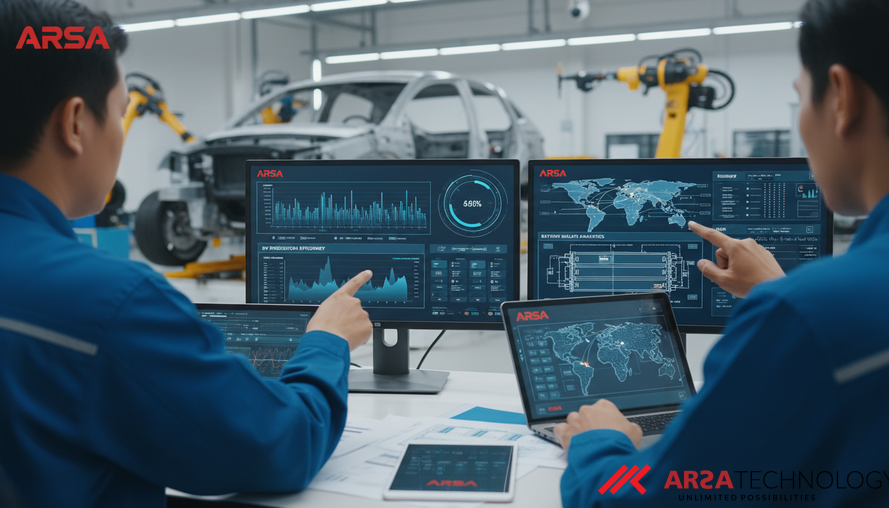
Modern manufacturing and battery management systems increasingly rely on Artificial Intelligence and Internet of Things (IoT) technologies to enhance safety and reliability. For instance, AI Video Analytics can be deployed on production lines to detect minute manufacturing defects in real-time, preventing faulty components from reaching consumers. Similarly, IoT sensors embedded within battery packs can continuously monitor temperature, voltage, and overall health, providing predictive insights that help prevent overheating incidents and enable proactive maintenance or recalls. These intelligent systems are vital for safeguarding consumer confidence and ensuring the long-term viability of electric fleets, transforming raw operational data into actionable intelligence.
Volvo's Forward Vision: A New Affordable EV for 2027
Despite the EX30's discontinuation, Volvo has confirmed its commitment to introducing a new, more accessible electric vehicle for the U.S. market by 2027. According to Luis Rezende, President of Volvo Cars America, this upcoming EV will occupy a similar segment in the lineup, although not necessarily matching the EX30's original target price. He hinted at a vehicle that offers a "bigger space" and promises to be "fun to drive," suggesting a balance between practicality and engaging performance. This strategic pivot signals Volvo’s intent to learn from past challenges and leverage new technological advancements to meet consumer demand for value-driven electric mobility.
The development of such a vehicle benefits significantly from integrated AI and IoT. From optimizing aerodynamic design for extended range using AI simulations to tailoring the driving dynamics for an enjoyable experience, intelligent systems play a crucial role. Furthermore, AI-driven analytics can help forecast market demand and refine pricing strategies, ensuring that the new EV strikes the right balance between affordability for consumers and profitability for the manufacturer. The integration of advanced computational tools throughout the design and engineering phases is critical for building a vehicle that not only performs well but also resonates with the target audience.
Rethinking Supply Chains and Production with Intelligent Systems
The aspiration for affordable yet profitable EVs hinges on overcoming significant supply chain and manufacturing hurdles. Achieving the necessary scale and cost efficiency is a complex undertaking, often requiring a level of vertical integration and supply chain mastery that many companies are still building. For a global enterprise like Volvo, which aims to distribute vehicles across various international markets, managing the impact of tariffs and ensuring a resilient supply chain are continuous challenges.
This is where advanced AI and IoT solutions provide a transformative edge. Predictive analytics, for example, can analyze global economic trends, geopolitical factors, and material costs to anticipate potential tariff impacts and optimize sourcing strategies. Within manufacturing facilities, IoT sensors monitor machine performance, raw material flow, and assembly line efficiency, feeding data to AI algorithms that can identify bottlenecks, predict equipment failures, and optimize production schedules. Solutions like custom AI solutions and custom web application solutions can unify complex operational data, providing enterprises with comprehensive dashboards and real-time insights to manage their entire value chain effectively, ensuring both cost control and production agility. These capabilities are essential for companies building new models that prioritize affordability without compromising on quality or sustainability.
The Broader Impact of AI and IoT on Automotive Development
Volvo’s strategic recalibration, alongside the introduction of models like the EX60 (which starts at $59,795 and is built on a different architecture), reflects a broader industry movement toward diversified and intelligent automotive portfolios. While the new affordable EV will be fully electric, Volvo's executives have also discussed a "multi-fuel" strategy for other larger, family-oriented SUVs manufactured in facilities like Charleston, South Carolina. This flexible approach underscores the need for adaptable technological platforms that can support various powertrain options while maintaining core brand values.
AI and IoT are indispensable in facilitating this adaptability across all vehicle types. They enable more efficient research and development, streamline testing procedures, and allow for over-the-air updates that improve vehicle performance and safety long after purchase. From real-time vehicle analytics to integrated predictive maintenance systems, these technologies are defining the next generation of automotive excellence. As an experienced since 2018 AI and IoT solutions provider, ARSA Technology understands the critical role these intelligent systems play in empowering manufacturers to build smarter, safer, and more economically viable vehicles for the global market.
Volvo's ongoing efforts to deliver competitive electric vehicles highlight the dynamic challenges and immense potential within the automotive sector. As the industry continues to evolve, the integration of advanced AI and IoT technologies will be fundamental to creating vehicles that are not only affordable and safe but also intelligent and sustainable.
To explore how ARSA Technology's AI and IoT solutions can enhance your enterprise operations and drive innovation in complex industries, we invite you to contact ARSA for a free consultation.
Source: Andrew J. Hawkins, The Verge, May 18, 2026, Volvo teases a new affordable EV to replace discontinued EX30