Zero-Infra AI Agent Memory: Revolutionizing LLM Context with Markdown and SQLite
Explore memweave, an innovative zero-infrastructure approach to AI agent memory using Markdown and SQLite. Ditch complex vector databases for simpler, more efficient, and privacy-centric LLM context management, ideal for enterprise AI.

The Evolution of AI Agent Memory: Beyond Traditional Vector Databases
The landscape of Artificial Intelligence is rapidly evolving, with AI agents moving from theoretical concepts to practical applications across various industries. These autonomous agents, powered by Large Language Models (LLMs), promise to transform operations from customer service to complex data analysis. A critical component enabling their effectiveness is persistent memory—the ability to retain and retrieve relevant information over time to maintain context and improve decision-making. Traditionally, this challenge has often been met with Retrieval-Augmented Generation (RAG) architectures, heavily relying on complex vector databases. However, a new paradigm is emerging: zero-infrastructure solutions like `memweave`, which leverage simpler, more accessible tools like Markdown and SQLite to manage AI agent memory efficiently.
Understanding the Need for Robust AI Agent Memory
For an AI agent to perform complex, multi-step tasks or engage in extended interactions, it requires more than just short-term context from the current prompt. It needs to recall past conversations, learned facts, procedural knowledge, and specific user preferences. This long-term memory allows agents to build upon previous interactions, avoid redundancy, and deliver more coherent and personalized experiences. Without effective memory, agents risk "forgetting" crucial details, leading to disjointed responses and inefficient workflows. This is particularly relevant for AI coding assistants that need to remember code snippets, architectural decisions, or debugging steps over several sessions.
The common solution for furnishing LLMs with external knowledge involves RAG, where user queries are converted into numerical vectors (embeddings), used to search a vector database containing vectorized chunks of relevant documents. The retrieved context is then fed back to the LLM. While powerful for semantic search over vast, unstructured data, vector databases introduce significant infrastructure overhead, management complexity, and can be resource-intensive, especially for smaller-scale or localized applications.
`memweave`: A Lightweight Approach with Markdown and SQLite
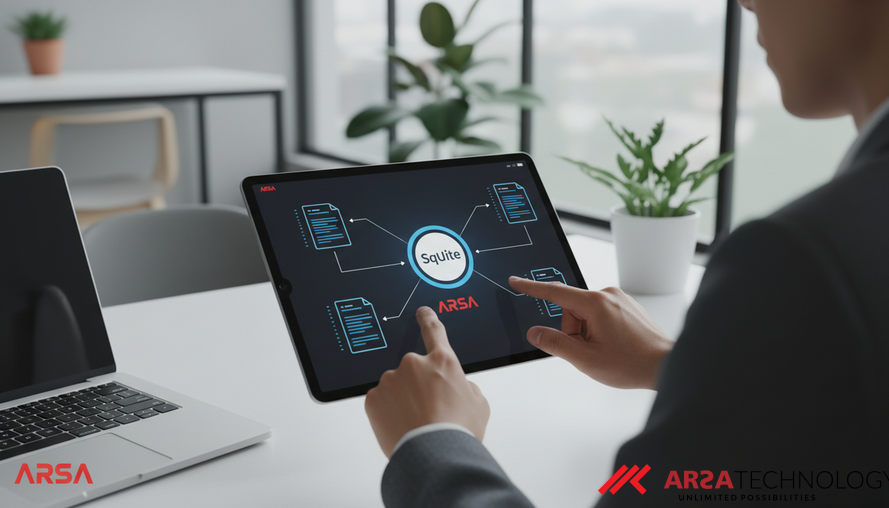
`memweave` presents an innovative alternative by proposing a zero-infrastructure solution for AI agent memory, eliminating the need for a dedicated vector database. It achieves this by storing contextual information directly in structured Markdown files and managing their retrieval using SQLite. This combination offers a straightforward, file-based approach to memory, making it highly portable, easy to inspect, and simple to deploy.
The core idea is to structure an agent's memory as a collection of Markdown documents, which are inherently human-readable and versatile. Each document can contain facts, rules, chat histories, or specific data relevant to the agent's function. SQLite, a self-contained, serverless, zero-configuration SQL database engine, then acts as the index and retrieval mechanism. It stores metadata about these Markdown files and can be used to perform searches based on keywords, tags, or even by generating embeddings on-the-fly for the current query and comparing them to stored content hashes or metadata, rather than requiring a persistent vector store. This allows for rich, structured memory retrieval without the typical infrastructure burden, aligning with ARSA Technology's focus on practical, deployed AI solutions that prioritize efficiency and controlled environments, as seen in our custom AI solutions.
Key Advantages of a Zero-Infrastructure Memory Model
Adopting a memory solution like `memweave` brings several compelling advantages, particularly for enterprises and developers seeking agile, cost-effective, and privacy-conscious AI deployments:
- Reduced Infrastructure Overhead: By sidestepping vector databases, organizations can significantly cut down on server costs, maintenance, and the specialized expertise required to manage distributed vector stores. This translates to lower operational expenditure and a simpler IT footprint.
- Enhanced Data Control and Privacy: Storing memory locally in Markdown files and SQLite provides complete control over data sovereignty. This is crucial for industries with strict regulatory compliance requirements, such as healthcare or finance. Data never needs to leave the local environment, simplifying compliance with regulations like GDPR or HIPAA.
- Simplified Development and Deployment: The ease of working with Markdown and SQLite accelerates prototyping and deployment cycles. Developers can quickly integrate and modify agent memory without intricate database setup or cloud dependencies, fostering faster innovation. This plug-and-play philosophy resonates with the design principles behind the ARSA AI Box Series, which simplifies edge AI deployment.
- Portability and Inspectability: Markdown files are inherently portable and human-readable. This makes it easy to audit, debug, and transfer agent memory across different environments or even between development teams.
- Cost-Effectiveness: For many AI agent use cases that don't require semantic search over petabytes of data, the cost of a full-fledged vector database is an unnecessary expense. `memweave` provides a highly efficient alternative, making advanced AI agent capabilities accessible to a broader range of businesses, including those in various industries.
Where `memweave` Fits in the Enterprise AI Landscape
While vector databases remain invaluable for specific applications requiring large-scale, deep semantic search across massive, unstructured document repositories, `memweave` fills a crucial gap for agentic AI that thrives on structured, curated, and context-specific knowledge. It's particularly well-suited for:
- Personalized AI Assistants: Agents that need to remember user preferences, ongoing projects, or historical interactions.
- AI Coding Assistants: Maintaining context of an entire codebase, specific coding styles, or previous debugging attempts.
- Internal Knowledge Base Agents: For smaller enterprises or specific departmental bots that handle well-defined sets of information, policies, or procedures.
- Edge AI Deployments: Where minimal infrastructure and offline capabilities are paramount, `memweave`'s local storage solution is highly advantageous.
This approach signifies a growing trend in AI development: optimizing solutions for specific use cases rather than adopting a one-size-fits-all model. By thoughtfully choosing memory architectures, enterprises can build more efficient, secure, and manageable AI agents that deliver tangible business value without undue complexity.
In conclusion, `memweave` offers a compelling vision for AI agent memory by demonstrating that sophisticated contextual understanding doesn't always require heavy infrastructure. By embracing Markdown and SQLite, it paves the way for more accessible, efficient, and privacy-preserving AI agent deployments.
Source: Sachin Sharma, "memweave: Zero-Infra AI Agent Memory with Markdown and SQLite—No Vector Database Required", available at https://towardsdatascience.com/memweave-zero-infra-ai-agent-memory-with-markdown-and-sqlite-no-vector-database-required/
To explore how ARSA Technology can help your organization leverage innovative AI solutions for enhanced operational intelligence and efficiency, we invite you to contact ARSA for a free consultation.