Zero-Shot Anomaly Detection: Revolutionizing Industrial Quality Control and Security with AI
Discover how training-free, vision-only Zero-Shot Anomaly Detection (ZSAD) powered by diffusion inversion transforms industrial quality control and security, offering rapid defect identification without extensive training data.

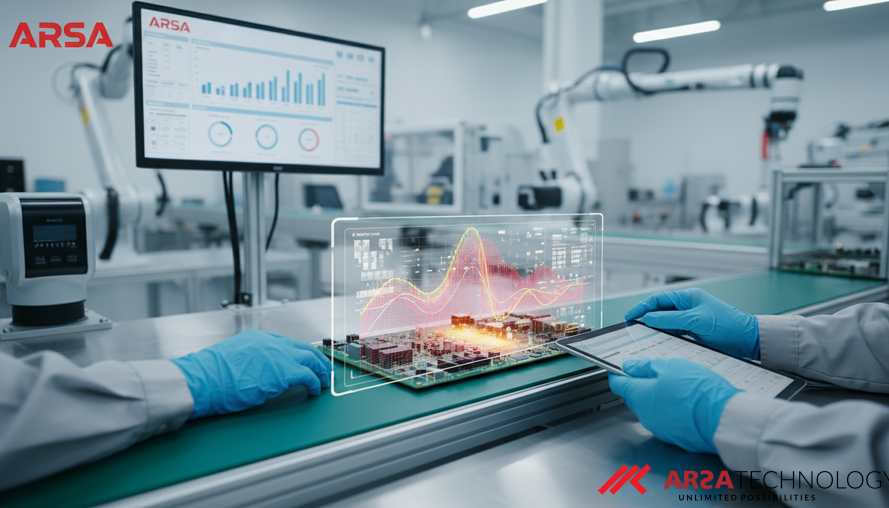
The Pervasive Challenge of Anomaly Detection in Industry
In today's fast-paced industrial landscape, maintaining product integrity, operational efficiency, and stringent security is paramount. A key challenge across sectors like manufacturing, logistics, and critical infrastructure lies in effectively identifying and localizing anomalies—whether they are subtle defects in a product, unusual patterns in traffic flow, or suspicious activities in a restricted area. Traditional anomaly detection (AD) methods often demand extensive datasets of "normal" samples for training, which can be a significant hurdle. Collecting vast quantities of anomaly-free data is not only resource-intensive, requiring meticulous human inspection, but also necessitates retraining models for every new product, asset, or scenario. This process is time-consuming, expensive, and often delays the deployment of crucial monitoring systems.
Manual inspection, while still prevalent, is prone to human error, fatigue, and lacks the scalability required for modern, high-volume operations. Furthermore, many existing advanced anomaly detection systems rely on complex, specially curated "prompts" or textual descriptions to guide their analysis. This dependence on fine-grained textual input can add another layer of complexity, requiring significant domain knowledge to effectively define what constitutes "normal" and "abnormal" for each unique application. The quest for a more agile, cost-effective, and universally applicable solution has driven innovation in the field of Artificial Intelligence.
Introducing Zero-Shot Visual Anomaly Localization: A Paradigm Shift
A groundbreaking advancement in this field is Zero-Shot Anomaly Detection (ZSAD). Unlike traditional methods that need to be trained on examples of "normal" data for each specific object or environment, ZSAD operates without any prior training samples from the target dataset. This means a system could identify a defect on a new product line or a suspicious behavior in an unfamiliar setting, even if it has never "seen" that specific product or situation before. This capability significantly reduces the overhead associated with data collection and model retraining, making AI-powered anomaly detection far more adaptable and scalable.
However, many current ZSAD approaches still lean heavily on auxiliary information, often in the form of language-based prompts to achieve precise anomaly localization. These prompts, while effective, can be complex to generate and maintain, still requiring a degree of human intervention or domain expertise. The innovation lies in moving beyond this prompt dependency, enabling truly "vision-only" ZSAD that focuses solely on the visual input to pinpoint anomalies with high spatial precision. This shift streamlines deployment and enhances system autonomy, marking a significant step towards fully automated, intelligent monitoring.
How Diffusion Inversion Powers Next-Gen Anomaly Detection
A novel framework leverages a powerful AI technique called diffusion inversion, using a pretrained Denoising Diffusion Implicit Model (DDIM). Imagine an advanced AI model that has been extensively trained solely on a vast array of "normal-looking" images from the general world. This model intrinsically understands the patterns and characteristics of what is considered "normal." The core idea of diffusion inversion is to take an input image (which might contain an anomaly) and ask this pretrained model to "undo" the process of creation, essentially transforming the image back into its "pure," normal latent representation.
Once inverted, the system then initiates a denoising process from an intermediate stage, effectively reconstructing the image based only on the model's understanding of "normal." Because the underlying diffusion model has only learned from normal data, this reconstruction process naturally yields a version of the input image that appears perfectly normal, even if the original input had flaws. The genius lies in comparing the original input image with this "normal-looking" reconstructed image. Any discrepancies or significant differences between the two highlight the exact locations of potential anomalies. This "training-free" and "vision-only" approach, called DIVAD, bypasses the need for manual prompt generation or extensive domain-specific anomaly definitions, offering a robust and highly accurate method for visual anomaly localization.
Key Advantages and Business Impact
This innovative approach offers several compelling advantages for businesses seeking to enhance their operational intelligence:
- Training-Free and Prompt-Agnostic: The most significant benefit is the elimination of specialized training datasets for each new application or product. This vastly reduces setup time and ongoing maintenance costs, enabling rapid deployment across diverse environments. Businesses no longer need to invest heavily in curating specific textual prompts, simplifying implementation.
- High Accuracy and Spatial Precision: Despite being training-free, this method achieves state-of-the-art performance in anomaly localization, as demonstrated on challenging datasets like VISA. It provides precise heatmaps that pinpoint exactly where anomalies exist, rather than just classifying an entire image as "abnormal." This is critical for applications like quality control, where identifying the exact location of a defect is essential for remediation.
- Cost-Effectiveness and Scalability: By utilizing pretrained models and avoiding extensive retraining, the solution offers a cost-effective alternative to traditional AD. Its ability to adapt to new object classes without additional data collection or model fine-tuning makes it highly scalable for enterprises with diverse product lines or rapidly changing operational requirements.
- Enhanced Data Privacy: The "vision-only" nature of the method, which doesn't rely on complex textual prompts generated from specific domain knowledge, can contribute to a more privacy-compliant solution by reducing the need to process or store potentially sensitive descriptive data. When combined with edge computing, such as ARSA's AI Box Series, data processing happens locally, keeping sensitive visual information within the premises.
Practical Applications for Indonesian Enterprises
The implications of such advanced zero-shot visual anomaly localization are far-reaching, offering tangible benefits across various industries:
- Manufacturing and Quality Control: In manufacturing facilities, this technology can revolutionize quality inspection. It can automatically detect subtle surface cracks, misalignments, color inconsistencies, or missing components on production lines in real-time. This reduces the risk of defective products reaching customers, minimizes waste, and significantly lowers operational costs. For example, by integrating with existing CCTV systems, ARSA's AI Video Analytics can be deployed to provide constant, automated quality checks.
- Workplace Safety and Compliance: Ensuring adherence to safety protocols is crucial in construction, mining, and factory environments. The system can automatically detect anomalies like improper Personal Protective Equipment (PPE) usage (e.g., a worker without a hard hat in a designated area) or unauthorized access to restricted zones. This proactive monitoring enhances worker safety and ensures regulatory compliance. ARSA's AI BOX - Basic Safety Guard is a prime example of how such capabilities can be deployed to monitor safety compliance effectively.
- Security and Surveillance: For enterprises, smart cities, and public spaces, the technology can transform security monitoring. It can identify unusual behaviors, unattended objects, or deviations from normal crowd patterns in real-time, providing immediate alerts to security personnel. This proactive threat identification capability significantly improves response times to incidents and enhances overall security infrastructure.
- Infrastructure and Asset Monitoring: In critical infrastructure like power plants, transportation networks, or industrial machinery, anomaly detection can be used to monitor the condition of assets. By spotting unusual wear and tear, fluid leaks, or abnormal movements, it enables predictive maintenance, preventing costly breakdowns and minimizing downtime.
By leveraging these advanced AI capabilities, businesses can achieve new levels of efficiency, security, and quality, making data-driven decisions based on real-time visual insights.
Ready to explore how cutting-edge AI can transform your operations with advanced anomaly detection and visual analytics? Empower your business with intelligent solutions designed for efficiency and security. We invite you to explore ARSA's innovative products and solutions further, and to request a free consultation with our team to discuss your specific needs.