Zoox Expands Robotaxi Service: A Look at Autonomous Urban Mobility and Edge AI
Zoox is expanding its purpose-built robotaxi services in San Francisco and Las Vegas, with new launches planned for Austin and Miami. Explore the technology powering these driverless vehicles and the future of AI in urban logistics.

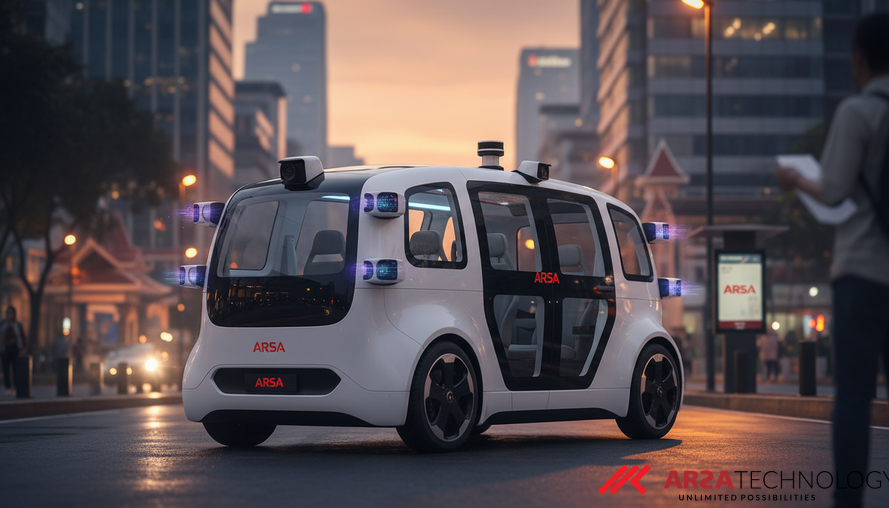
The landscape of urban transportation is undergoing a significant transformation, driven by the rapid advancements in artificial intelligence and autonomous vehicle technology. A prominent player in this evolving field, Zoox, an Amazon-owned robotaxi company, has announced ambitious plans to broaden its operational footprint. This expansion includes enhancing existing services in key cities like San Francisco and Las Vegas, while simultaneously launching new pilot programs in Austin and Miami. This move underscores the industry's progression towards making driverless mobility a tangible reality for more urban centers. (Source: The Verge)
The Rise of Purpose-Built Robotaxis: Zoox’s Approach
Zoox distinguishes itself in the autonomous vehicle sector by deploying custom-built robotaxis, meticulously engineered without conventional driving controls such as steering wheels or pedals. This unique design allows for an interior layout featuring bench seats that face each other, fostering a more communal and engaging passenger experience. The exterior of these vehicles is a testament to cutting-edge technology, equipped with a comprehensive array of sensors, including cameras, lidar, and radar, which continuously scan the environment to facilitate safe and precise navigation. When in operation, these sophisticated vehicles typically maintain speeds of up to 45 mph, prioritizing safety and efficiency in urban environments.
Since the launch of its customer service, Zoox's robotaxis have accumulated nearly two million driverless miles and transported approximately 350,000 passengers. Currently, Zoox operates under a "demonstration exemption" from the National Highway Traffic Safety Administration, which means it does not charge passengers for its rides. This operational model allows the company to rigorously test and refine its technology in real-world scenarios, gathering invaluable data to enhance its autonomous capabilities and ensure high standards of safety and reliability for future commercialization.
Expanding Horizons: Current Service Upgrades
In its established operational areas, Zoox is not only scaling up but also refining the user experience with several significant enhancements. For existing services in San Francisco and Las Vegas, the company is rolling out updated features to its mobile application. These include an improved ETA function for greater precision in arrival predictions and pre-booking estimates, offering passengers a clearer understanding of their journey details before confirming a ride. Additional conveniences like "Find My Zoox" assist riders in locating their vehicle in bustling areas, while "ZooxCast" Bluetooth capabilities provide personalized audio options, enriching the passenger's travel experience.
The expansion in Las Vegas is particularly notable, with Zoox significantly increasing its network of approved pickup and drop-off points. Beyond its initial destinations such as Resort World Las Vegas, AREA15, Topgolf, New York New York, and the Luxor, the service now extends to the Las Vegas Convention Center and a majority of the prominent hotels along the Strip. The company is also preparing to tackle high-traffic zones, including iconic venues like the Sphere and T-Mobile Arena, demonstrating its capacity to integrate into complex urban logistics. In San Francisco, Zoox is quadrupling the size of its service area, encompassing the eastern half of the city and bringing autonomous mobility to neighborhoods like the Marina, North Beach, Chinatown, Pacific Heights, and along the Embarcadero. These expansions signify a strategic move to serve a wider demographic and denser urban corridors.
New Frontiers: Austin and Miami Join the Autonomous Revolution
The introduction of Zoox’s robotaxi services into new markets like Austin and Miami represents a significant step in the broader adoption of autonomous technology. Initially, the company will commence operations in smaller, defined sections of each city, limiting rides to employees, their families, and friends. This controlled rollout strategy allows Zoox to fine-tune its systems to the unique environmental and traffic conditions of these new cities while ensuring a gradual and safe integration. As these pilots progress and systems are validated, Zoox plans to progressively open its services to individuals on its extensive waitlist, which already boasts over half a million interested riders.
Such staged deployments are crucial for robust AI and IoT solutions, as they allow for continuous learning and adaptation. Just as autonomous vehicles require rigorous testing and iterative development, enterprises leveraging sophisticated AI for real-time operations benefit from solutions that are proven in controlled environments before full-scale rollout. ARSA Technology, for instance, focuses on providing Custom AI Solutions tailored to specific industrial and urban challenges, ensuring that deployments are practical, reliable, and scalable. This approach mirrors the meticulous planning needed for successful autonomous deployments.
The Broader Impact of Autonomous Technology on Enterprises
The proliferation of robotaxis like those from Zoox highlights the growing maturity of AI and IoT beyond theoretical applications, demonstrating their practical, measurable impact on logistics, urban planning, and public services. The advanced sensor arrays, real-time data processing, and predictive analytics embedded in these vehicles share common technological DNA with many enterprise-grade AI and IoT solutions. For businesses in manufacturing, logistics, or smart city initiatives, the ability to process vast amounts of sensor data at the point of origin, or "at the edge," is paramount for instantaneous decision-making and operational efficiency.
The challenges of urban deployment—from navigating complex traffic patterns to ensuring pedestrian safety and adhering to local regulations—are effectively tackled by robust AI systems. These systems continuously learn and adapt, making them invaluable for optimizing various operational facets across various industries. For example, similar AI-driven video analytics, which process CCTV footage in real-time to detect objects, people, and behaviors, are critical for enhancing security, managing traffic flow, or monitoring industrial safety compliance. ARSA’s AI Video Analytics leverages such real-time processing to deliver actionable insights without human intervention.
The Future of Urban Mobility and AI Integration
The expansion of Zoox's robotaxi service signals a definitive shift towards integrating fully autonomous systems into daily urban life. As companies like Zoox continue to push the boundaries of driverless technology, the implications for urban planning, commercial logistics, and personal transportation are profound. The underlying AI and IoT infrastructure that enables these vehicles—real-time computer vision, sophisticated navigation algorithms, and secure, low-latency communication—are becoming essential components for smart cities and enterprises aiming for advanced automation.
This ongoing technological evolution underscores the importance of robust, deployable AI and IoT solutions that deliver tangible business outcomes. From enhancing public safety to streamlining retail operations and optimizing industrial processes, the principles behind autonomous vehicle development are transferable to a wide array of enterprise needs. Businesses and governments seeking to implement intelligent, future-proof systems can look to these advancements as a benchmark for what is achievable with practical, performance-driven AI.
Ready to explore how advanced AI and IoT solutions can transform your operations and create new value? Discover ARSA Technology’s innovative products and services, and contact ARSA for a free consultation to discuss your specific needs.