Advancing Digital Content Security: Neural Watermarking for Screen-Capture Robustness
Explore JND-guided neural watermarking, an AI-driven solution for content protection against screen-capture distortions. Learn how it achieves high accuracy and visual quality.

The Growing Challenge of Digital Content Protection
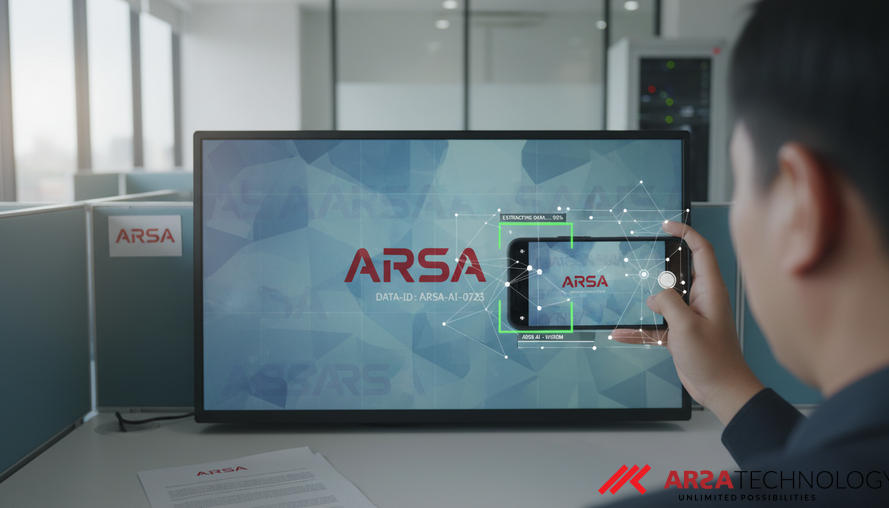
In today’s digital landscape, where high-resolution screens and ubiquitous camera-equipped mobile devices are commonplace, protecting digital content faces unprecedented challenges. While traditional digital watermarking techniques have proven effective against typical signal-processing attacks in the digital realm, they often fall short when content transitions across physical media. This gap is particularly evident in the "screen-shooting pipeline," a process where a watermarked image is displayed on a screen and then re-captured by a physical camera.
This cross-media transfer introduces a unique and complex array of distortions that traditional methods are ill-equipped to handle. The rapid advancements in deep generative models, such as diffusion-based architectures and large multimodal models, have made it easier than ever to create, manipulate, and redistribute visual content. This amplifies the urgent need for robust content authentication and traceability mechanisms that can withstand not just digital attacks, but also the physical-channel distortions inherent in screen-shooting.
Understanding Screen-Shooting Distortions: The "Physical Channel" Challenge
The journey of an image from a digital display to a re-captured photograph involves a multifaceted distortion pipeline. This "physical channel" introduces severe and often entangled degradations that significantly compromise watermark integrity. Key among these are Moiré patterns, which arise from the interference between the display’s pixel grid and the camera’s sensor array. Beyond Moiré, other complex distortions include color-gamut shifts (where colors change due to display and camera characteristics), perspective warping (when the camera captures the screen at an angle), motion blur, and various forms of sensor noise.
These combined effects make it incredibly difficult to embed information imperceptibly into an image while ensuring it can still be accurately extracted after being screen-captured. Traditional methods, often reliant on hand-crafted features and transform-domain techniques, struggle with this level of complex, real-world noise. This research highlights how current deep learning advancements can provide a more resilient solution for such challenging environments, crucial for scenarios from copyright protection to sensitive document handling.
Neural Watermarking: A Deep Learning Approach to Robustness
Addressing the limitations of traditional methods, a novel end-to-end deep learning framework has been developed to jointly optimize watermark embedding and extraction for screen-shooting robustness. This framework represents a significant leap forward, moving beyond static, predefined methods to dynamically learn and adapt to distortions. By treating the entire process—from embedding the watermark into an image to re-capturing it and then extracting the hidden information—as a single, optimizable system, the framework can develop highly resilient strategies.
This approach leverages the power of neural networks to learn intricate patterns and relationships within data, enabling them to embed information subtly yet robustly. Unlike earlier deep learning methods that faced challenges with maintaining visual quality under harsh conditions, this new framework integrates several key innovations to achieve both high imperceptibility and extraction accuracy. For organizations requiring advanced image processing and robust content security, leveraging such deep learning frameworks can be transformative. ARSA Technology, with its AI Video Analytics expertise, understands the complexities of real-time visual data processing and the critical need for resilient solutions.
Innovation 1: Realistic Noise Simulation for Adversarial Training
One of the core innovations lies in a comprehensive noise simulation layer. This layer is designed to faithfully model the realistic distortions encountered during the screen-shooting process. Crucially, it includes a physically-motivated Moiré pattern generator, which is essential for replicating one of the most challenging forms of interference. By generating diverse and realistic distortion scenarios during training, the network is exposed to the full spectrum of capture-channel noise.
This adversarial training environment forces the embedding and extraction networks to learn robust representations that can withstand these complex degradations. It's like training a system to recognize an object no matter how blurry, tilted, or color-shifted its image becomes. This ensures that when the watermarked image faces real-world screen-capture, the embedded information remains detectable and accurate. Such rigorous training is vital for deploying AI solutions in unpredictable operational environments, an area where ARSA's AI Box Series excels in edge processing and robust performance.
Innovation 2: Just Noticeable Distortion (JND) for Visual Quality
Maintaining high visual quality of the original image after embedding a watermark is paramount; the watermark should be imperceptible to the human eye. This framework introduces a Just Noticeable Distortion (JND) perceptual loss function to achieve this. The JND concept refers to the threshold at which a change in a stimulus can be detected by the human perceptual system. By understanding where the human eye is less sensitive to changes (e.g., in highly textured areas or regions of complex detail), the system can strategically embed the watermark.
This JND-guided approach adaptively modulates the watermark embedding strength, concentrating the watermark's energy in these perceptually insensitive regions. This minimizes the visual discrepancy between the original and watermarked images, maximizing visual quality while ensuring the watermark remains robust. This intelligent embedding strategy helps achieve an impressive average PSNR of 30.94 dB and SSIM of 0.94, which are standard metrics for image quality, indicating very little perceptible degradation.
Innovation 3: Automated Watermark Localization and Decoding
For practical deployment, a robust watermarking system must be fully automated, capable of accurately locating and rectifying the watermarked image even when captured under varying conditions. This research integrates two complementary automatic localization modules that enable seamless watermark decoding. First, a semantic-segmentation-based foreground extractor is used for captured image rectification. Semantic segmentation is an AI technique that classifies each pixel in an image, allowing the system to precisely identify and isolate the screen-captured image from its background, correcting for any perspective distortions.
Second, a symmetric noise template mechanism is employed for anti-cropping region recovery. Even if parts of the image are cropped out, this mechanism helps recover the relevant regions, ensuring the watermark can still be extracted. These modules work in tandem to provide end-to-end automation, making the system suitable for real-world scenarios without manual intervention. This level of automation is critical for enterprise-grade solutions, echoing the self-hosted and plug-and-play capabilities offered by ARSA with its AI Video Analytics Software.
Performance Beyond the Lab: Real-World Results
The true test of any advanced technology lies in its real-world performance. Extensive experiments have demonstrated that this JND-guided neural watermarking method achieves outstanding results. While embedding substantial 127-bit payloads (a significant amount of hidden information), the watermarked images maintain excellent visual fidelity, as evidenced by an average PSNR of 30.94 dB and SSIM of 0.94.
More critically, the system exhibits remarkable robustness, achieving bit error rates of only 1%–3% under diverse screen-shooting conditions. This includes variations in capture distances, angles, and device combinations – scenarios that typically cripple traditional watermarking techniques. This performance substantially outperforms many state-of-the-art methods, proving its efficacy in challenging, unpredictable environments. The ability to maintain such low error rates despite complex degradations marks a significant advancement for digital content security.
The Future of Content Security in an AI-Driven World
The proliferation of high-resolution content and advanced image manipulation tools necessitates increasingly sophisticated protection mechanisms. This research on JND-guided neural watermarking provides a powerful solution to a critical problem in digital content security. By combining realistic noise simulation, human perception-aware embedding, and automated localization, it addresses the complex distortions of the physical screen-capture channel, ensuring content authenticity and traceability.
The implications for industries relying on secure content distribution, from media and entertainment to government and enterprise, are profound. As a company experienced since 2018 in delivering practical AI deployed solutions, ARSA Technology recognizes the importance of robust and adaptable systems in an evolving threat landscape. The principles demonstrated here, particularly around robust AI models and flexible deployment, align with ARSA's mission to engineer intelligence into operations across various industries.
For organizations looking to integrate cutting-edge AI for robust content protection or to explore custom AI solutions for their unique challenges, understanding these advancements is key.
To discover how ARSA Technology’s AI and IoT solutions can fortify your operational security and enhance digital content integrity, we invite you to contact ARSA for a free consultation.
Source: JND-Guided Neural Watermarking with Spatial Transformer Decoding for Screen-Capture Robustness