Agentic AI Transforms C-Arm Control: Advancing Surgical Precision Through Skeletal Landmark Localization
Explore how fine-tuned Multimodal Large Language Models (MLLMs) are revolutionizing C-arm control in surgical interventions, enabling autonomous skeletal landmark localization for faster, safer, and more precise medical procedures.

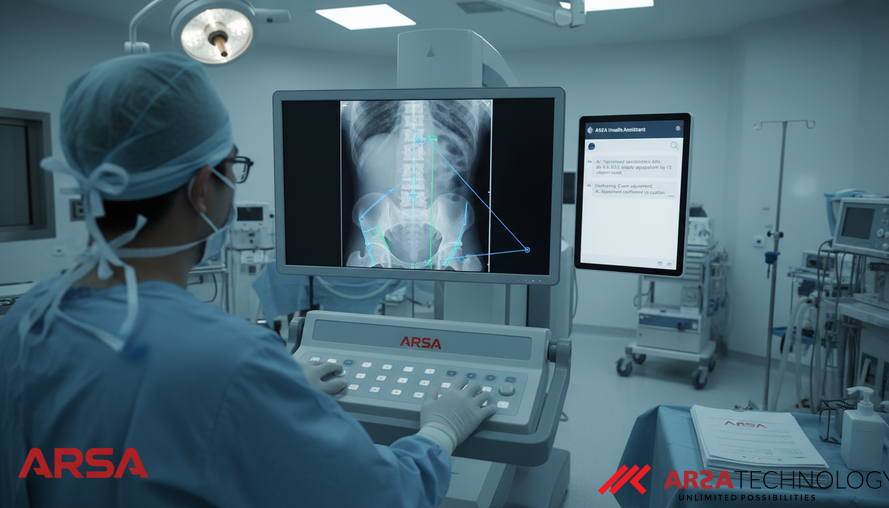
Revolutionizing Surgical Imaging with Agentic AI
In modern surgical procedures, especially complex interventions, C-arm machines are indispensable for providing real-time imaging guidance. These devices allow clinicians to view internal structures during surgery, crucial for precision and patient safety. However, the current operational model often requires manual positioning, a task that demands significant coordination among staff and can lead to critical delays, particularly in emergency scenarios like stroke thrombectomy. Such delays not only compromise patient outcomes but also increase radiation exposure for both patients and the medical team. Traditional deep learning (DL) approaches have attempted to automate C-arm control, but their limitations become apparent when faced with unexpected situations, forcing clinicians back to manual control.
The advent of agentic AI and advanced multimodal large language models (MLLMs) presents a transformative opportunity for C-arm operations. This new paradigm envisions an intelligent assistant that can interpret complex surgeon commands, such as "align to the femoral neck" or "move to the lateral skull base," and execute them autonomously. More importantly, when an initial AI prediction is incorrect, an agentic system can incorporate clinician feedback, reason through the adjustments, and refine its actions for more accurate positioning. This capability moves beyond simple automation to create a truly collaborative and adaptive surgical environment.
The Critical Role of Skeletal Landmark Localization
At the heart of precise C-arm positioning lies accurate skeletal landmark localization. These landmarks, specific points on the bones, act as stable anatomical reference points, defining the patient's orientation and geometry in real-time X-ray images. By understanding the configuration of these detected landmarks relative to a target anatomical view, the C-arm navigation system can calculate the exact movements required to achieve the desired position. This ability to spatially ground the X-ray image within the patient's anatomy is foundational for any automated C-arm system.
While existing deep learning models have shown quantitative success in skeletal landmark localization, they typically operate purely on pixel-level data. This means they can identify patterns but lack the semantic understanding necessary for context-aware, instruction-following, and interpretable localization – capabilities vital for an agentic C-arm control system. The challenge is to move beyond mere detection to a system that can understand why a landmark is where it is, and how it relates to other anatomical structures.
From Passive Data to Intelligent Action: The MLLM Approach
This research explores adapting MLLMs to perform autonomous skeletal landmark localization, aiming to equip them with the semantic understanding that traditional DL models lack. The methodology hinges on the concept of "anatomical spatial grounding," where MLLMs learn to localize an X-ray image within the patient's body by understanding its relationship to surrounding anatomical features. This is achieved through supervised fine-tuning (SFT) using specialized datasets. The models learn not just to identify landmarks, but to predict the closest ones in a ranked order, providing crucial anatomical context. For instance, the system learns that the skull is closer to the T1 vertebra and humeral heads than to the hemidiaphragm.
Two distinct datasets were utilized for training and evaluation. The first is a publicly available dataset of real X-ray images. The second is a synthetic dataset, meticulously constructed from annotated upper-body CT scans. This synthetic dataset features fourteen anatomical landmarks and generates Digitally Reconstructed Radiographs (DRRs) that accurately mimic the realism of C-arm imaging geometry. The synthetic data is particularly valuable as AI models trained on such DRRs have shown robust generalization to real-world clinical data. ARSA Technology, for example, develops custom AI solutions that leverage diverse datasets, including synthetic data, to build robust and scalable systems for complex industrial and medical applications.
The researchers fine-tuned two open-source MLLMs, Gemma-3 and Qwen-2.5VL, tasking them with retrieving the three closest landmarks from each X-ray image's center. This approach transforms landmark localization into a ranked prediction task, rather than a direct coordinate regression, allowing the MLLMs to leverage their prior anatomical knowledge for improved robustness. For efficient fine-tuning, the Unsloth Framework, an open-source system known for enhancing LLM fine-tuning efficiency and memory utilization, was adopted. Systems like the ARSA AI Box Series are designed for rapid, on-site deployment and local processing, exemplifying how such advanced AI can be efficiently integrated into existing infrastructure.
Achieving Precision and Adaptability in C-Arm Guidance
The experimental results demonstrate that fine-tuned MLLMs achieve competitive performance in skeletal landmark localization when compared to leading conventional deep learning approaches, and in some metrics, even surpassed them. Beyond raw quantitative performance, qualitative experiments revealed compelling evidence of the MLLMs' reasoning abilities and spatial awareness. For instance, the models could logically correct an initially incorrect landmark prediction based on contextual understanding. Furthermore, they proved capable of navigating the C-arm towards a target anatomical location in a multi-step manner, mimicking a clinician's iterative adjustments.
This ability for an AI system to reason and adapt, rather than simply following a fixed algorithm, marks a significant leap forward. It means the C-arm can become a true "agent" in the operating room, understanding commands, offering intelligent suggestions, and course-correcting based on real-time feedback. Such advancements are crucial for environments demanding high accuracy and reliability, like those addressed by ARSA Technology's AI Video Analytics, which provides real-time operational intelligence for critical sectors.
Practical Implications for Healthcare and Beyond
The implications of agentic C-arm control powered by MLLMs are profound for healthcare. Reduced C-arm positioning time directly translates to faster treatment, which can be life-saving in emergency situations, particularly for stroke patients. It also minimizes radiation exposure for both patients and clinical staff, enhancing safety protocols. For hospitals and clinics, this technology means increased operational efficiency, as less experienced staff can operate C-arms more effectively, and expert clinicians can focus on critical aspects of the procedure.
Beyond the operating room, the underlying principles of anatomical spatial grounding and context-aware localization through MLLMs hold promise for other AI-powered diagnostic and interventional systems. This research demonstrates how AI can move from mere pattern recognition to truly intelligent, context-aware decision-making, offering a glimpse into a future where medical technology is more intuitive, autonomous, and ultimately, safer and more effective. ARSA Technology, with its expertise in deploying practical AI solutions, understands the critical balance between cutting-edge research and real-world operational impact, building on its experience experienced since 2018.
The Future of Autonomous Medical Interventions
This study provides strong evidence that fine-tuned MLLMs are not only capable of accurate skeletal landmark localization but also show significant potential for enabling agentic autonomous C-arm control. The ability of these models to reason, adapt, and follow instructions based on semantic understanding is a game-changer for medical imaging and intervention. This research paves the way for a new generation of smart medical devices that can truly augment human capabilities, making complex procedures safer, faster, and more precise. Future work will undoubtedly build on these foundations, exploring further integration with real-time feedback loops and broader applications in autonomous medical robotics.
Source: Autonomous Skeletal Landmark Localization towards Agentic C-Arm Control
To discover how advanced AI and IoT solutions can transform your operations and enhance precision in critical environments, explore ARSA Technology’s offerings and contact ARSA for a free consultation.