AI-First Retail: Driving Operational Intelligence and Customer Experience
Discover how AI is transforming retail beyond the storefront, optimizing backend operations, supply chains, and hyper-personalization for measurable ROI.

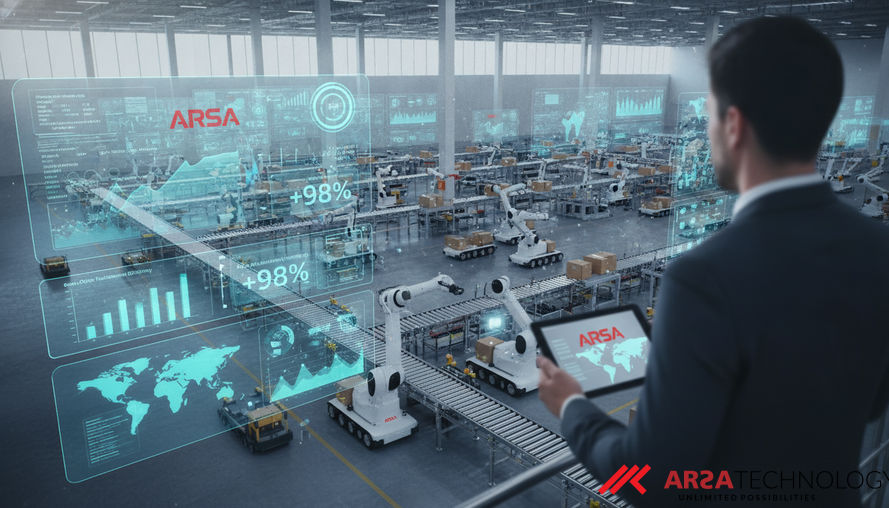
The retail sector is in a perpetual state of flux, characterized by intense competition, fragmented markets, and rapidly evolving consumer expectations. Amidst this dynamic environment, Artificial Intelligence (AI) is not merely an optional upgrade but a foundational operating philosophy that reshapes how businesses strategize and execute. While consumers might first think of AI in the form of virtual try-ons or conversational chatbots, the most profound transformations are occurring behind the scenes, driving efficiency and intelligence into core operational decisions.
The Paradigm Shift to AI-First Operations
Retailers are increasingly adopting an "AI-first" approach, embedding intelligence directly into their systems rather than simply layering AI functionalities onto existing workflows. This strategic integration aims to accelerate business processes and make every customer interaction inherently more relevant. Companies like Macy’s exemplify this by integrating AI into critical areas such as personalization engines, search algorithms, operational planning, and even software development cycles. The goal is to dramatically compress the "gap between the signal and the action," enabling real-time responses to market demands and customer behaviors (MIT Technology Review Insights).
Initial deployments often target high-impact use cases that deliver measurable gains, such as improved conversion rates or reduced friction in customer journeys. These early successes build internal momentum, transforming scaling from a technological debate into a clear business imperative. For instance, in 2025, retailers at NRF highlighted that AI has moved beyond the hype, offering tangible results in predictive and generative AI applications for backend operations (commercetools.com). This signals a maturity in AI adoption where its value is proven and its integration becomes a strategic priority for driving profit and streamlining processes.
Optimizing the Retail Backbone: Inventory, Pricing, and Supply Chain
One of the most significant areas where AI is delivering tangible ROI is in optimizing the intricate backend operations that underpin a successful retail business. Challenges like accurately forecasting demand and efficient inventory allocation plague many retailers, with a 2025 report indicating that 45% struggle with demand forecasting, leading to stockouts of popular products and surpluses of unpopular ones. AI tools are proving instrumental in overcoming these hurdles by analyzing vast datasets—both internal sales figures and external factors like weather, local events, and social media trends—to identify patterns and provide data-driven recommendations. The continuous feedback loop of machine learning further refines accuracy over time.
For example, a major mattress retailer with thousands of stores and distribution centers leveraged AI to solve complex inventory issues, improving forecast accuracy and ensuring products are in the most profitable locations. This resulted in better product availability, reduced excess inventory, optimized discount strategies, and significant cost savings across the supply chain. Beyond inventory, AI is revolutionizing pricing. While dynamic pricing models are gaining traction, retailers are also exploring hyper-localization of pricing and advanced markdown management. AI-powered tools simplify the complexity of adjusting millions of SKU combinations weekly, making discount planning faster and more effective. Furthermore, in supply chain management, technologies like "physics AI" enable the creation of digital twins for entire stores or distribution centers. These physically accurate virtual replicas, updated in real-time with operational and inventory data, allow retailers to simulate different layouts, optimize product placement, and predict the behavior of people and objects without disrupting physical operations, leading to improved sales and revenue. Solutions like ARSA AI Video Analytics Software can be deployed on existing infrastructure to process CCTV streams, offering real-time insights for inventory, security, and operational efficiency without requiring new hardware.
Elevating Customer Engagement with Intelligent Personalization
While much of AI's deep impact is internal, its influence on customer-facing experiences is also evolving. The rise of conversational commerce, powered by AI, transforms traditional search into a more intuitive, personalized interaction. AI-powered shopping assistants can act as personal stylists, understanding natural language queries and offering curated recommendations based on a customer's purchase history, stated preferences, and current context. This hyper-personalization makes digital retail experiences feel more intuitive and individualized.
The long-term vision for retailers is a seamless, adaptive, and highly personalized customer journey. AI functions as an invisible layer, augmenting human judgment rather than replacing it. The true transformation lies in continuous improvement, where businesses learn from data, rapidly adapt to new technology standards, and execute effectively to deliver a consistently superior customer experience. Leveraging edge AI solutions like the ARSA AI Box Series can facilitate real-time analytics for customer behavior and crowd management in retail environments, ensuring instant insights and responsive operations. For highly specific applications such as monitoring customer flow or queue analysis, ARSA also offers specialized modules like AI Box - Smart Retail Counter.
Deployment Realities and Strategic Advantages
The shift to AI-first retail necessitates robust and flexible deployment strategies. Organizations must choose between cloud-based APIs, on-premise software, or turnkey edge systems based on their architectural, scale, and compliance needs. Critical considerations include data ownership, latency requirements, and the ability to operate in restricted or air-gapped environments. On-premise deployments, for instance, offer complete data control, which is vital for regulated industries and privacy-sensitive operations.
Ultimately, AI empowers retailers to make better, faster decisions by processing and analyzing vast amounts of information that would overwhelm human capacity. The objective is not merely to integrate AI for its own sake, but to leverage it as an enabler for greater profitability, leaner operations, and more empowered employees. Enterprises globally are building AI since 2018 with partners like ARSA Technology to translate this vision into practical, production-ready systems that deliver measurable business outcomes across diverse industries.
For businesses looking to integrate advanced AI capabilities into their retail strategies and operations, exploring tailored solutions is a critical next step.
Sources:
- Repositioning retail for the AI era, MIT Technology Review Insights, 2026.
- Insights from NRF 2025: How retailers are using AI to ensure the right product is in the right place at the right time for the right price, commercetools.com, 2025.
Ready to engineer your retail advantage with practical AI solutions? Contact ARSA to discuss how our AI and IoT expertise can transform your operations and elevate customer experiences.