AI for Health: Revolutionizing Tuberculosis Care with Domain-Specific Language Models
Explore how domain-specific AI is transforming TB care in South Africa. Learn about the development and impact of specialized Large Language Models for enhanced patient management and clinical support.

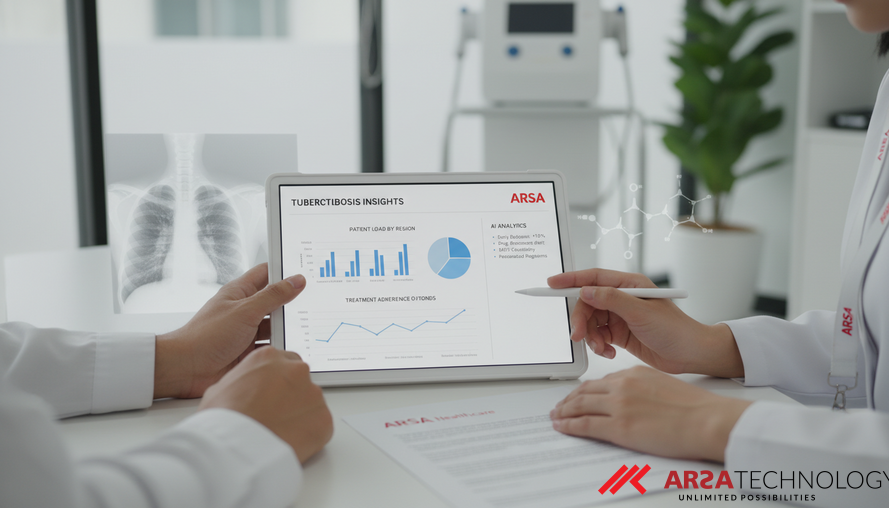
The Global Tuberculosis Burden and South Africa's Critical Challenge
Tuberculosis (TB) persistently ranks among the world's deadliest infectious diseases. Despite being both preventable and curable, global efforts to diagnose and treat TB have not been sufficient to meet the World Health Organization's (WHO) 2030 goals. This ongoing struggle leads to continuous transmission, tragic loss of life, and a disproportionate burden on low- and middle-income countries. South Africa, in particular, faces an acute crisis, with the WHO estimating an incidence rate of 468 per 100,000 people in 2022. This high prevalence is fueled by a complex interplay of socio-economic factors like poverty and extreme income inequality, exacerbated by bio-social risks such as HIV co-infection, alcohol abuse, smoking, and diabetes.
The human toll of TB is staggering, affecting approximately 10 million people globally and causing 1.5 million deaths each year. South Africa is one of just eight nations that account for half of all global TB cases, making it the leading cause of death from a single infectious agent in the country, surpassed only by HIV/AIDS. These statistics highlight the immense pressure on the South African healthcare system and research facilities. Patients often struggle to complete their TB treatment due to fragmented care, while healthcare providers grapple with knowledge gaps and operate within under-resourced environments. This necessitates the adoption of innovative, multi-sectoral methods to alleviate the burden on both patients and clinicians.
Bridging Healthcare Gaps with AI: The Power of Language Models
Artificial Intelligence (AI) is rapidly transforming various sectors, and healthcare is no exception. AI holds immense potential to revolutionize patient care and disease management by automating routine tasks, optimizing processes, minimizing manual intervention, and simplifying complex operations for all stakeholders. Among AI’s many capabilities, Large Language Models (LLMs) stand out as particularly promising. These advanced machine learning models are trained on vast textual datasets, enabling them to understand, process, and generate human-like text with remarkable fluency.
In the medical realm, LLMs can offer significant assistance. They can efficiently document and summarize extensive medical literature, thereby accelerating research. They can also aid clinical decision support by analyzing complex cases based on symptoms and medical history. Furthermore, LLMs could automate the handling of patient inquiries, providing essential advice on medication schedules or general health concerns, a feature especially valuable in areas with limited access to healthcare workers. However, a general-purpose LLM, while versatile, often lacks the specialized depth required for highly specific medical domains. This underscores the critical need for domain-specific LLMs (DS-LLMs) to tackle nuanced challenges, such as those in tuberculosis care.
Designing a Specialized AI for Tuberculosis Care
Unlike their general-purpose counterparts, Domain-Specific Large Language Models (DS-LLMs) are meticulously tailored to achieve high performance and accuracy within a particular area of expertise. For tuberculosis, a DS-LLM offers an invaluable resource: an easily accessible knowledge retrieval system capable of answering precise clinical questions, providing researched TB care methods, extracting vital information from clinical notes or publications, and improving access to appropriate TB guidelines for both clinicians and patients in South Africa. The implementation of such a model promises to enhance the accurate dissemination of knowledge for better continuous patient care, help researchers stay current with relevant literature to address gaps in South African TB care, and significantly reduce the workload on healthcare providers.
The research highlighted in a recent study by Thokozile Khosa and Olawande Daramola explored the development and preliminary evaluation of a DS-LLM specifically for TB care in South Africa. This involved a comprehensive process of literature review, data collection, and the application of advanced AI techniques to adapt a powerful AI model for this critical healthcare application. The methodology focused on "fine-tuning" an existing medical LLM with specialized TB data, demonstrating a promising application of AI to improve the overall experience of TB healthcare.
From Diverse Data to Deep Insights: The Development Process
The effectiveness of any DS-LLM is fundamentally dependent on the quality and relevance of its training data. For this project, a robust data collection strategy was implemented, drawing from authoritative South African TB guidelines, carefully curated TB literature, and established benchmark medical datasets. This diverse and specialized dataset ensured that the resulting model would be well-grounded in contextually relevant and accurate information. The next pivotal stage involved "fine-tuning" a pre-existing medical LLM. Fine-tuning is an advanced technique where a large, general AI model, already proficient in broad language patterns, undergoes further training on a smaller, highly specific dataset. This process allows the model to refine its understanding and generation capabilities, adapting them to the intricate nuances of a particular domain—in this instance, tuberculosis care.
The researchers selected BioMistral-7B as their base model, an LLM already possessing a foundational understanding of medical terminology. To ensure the fine-tuning process was both efficient and scalable, they employed Quantised Low-Rank Adaptation (QLoRA). QLoRA is an innovative form of Parameter-Efficient Fine-Tuning (PEFT). Rather than attempting to retrain all billions of parameters within a large model—a process that is computationally intensive and requires vast amounts of data—QLoRA strategically updates only a small, critical subset of the model's parameters. This method also incorporates "quantisation," which reduces the memory footprint and computational demands by using lower precision data. This makes the fine-tuning process more accessible and less resource-intensive, particularly beneficial when working with smaller, specialized datasets.
Enhancing Factual Accuracy with Retrieval-Augmented Generation (RAG)
While fine-tuning is crucial for an LLM to grasp the intricacies of a specific domain, ensuring factual accuracy and mitigating the risk of "hallucinations" (where the AI generates incorrect but plausible information) is absolutely paramount in sensitive fields like medicine. This is precisely where Retrieval-Augmented Generation (RAG) becomes indispensable. RAG enhances an LLM's capabilities by enabling it to actively retrieve factual, contextual, and domain-specific information from an external, authoritative knowledge base before formulating its response. This approach dramatically improves the factual correctness and overall reliability of the AI's output, preventing it from relying solely on its internal, pre-trained knowledge, which might not always be perfectly current or specific enough.
In this specific study, the researchers implemented RAG using GraphRAG, which implies the utilization of an underlying knowledge graph structure to efficiently organize and retrieve TB-related information. By combining the fine-tuned BioMistral-7B with a robust RAG system, the DS-LLM gained the ability to both synthesize information from its specialized training and retrieve real-time data from up-to-date guidelines and literature. This hybrid approach ensures that the model's answers are not only contextually relevant but also rigorously fact-checked. For enterprises looking to deploy such advanced AI solutions, modular platforms like ARSA's AI Box Series or sophisticated AI Video Analytics systems demonstrate the practical implementation of edge AI processing for real-time operational intelligence, mirroring the rapid processing and information retrieval capabilities of this DS-LLM.
Evaluating Performance and Predicting Impact
The preliminary evaluation of the newly developed DS-LLM involved a rigorous comparison against its original base model, BioMistral-7B, and a general-purpose LLM. This assessment utilized a combination of automated metrics and quantitative ratings, with a particular focus on the model's "contextual alignment." This metric evaluates how accurately the model's generated responses align lexically (in terms of vocabulary and phrasing), semantically (in meaning and understanding), and factually (in terms of embedded knowledge) with the specific requirements of TB care in South Africa. The results unequivocally demonstrated that the domain-specific LLM significantly outperformed the base model across all aspects of contextual alignment. This clear superiority highlights that the specialized training and the integration of RAG successfully equipped the AI with a deeper, more precise, and accurate understanding of tuberculosis.
The implications of these findings are profound, pointing to several transformative impacts on TB care:
- Improved Patient Empowerment: By providing accessible, accurate, and easy-to-understand information, patients can gain a better grasp of their condition and treatment plans, fostering greater adherence and engagement.
- Empowered Clinicians: Healthcare providers can rapidly access the most current guidelines and receive reliable decision support, which is particularly valuable in resource-constrained settings where immediate expertise is critical.
- Accelerated Research and Development: Researchers can leverage the model to efficiently navigate vast medical literature, identify crucial knowledge gaps, and strategically focus their efforts on pressing issues pertinent to South African TB care.
- Enhanced Operational Efficiency: Automating routine information retrieval and patient inquiries can free up invaluable human resources. This allows medical staff to dedicate more time to direct patient interaction, critical care, and other high-value tasks, ultimately optimizing healthcare delivery.
This research serves as a powerful testament to how custom AI solutions can be strategically engineered to address highly critical and specific challenges within various domains. Companies like ARSA Technology, with a strong focus on developing bespoke AI and IoT solutions, are at the forefront of translating such advanced AI research into tangible operational improvements across diverse industries, from public health to industrial automation.
Conclusion: A New Frontier in TB Management
The development and preliminary evaluation of a domain-specific Large Language Model for tuberculosis care in South Africa represent a pivotal advancement in leveraging AI to combat one of humanity's most enduring health crises. By demonstrating superior contextual alignment and factual accuracy compared to general AI models, this specialized LLM underscores the immense potential of tailored AI to provide accurate, accessible, and actionable information for both patients and healthcare providers. It establishes a robust blueprint for the pragmatic deployment of advanced AI to significantly improve public health outcomes, particularly in regions burdened by high disease prevalence and limited resources. This shift from generic AI to highly specialized, fact-checking models heralds a future where technology plays an even more integral role in delivering precision healthcare.
For organizations looking to explore how domain-specific AI or other advanced AI and IoT solutions can transform their operations and address complex challenges, our experienced team is ready to provide a free consultation.