AI for Industrial Fault Diagnosis: Leveraging Renormalization Group for Imbalanced Data
Discover RGNet, an innovative neural network that uses the Renormalization Group concept to accurately predict rare industrial faults despite class imbalance and data noise.

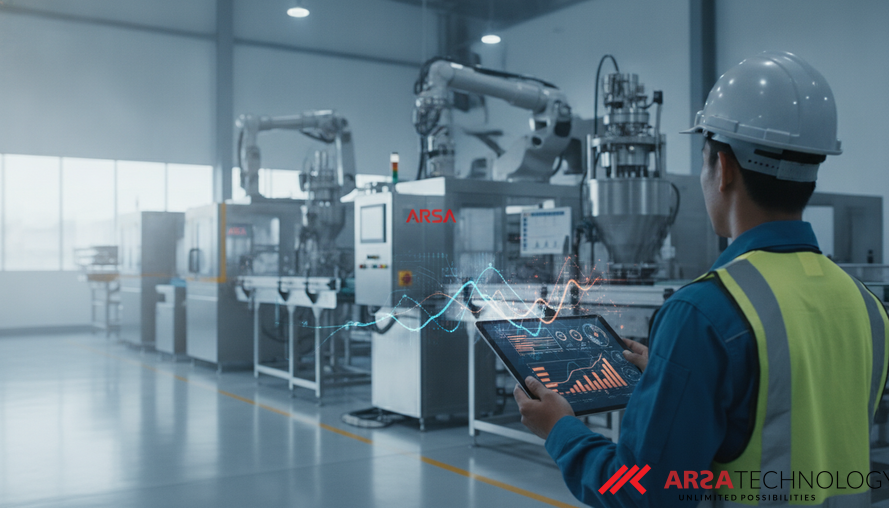
The relentless march of digital transformation has equipped industries with unprecedented volumes of operational data. Within this deluge, predictive maintenance (PdM) stands out as a critical application, promising to preempt equipment failures, minimize downtime, and enhance safety across sectors from manufacturing to smart infrastructure. However, the practical implementation of advanced machine learning (ML) for PdM often hits two significant roadblocks: persistent class imbalance and the multiscale, noisy nature of real-world industrial data.
Addressing the Dual Challenge in Predictive Maintenance
In industrial settings, data representing catastrophic failures or critical risks is inherently scarce. These "fault" cases might constitute less than five percent of the total dataset, yet their accurate identification is paramount. Standard ML algorithms, typically optimized for overall accuracy, often overlook these rare but critical events, leading to a dangerous bias towards predicting normal operation for everything. This inability to correctly identify genuine fault conditions can have severe, even catastrophic, consequences. Simultaneously, critical information about potential malfunctions often manifests across different scales within the data—from subtle, individual sensor fluctuations to broader, long-term trends. These signals can be easily obscured by background noise if analyzed at a single scale, making a robust, multi-perspective approach essential for true operational intelligence.
A recent research paper, "Neural Network Implementation of the Renormalization Group for Fault Diagnosis with Class Imbalance" by Evgeny Nikulchev and Dmitry Ilin, proposes an innovative solution called RGNet. This neural network architecture draws inspiration from the Renormalization Group (RG) concept, a powerful theoretical framework from mathematical physics, to tackle these challenges head-on (Nikulchev & Ilin, 2026).
The Renormalization Group: A Framework for Intelligent Data Analysis
At its core, the Renormalization Group (RG) is a methodology used in physics to analyze complex systems by progressively simplifying them. Imagine zooming out from a highly detailed map: you start by seeing individual buildings, then neighborhoods, then cities, and finally entire regions. At each "zoom level" (or scale), irrelevant fine details are averaged out or discarded, while essential, collective properties are preserved. This process, known as "coarse-graining," reveals how a system's behavior changes depending on the scale of observation.
In the context of RGNet, this sophisticated concept is translated into a neural network that performs hierarchical dimensionality reduction. The network sequentially "compresses" the input data, effectively moving from fine-grained features (like individual sensor readings) to coarser, more abstract representations that capture larger-scale patterns. This approach is gaining traction in the broader AI community, with other research also exploring how deep generative models can implement variational RG approaches for hierarchical data transformations (Li & Wang, 2018).
A key distinction of RGNet's approach is that its compressing layers are adaptively trained to identify which combinations of input features are most significant for the target classification task – in this case, fault prediction. Unlike generic dimensionality reduction methods such as Principal Component Analysis (PCA), which simply maximize data variance, RGNet specifically focuses on preserving information critical for detecting rare events. This intelligent coarse-graining ensures that whether a fault is indicated by a single anomalous sensor spike or a subtle, statistically significant anomaly emerging from many sensors over time, the model is equipped to detect it. ARSA Technology applies advanced AI and video analytics, like in its AI Box Series, to integrate such multi-scale analysis for real-time operational insights, allowing for proactive responses to emerging issues on the factory floor or in smart city infrastructure.
Overcoming Class Imbalance and Multiscale Noise
RGNet's architecture is specifically designed to overcome the twin challenges of class imbalance and multiscale noise. By applying sequential coarse-graining, it effectively filters out irrelevant background noise that might mask critical signals at any single scale. Simultaneously, the model incorporates a "scale concatenation" mechanism, which is crucial for handling class imbalance. Instead of relying solely on the most compressed, coarse-grained data for classification, RGNet concatenates features from all scales – from the original raw data to the most abstract representations – at the input of its final classifier. This multi-perspective input ensures that the model leverages both fine details and overarching global patterns, preventing the rare fault class from being overlooked.
For businesses, this translates into tangible benefits. Accurately predicting rare faults means:
- Reduced Risk: Preventing unforeseen equipment failures, enhancing safety in hazardous environments, and maintaining continuity in critical infrastructure.
- Cost Efficiency: Shifting from reactive to proactive maintenance, minimizing costly emergency repairs, and optimizing operational budgets.
- Improved Productivity: Maximizing asset uptime and ensuring smooth, uninterrupted operations.
- Enhanced Compliance: Supporting regulatory requirements for safety and operational reliability in regulated industries.
The ability to maintain high sensitivity to rare faults while handling complex, noisy data positions RGNet as a competitive solution for high-stakes industrial applications. For organizations seeking tailored solutions to their unique data and operational challenges, custom AI solutions can integrate these sophisticated analytical approaches into existing infrastructure.
Interpretability and Actionable Insights with RG-flows
A significant contribution of RGNet is the introduction of "RG-flows." These are interpretable, low-dimensional representations that visualize how data points evolve through the hierarchical coarse-graining process. Using techniques like t-SNE (t-Distributed Stochastic Neighbor Embedding), these RG-flows reveal discrete curvilinear structures, offering clear insights into how the model differentiates between normal states and various fault conditions.
In the B2B world, the "black box" nature of many advanced AI models can be a significant barrier to adoption. Leaders need to understand why an AI solution flags a potential issue, especially when critical operational decisions are at stake. RGNet's interpretability, through its RG-flows, builds trust and facilitates better decision-making. By visualizing the data's journey from raw input to classified output, operators and managers can gain a global understanding of the data structure at different scales, ensuring greater confidence in the AI's predictions. This transparency is vital for auditing, troubleshooting, and continuous improvement of AI-driven systems. Providers like ARSA Technology, building AI since 2018, understand the need for transparent and reliable AI deployments in real-world environments.
Practical Impact for Industrial Applications
The experimental results on imbalanced datasets, such as the AI4I dataset for industrial fault diagnosis, highlight RGNet's effectiveness. It emerges as a universal, interpretable, and highly competitive solution for fault prediction in applications characterized by extreme class imbalance. Its capacity to capture both local details and global patterns simultaneously provides a comprehensive understanding of data that traditional methods often miss.
For enterprises operating in demanding environments, integrating advanced AI like RGNet into their existing infrastructure can be transformative. Whether it's monitoring personal protective equipment (PPE) compliance in manufacturing, managing traffic flow in smart cities, or detecting anomalies in critical infrastructure, the ability to accurately identify rare events is paramount. ARSA AI Video Analytics Software, for instance, provides on-premise AI processing that can be integrated with existing CCTV systems, delivering real-time operational intelligence and enabling organizations to transform passive video feeds into active sensors capable of detecting conditions and triggering actions instantly, without cloud dependency.
This research underscores the potential of drawing on diverse scientific fields, like mathematical physics, to solve pressing challenges in artificial intelligence. As industries continue to generate vast amounts of complex data, solutions like RGNet offer a promising path forward for robust, reliable, and explainable AI in mission-critical applications across the industries we serve.
Sources
Nikulchev, E., & Ilin, D. (2026). Neural Network Implementation of the Renormalization Group for Fault Diagnosis with Class Imbalance*. International Journal of Advanced Computer Science and Applications, Vol. XXX, No. XXX. https://arxiv.org/abs/2606.18326 Li, S.-H., & Wang, L. (2018). Neural Network Renormalization Group*. Physical Review Letters, 121(26), 260601. https://arxiv.org/abs/1802.02840
Ready to transform your operational data into actionable intelligence? Explore ARSA Technology's range of AI and IoT solutions, from advanced video analytics to custom AI development, designed for precision, scalability, and measurable ROI. Learn how our expertise can drive your business forward and contact ARSA today.