AI for Soil Moisture: Empowering Precision Agriculture and Environmental Resilience
Explore how AI-driven models for soil moisture regression and classification are transforming smart agriculture, water resource management, and climate forecasting for B2B enterprises.

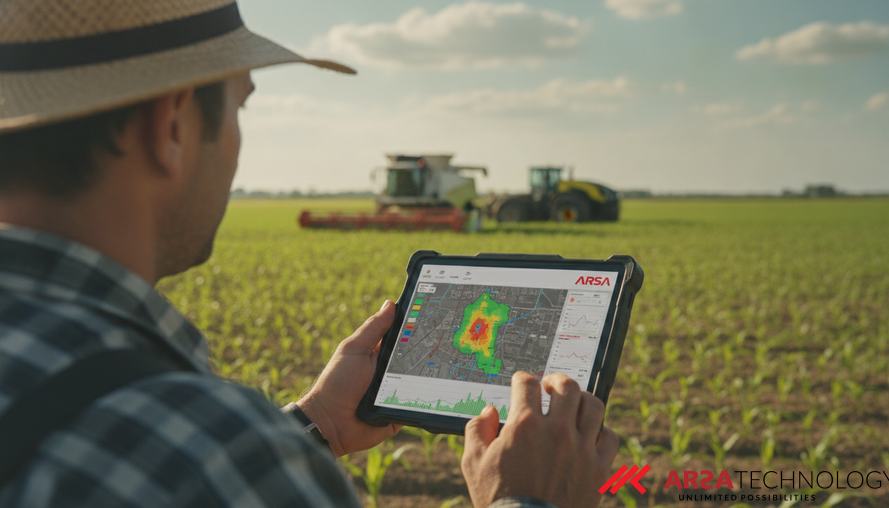
Soil moisture (SM) is a cornerstone of our planet’s hydrological cycle, profoundly influencing everything from agricultural yields to the severity of floods and droughts. Accurate and timely understanding of soil moisture dynamics is critical for sustainable resource management and maintaining ecological balance. However, monitoring and predicting soil moisture is a complex challenge, characterized by its dynamic nature across both space and time, intricate environmental interactions, and the sheer heterogeneity of data involved. This complexity has traditionally posed significant hurdles for large-scale, cost-effective deployment using conventional methods.
From Physics to Prediction: The Rise of Data-Driven AI
Historically, predicting soil moisture relied on physics-based approaches, such as water balance models. These models, while foundational, necessitate explicit hydrological equations and demand exceptionally high-quality input data. Their primary drawbacks include substantial computational costs and limitations in scalability, making them impractical for broad deployment across vast and diverse landscapes.
In contrast, data-driven artificial intelligence (AI) methods have emerged as a flexible and powerful alternative. These models bypass rigid physical equations by extracting empirical relationships between soil moisture and various environmental factors. This approach requires fewer underlying modeling assumptions, allowing for greater adaptability and broader application. AI-based models leverage historical soil moisture records, meteorological data (like precipitation and temperature), vegetation indices, topography, and soil characteristics to understand and predict complex “spatio-temporal” patterns—how soil moisture changes over both geographical space and time simultaneously. This ability to process and learn from diverse data sets, even with limited ground observations, underscores their growing importance in addressing critical environmental and agricultural challenges (Tsimpidi et al., 2026).
AI at Work: Regression and Classification in Soil Moisture Modeling
Data-driven soil moisture modeling typically takes one of two forms: regression or classification, each serving distinct application needs.
Regression Tasks
Regression models are employed to predict continuous soil moisture values. This is particularly useful when precise measurements, such as volumetric water content, are required. Key applications of soil moisture regression include:
- Point Estimation: Predicting soil moisture at specific locations or depths using current environmental data.
- Temporal Forecasting: Predicting future soil moisture values by analyzing historical observations and external factors like predicted rainfall or evapotranspiration.
- Multi-Depth Prediction: Forecasting moisture levels across various soil layers, which is vital for understanding root zone conditions.
- Gap-Filling and Reconstruction: Imputing missing or incomplete soil moisture data in datasets, enhancing data integrity for analysis.
- Spatial Downscaling: A specialized regression task that refines coarse-resolution satellite soil moisture products by integrating higher-resolution auxiliary data (e.g., vegetation maps, land surface temperature, topography) to provide finer spatial detail. This is crucial for precision agriculture where localized information is paramount.
Classification Tasks
Classification models categorize soil moisture into predefined discrete states, such as "dry," "moderate," or "wet." While seemingly less precise than regression, this approach is invaluable in scenarios where:
- Data availability for continuous prediction is limited.
- Simplified, actionable insights are needed, such as for irrigation scheduling or drought monitoring.
- The output needs to be easily interpretable for decision-making systems.
Whether a business requires continuous values for intricate hydrological simulations or categorical states for operational alerts, modern AI solutions can be tailored. For instance, enterprises can implement Custom AI Solutions to fit their specific agricultural or environmental monitoring requirements, leveraging either regression for detailed analysis or classification for immediate, actionable insights.
The Data Foundation: Inputs and Robust Validation
The efficacy of any data-driven model is inextricably linked to the quality and relevance of its input data—a principle often summarized as "Garbage In, Garbage Out." For soil moisture modeling, a comprehensive array of input variables is crucial. These typically include:
- Meteorological Data: Precipitation, air temperature, solar radiation, and wind speed.
- Remote Sensing Data: Satellite observations providing vegetation indices (e.g., NDVI), Synthetic Aperture Radar (SAR) backscatter, and land surface temperature.
- Soil Characteristics: Soil texture (sand, silt, clay content), bulk density, and organic matter.
- Topography: Elevation, slope, and aspect.
- Temporal Predictors: Historical soil moisture records and antecedent conditions.
Common data sources range from in-situ measurements provided by networks like the International Soil Moisture Network (ISMN) to satellite products such as SMAP and SMOS, Sentinel-1 SAR observations, and reanalysis datasets like ERA5-Land (Tsimpidi et al., 2026). The proper selection and preprocessing of these diverse inputs are fundamental to building accurate predictive models.
Beyond data input, the validation of these models is paramount to ensure their real-world applicability and generalization to new, unseen data. While random cross-validation is common, for spatio-temporal problems like soil moisture, more robust strategies are preferred. These include temporal holdout (testing on future data), spatial blocking (testing on geographically distinct areas), or leave-one-station-out validation (testing on data from an unobserved station). Such methods ensure that the models genuinely perform under varied conditions, providing reliable insights for critical operations. Companies with a long track record, such as ARSA Technology, which has been building AI since 2018, understand the importance of rigorous validation in developing production-ready systems.
Business Impact: Smarter Decisions for a Sustainable Future
The integration of AI into soil moisture monitoring is more than a technological advancement; it's a strategic imperative for businesses and governments aiming for greater efficiency, sustainability, and resilience. As the global population grows, demanding a more sustainable food supply, GeoAI is becoming indispensable in agriculture. The "GeoAI for Smart Agriculture" report highlights significant benefits for businesses in this sector (TechGEO Mapping, 2025):
- Enhanced Crop Production: By optimizing irrigation and fertilization based on precise, real-time soil moisture data, farmers can achieve significantly higher yields.
- Reduced Water Use: AI-driven irrigation systems can pinpoint the exact water needs of specific areas or crops, minimizing waste and conserving a critical resource.
- Optimized Fertilizer Applications: Accurate soil moisture insights enable precision application of fertilizers, preventing overuse, reducing costs, and promoting environmental sustainability by mitigating runoff.
- Improved Pest and Disease Management: Healthy crops, supported by optimal water and nutrient levels, are more resilient to pests and diseases, reducing the need for chemical interventions.
- Increased Farm Profitability: These efficiency gains translate directly into substantial cost savings and improved profitability for agricultural enterprises.
Beyond agriculture, accurate soil moisture data aids in crucial environmental management. Governments and smart city initiatives leverage these insights for improved flood and drought forecasting, helping to mitigate risks and allocate resources more effectively. For industrial and infrastructure operators, understanding soil moisture can prevent damage to foundations and infrastructure, reducing maintenance costs and ensuring operational continuity.
ARSA Technology provides solutions like the AI Video Analytics Software which can be adapted for broad environmental monitoring, and the AI Box Series, offering edge AI processing for local, real-time analysis in remote or agricultural settings. These solutions support enterprises across various industries we serve, enabling them to make data-driven decisions that enhance productivity, reduce operational risks, and contribute to a more sustainable future.
The shift towards data-driven AI models for soil moisture management represents a profound opportunity for transformation. By embracing these advanced technologies, businesses can unlock unparalleled insights, optimize resource allocation, and build more resilient operations in an increasingly complex world.
Ready to harness the power of AI for your environmental monitoring or agricultural operations? Contact ARSA to explore how our proven AI and IoT solutions can be tailored to meet your specific needs.
Sources:
Tsimpidi, I., Georgoulas, G., Sumathy, V., & Nikolakopoulos, G. (2026). A Survey on Data-Driven Models for Soil Moisture Regression and Classification. arXiv preprint arXiv:2606.18316*.
- TechGEO Mapping. (2025, March 15). GeoAI for Smart Agriculture – Soil Moisture Monitoring.