AI-Powered Air Purifiers: How Edge AI and Computer Vision Deliver Personalized Air Quality with Enhanced Privacy
Explore how advanced air purifiers use on-device AI and computer vision to deliver personalized air quality, track users, and ensure data privacy through edge processing. Discover the broader implications for smart environments.

The Evolution of Air Purification: Introducing AI for Personalized Comfort
Air purification systems have long been essential for maintaining healthy indoor environments, silently removing pollutants and allergens. However, a new generation of devices is redefining this experience by integrating sophisticated artificial intelligence (AI) and computer vision. These innovations move beyond passive air cleaning to actively engaging with occupants, delivering fresh air precisely where and when it's needed most. This shift marks a significant leap towards truly intelligent living and working spaces, leveraging advanced technology to enhance personal well-being and operational efficiency.
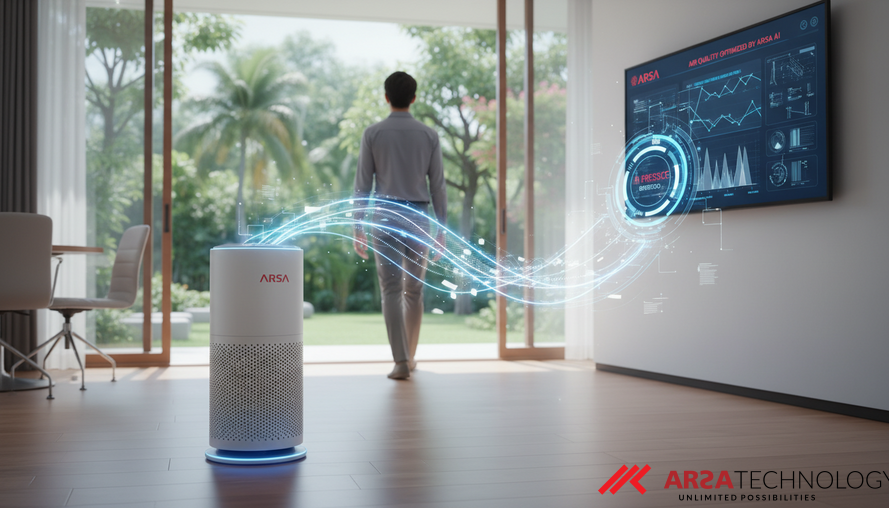
A notable example of this trend is a recent smart air purifier that incorporates an AI-powered camera to track the location of individuals within a room. This capability allows the device to intelligently direct airflow, ensuring that clean air follows users as they move, whether they are bustling around a kitchen or settling down in a living area. This "Find+Follow" functionality represents a fusion of environmental control with personalized responsiveness, a concept increasingly becoming a cornerstone of modern smart technologies.
Edge AI and Computer Vision: Enabling Intelligent Tracking and Efficiency
The core of this advanced air purifier’s functionality lies in its use of on-device AI and computer vision. Rather than merely detecting air quality, the integrated camera system, akin to a periscope, allows the device to sense the presence and movement of people. This local processing, often referred to as edge AI, is critical because it enables real-time decision-making without constant reliance on cloud servers. For instance, if multiple people are detected in a room, the purifier automatically adjusts its oscillation to distribute airflow efficiently between them.
The system also offers practical benefits beyond personalized airflow. By understanding when a room is empty, the device can automatically power down or enter a low-energy mode, contributing to energy conservation. This intelligent automation extends to adjusting airflow intensity when higher levels of pollutants are detected, demonstrating a proactive approach to maintaining optimal air quality. Such capabilities highlight the versatility of computer vision, a technology ARSA Technology frequently deploys in solutions ranging from AI Video Analytics for security to optimizing operational workflows in various industries.
Prioritizing Privacy with Local Processing
A significant concern with any device incorporating cameras and AI is data privacy. Addressing this, developers of advanced air purifiers emphasize a privacy-by-design approach. The on-device AI vision system processes images locally, meaning captured visual data never leaves the device or is uploaded to the cloud. Crucially, the AI is designed solely for presence detection and movement tracking; it does not recognize individual persons or store facial biometric data. Furthermore, images captured by the camera are immediately deleted after real-time analysis, ensuring no persistent visual records are maintained.
This commitment to local processing and ephemeral data handling is paramount, especially as AI becomes more pervasive in our environments. For enterprises, particularly those in sensitive sectors like government, defense, or healthcare, robust data privacy and security measures are non-negotiable. This is precisely why solutions like the ARSA AI Video Analytics Software and ARSA AI Box Series are engineered for on-premise deployment, offering complete data ownership and operating without cloud dependency, thereby supporting stringent compliance requirements.
Beyond Consumer Products: Enterprise Applications of Smart Sensing
While a personalized air purifier exemplifies consumer-centric AI, the underlying technologies—computer vision, edge AI, and intelligent automation—have profound implications for enterprise environments. The ability to accurately detect presence, track movement, and dynamically respond to environmental changes can revolutionize various sectors:
- Smart Buildings: Beyond air quality, AI can optimize lighting, heating, and cooling based on occupancy, leading to significant energy savings and operational efficiency.
- Retail and Hospitality: Understanding customer flow and dwell times through anonymous tracking can inform store layouts, staffing levels, and targeted promotions, enhancing customer experience and boosting sales.
- Industrial and Workplace Safety: AI vision systems can monitor for compliance with safety protocols (e.g., PPE detection, restricted area alerts), enhancing worker safety and reducing incident risks without compromising individual privacy.
- Healthcare Facilities: Intelligent systems can monitor patient areas for activity, manage visitor flow, and even automate environmental controls in critical care zones, supporting staff and improving patient comfort.
The choice between a sophisticated camera-based system and simpler sensors for presence detection often hinges on the level of detail and dynamic response required. While passive infrared or ultrasonic sensors can detect presence, a camera offers richer data, enabling more nuanced actions like tracking specific movements, adjusting to multiple individuals, or adapting to complex scenarios. This advanced data allows for the development of highly customized solutions, a capability central to ARSA's approach to delivering bespoke technology transformations for mission-critical enterprises. Our Custom AI Solution services are designed to build unique intelligent systems tailored to specific operational challenges, much like how specialized AI is built for this air purifier.
Seamless Integration into Smart Ecosystems
The utility of smart devices is amplified by their ability to integrate seamlessly into broader smart ecosystems. With Matter compatibility, this new air purifier can connect with popular smart home platforms like Apple Home and Google Home. This integration allows users to control the device alongside other smart appliances, create automated routines, and leverage voice commands for a cohesive smart living experience.
In an enterprise context, such integration capabilities translate to unified operational intelligence. AI and IoT solutions that can communicate and interact with existing building management systems, security networks, and workflow platforms unlock unprecedented levels of automation and control. This interconnectedness is key to achieving comprehensive digital transformation, optimizing resource allocation, and delivering measurable ROI across an organization's entire operational stack. ARSA Technology, with its experienced since 2018, focuses on engineering converged AI, IoT, and web ecosystems that compound value across various industries.
The Future is Intelligent and Personalized
The advent of AI-powered air purifiers that actively track and respond to user presence is a compelling glimpse into our increasingly intelligent future. This technology exemplifies how localized AI, advanced computer vision, and thoughtful privacy considerations can converge to create environments that are not only healthier but also more responsive and energy-efficient. As these capabilities mature, we can anticipate a broader deployment of such intelligent systems, enhancing comfort, safety, and productivity across both consumer and enterprise landscapes. The emphasis on edge processing and data privacy will remain a critical factor, ensuring that convenience doesn't come at the cost of personal security.
Transform your operational challenges into intelligent solutions with AI & IoT technology. Explore ARSA's solutions and contact ARSA today for a free consultation.
Source: The Verge