AI-Powered Wildlife Monitoring: Revolutionizing Conservation with Computer Vision
Discover how computer vision, YOLO models, and synthetic data are transforming wildlife monitoring, enhancing efficiency, and bolstering global conservation efforts.

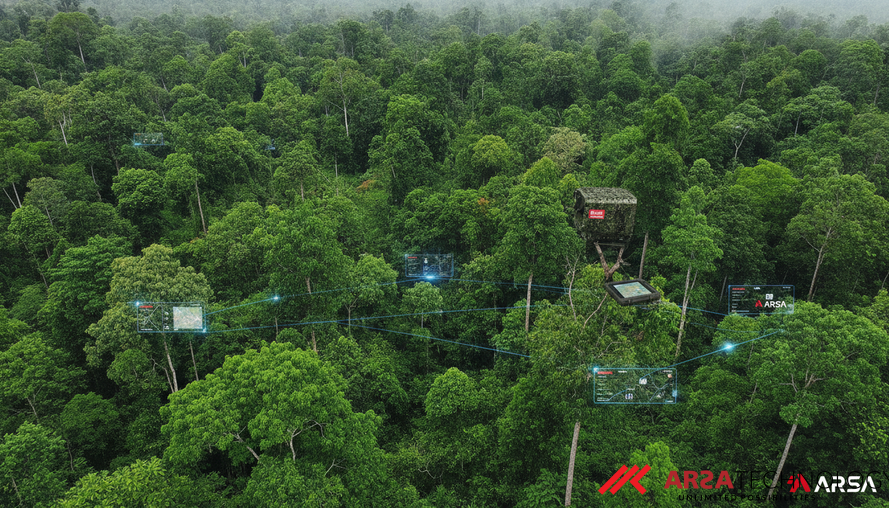
The escalating pace of urban expansion and deforestation presents a critical threat to global biodiversity, particularly endangering arboreal species. As forest habitats become increasingly fragmented, animals face heightened risks of mortality from accidents and isolation, disrupting natural gene flow and access to vital resources. Traditional conservation efforts, while well-intentioned, often struggle to keep pace with these challenges, especially when it comes to effective, continuous monitoring. This is where advanced computer vision and artificial intelligence (AI) are stepping in, offering transformative solutions to safeguard wildlife and optimize conservation strategies.
The Monitoring Dilemma: Overcoming Data Overload
For decades, camera traps have been a cornerstone of wildlife monitoring, providing invaluable insights into animal populations and behaviors. However, this method comes with its own set of challenges. Camera traps frequently trigger on non-target events—such as swaying vegetation or changing weather conditions—generating an overwhelming volume of false-positive images and videos. Manually sifting through thousands of hours of footage is an arduous, time-consuming task for conservationists, creating significant delays in assessing the effectiveness of conservation measures like canopy bridges. These artificial pathways are crucial for enabling arboreal species to move safely across fragmented landscapes, but their utility depends on consistent, accurate monitoring.
This data overload highlights a critical need for automation, and this is where computer vision algorithms shine. By automatically detecting and classifying target species, these technologies can dramatically reduce the manual workload, allowing conservationists to focus on higher-value tasks and make more timely decisions. The integration of AI in conservation, leveraging technologies like convolutional neural networks (CNNs), offers a scalable approach to processing vast datasets, identifying patterns that might elude human observers, and providing actionable intelligence for wildlife protection efforts (Fergus et al., 2024).
YOLO and the Power of Real-Time Object Detection
At the forefront of these technological advancements is You Only Look Once (YOLO), a state-of-the-art object detection system. Unlike older methods that might scan an image multiple times to identify objects, YOLO processes an entire image in a single pass, simultaneously predicting bounding boxes and class probabilities for detected objects. This makes it exceptionally fast and efficient, capable of real-time analysis—a crucial feature for dynamic environments like wildlife monitoring.
A recent study demonstrated the efficacy of applying the YOLOv10 framework for the automatic detection of brown howler monkeys (Alouatta guariba) in videos captured by camera traps. This research focused on optimizing the monitoring of canopy bridges in peri-urban Brazilian habitats, providing a powerful tool for assessing their use by arboreal mammals (Schneider et al., 2026). Such capabilities can be deployed through robust systems like ARSA Technology’s AI Box Series, offering pre-configured edge AI solutions for rapid, on-site deployment in challenging environments.
Bridging the Data Gap with Synthetic Intelligence
Developing high-performance AI models, including those based on YOLO, typically requires extensive, manually annotated datasets. This "data bottleneck" can hinder progress, especially when dealing with rare or elusive species where real-world data collection is challenging and expensive. For instance, creating a dataset with thousands of images showing a specific monkey species in various poses, lighting conditions, and environments is a monumental task.
To circumvent this, researchers are increasingly turning to synthetic data generation. Using computer graphics and 3D game engines, it is possible to create diverse, pre-labeled training sets that accurately mimic real-world scenarios. This scalable alternative allows for the creation of a virtually limitless supply of training data, significantly accelerating the development and refinement of AI models. The study on brown howler monkeys, for example, explored a hybrid approach, integrating both real-world footage and synthetic data generated in a gaming engine to enhance the YOLOv10 model's detection capabilities. This approach is similar to how providers of Custom AI Solutions might leverage diverse data streams to build highly specialized models for unique operational needs.
Practical Applications and Business Impact
The applications of computer vision in wildlife monitoring extend far beyond academic research. For organizations involved in environmental conservation, ecological research, and even infrastructure management in natural areas, these AI solutions offer tangible benefits:
- Enhanced Efficiency and Reduced Costs: Automating the analysis of camera trap footage drastically cuts down on the labor-intensive, time-consuming manual review process. This translates to significant cost savings and allows human resources to be reallocated to critical field operations, research, or policy development.
- Improved Accuracy and Timeliness: AI models can identify species with high precision, often surpassing human capabilities in challenging visual conditions like low light or dense foliage. Real-time detection capabilities, especially when integrated with edge AI systems, enable immediate alerts for critical events, such as illegal intrusion or rapid changes in animal behavior. These real-time insights can be crucial for anti-poaching efforts or rapid response to environmental incidents.
- Scalability and Reach: Computer vision platforms can process vast amounts of data from numerous camera traps across extensive geographical areas simultaneously. This scalability is vital for monitoring large conservation zones or tracking wide-ranging species, providing a comprehensive overview of ecological health and species distribution that would be impossible with manual methods. Solutions such as ARSA AI Video Analytics Software can be deployed on existing infrastructure, offering flexibility and scalability for diverse monitoring projects.
- Data-Driven Decision Making: The consistent, quantitative data generated by AI models provides a robust foundation for scientific research and evidence-based conservation strategies. From understanding migration patterns to evaluating the impact of climate change, these insights empower organizations to make informed decisions that maximize conservation impact and ensure compliance with environmental regulations.
- Reduced Human Disturbance: Non-invasive monitoring via AI-powered cameras minimizes human presence in sensitive habitats, reducing disturbance to wildlife and preserving natural behaviors.
Challenges and Future Outlook
Despite the promise, challenges remain. Data quality, especially from varied camera trap environments, can impact model accuracy. Furthermore, continuous training and updating of AI models are essential as new species are added or environmental conditions change, requiring significant computational resources. Ethical considerations, including potential biases in AI models and data privacy, also need careful attention to ensure responsible and transparent deployment.
Looking ahead, the development of edge AI solutions, which deploy AI models directly on devices like camera traps, will further enhance real-time capabilities and reduce reliance on constant internet connectivity in remote areas. Integrating multimodal data, such as audio alongside visual input, also promises more sophisticated and nuanced analysis. Partnerships between technology providers, conservation organizations, and local communities are crucial to ensure that these advanced tools are effective, contextually appropriate, and ethically sound.
The integration of advanced computer vision techniques like YOLO with innovative data strategies, such as synthetic data generation, represents a significant leap forward for wildlife conservation. By providing efficient, accurate, and scalable monitoring capabilities, these technologies are empowering conservationists to overcome long-standing challenges and make a measurable impact in the urgent fight to protect global biodiversity.
***
Sources
Schneider, G.F., Mainardi, G.L.G., Knob, P.R., Dias, P., Jardim, M., Bicca-Marques, J.C., Musse, S.R. (2026). Computer Vision for Wildlife Monitoring: Detecting Brown Howler Monkeys using YOLO. arXiv preprint arXiv:2607.01396*. Fergus, P., Chalmers, C., Longmore, S., Wich, S. (2024). Harnessing Artificial Intelligence for Wildlife Conservation. Conservation*, 4(4), 685-702.
To explore how AI and IoT solutions can transform your operational intelligence and support environmental initiatives, contact ARSA today.