AI Revolutionizes Automotive Design: Halving Development Cycles for Next-Gen Vehicles
Discover how AI is transforming the automotive industry, from accelerating initial sketches to optimizing aerodynamics and streamlining software development, significantly reducing car design timelines.

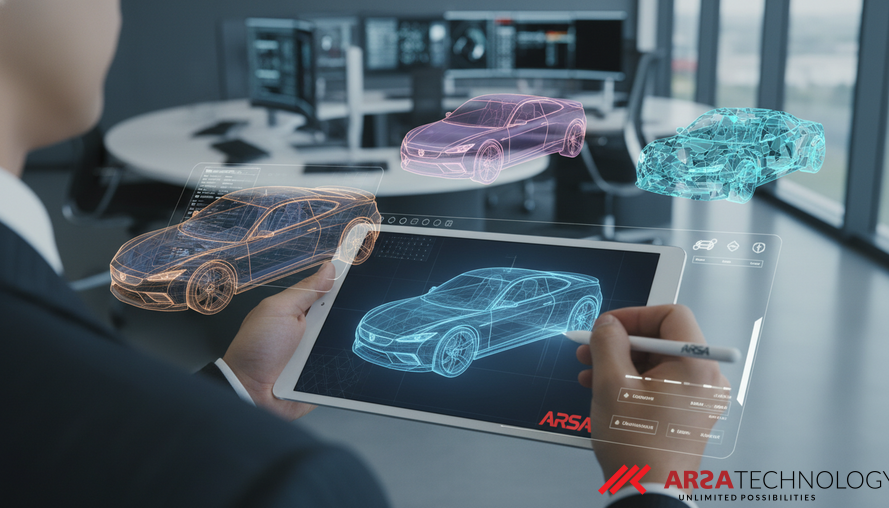
In an era marked by shifting global trade policies and unpredictable market demands, the automotive industry faces unprecedented pressure to innovate rapidly. Manufacturers are increasingly turning to artificial intelligence (AI) to dramatically shorten the notoriously long development cycles of new vehicles. Traditionally, bringing a car from concept to showroom floor could take five years or more, a timeline that now appears unsustainable given the pace of technological change and market volatility. This shift is crucial for companies aiming to adapt quickly to new consumer preferences, regulatory changes, and evolving sustainability goals.
Accelerating Automotive Design from Sketch to 3D Model
The journey of a new car often begins with a designer's sketch. These initial drawings undergo extensive refinement, iterating through countless revisions before being translated into detailed 3D digital models. Some designs are even physically sculpted in clay to provide a tactile understanding of lines and profiles. This initial design phase alone can consume significant time, with multiple teams dedicating months to perfect a concept. However, AI is now injecting unprecedented speed into this process. Tools like Vizcom, when fed hand-drawn sketches, can generate fully realized 3D models and even animations in mere hours. This drastic reduction in time allows design teams, such as those at General Motors (GM), to visualize concepts much sooner and iterate on ideas with remarkable agility.
GM’s creative designers, for example, can upload a sketch and, using simple text prompts, create dynamic action shots of concept vehicles in various urban environments. While these AI-generated visuals currently serve as internal "mood boards" to guide development, they fundamentally change how quickly designers can experiment and decide on aesthetic directions. This iterative power doesn't diminish the human role; rather, it empowers designers to explore more possibilities and refine their creative vision more efficiently, ensuring the brand identity—whether a Buick, GMC, or Cadillac—remains a human decision point, as highlighted by GM's creative designer, Dan Shapiro. For enterprises looking to accelerate their visual and product design processes, integrating advanced Custom AI Solutions can similarly transform complex workflows into agile, high-impact operations.
AI for Advanced Aerodynamics and Engineering Simulation
Beyond visual design, AI is also revolutionizing core engineering aspects, particularly computational fluid dynamics (CFD). CFD is a critical discipline that simulates how fluids, like air, interact with a vehicle's shape. This analysis helps optimize aerodynamics, improving fuel efficiency for internal combustion engines and extending the range of electric vehicles (EVs). Historically, CFD simulations were incredibly time-consuming, requiring hours on powerful supercomputers.
Since 2018, companies like Neural Concept have leveraged neural networks to dramatically accelerate CFD tasks. What once took hours can now be simulated in minutes using modern GPUs. This advancement is benefiting a wide range of vehicles, from standard family sedans to high-performance Formula One racers. Jaguar Land Rover (JLR) has publicly lauded the technology, reporting that aero jobs that previously took four hours are now completed in just one minute. GM is also developing its own "AI-powered virtual wind tunnel," allowing designers and engineers to receive near-instant feedback on design modifications. This capability fosters a far more iterative design process, enabling CFD analysis to begin much earlier in the development cycle and streamlining collaboration between design and engineering teams. Organizations in manufacturing and industrial sectors can achieve similar efficiencies by deploying ARSA AI Box Series for edge-based video analytics, turning passive cameras into active sensors for real-time operational insights.
Streamlining Software-Defined Vehicles with AI
The modern automobile is increasingly a software-defined machine, with millions of lines of code governing everything from infotainment to advanced driver-assistance systems. The complexity of integrating these intricate software components has led to significant delays and substantial costs for many automotive manufacturers. Here, AI is emerging as a critical tool for improving software development processes. Companies like Nissan are focusing on automating "menial tasks" within software development, such as generating unit tests.
Takashi Yoshizawa, corporate executive at Nissan overseeing software-defined vehicles, indicates that these AI-powered code-generation tools not only boost development speed but also enhance software quality. By offloading routine coding tasks to AI, human developers can focus on more complex architectural challenges, innovative features, and critical problem-solving, thereby accelerating the path to market for cutting-edge vehicle functionalities. This focus on automation and quality mirrors the demand for reliable, real-time intelligence in other complex systems, such as the AI Video Analytics solutions that convert CCTV streams into actionable insights for security, safety, and operational efficiency across various industries.
The Human Element: AI as an Amplifier, Not a Replacement
The rapid integration of AI across various industries often raises concerns about job displacement. In the automotive sector, companies assert that AI's primary role is to augment human productivity by eliminating tedious tasks, rather than reducing headcount. GM representatives emphasize that AI allows employees to focus on the creative and strategic aspects of their work. Similarly, Pierre Baqué, CEO of Neural Concept, stresses that their platform is designed to "amplify engineering teams, not reduce them."
However, not everyone shares this optimistic view. Matteo Licata, a former automobile designer and a professor at IAAD, suggests that while jobs may not disappear immediately, such significant productivity boosts will inevitably impact studio headcounts over time. He notes the already challenging nature of entering car design, predicting it will become even more competitive. This perspective underscores a broader discussion about how industries will navigate the evolving relationship between human expertise and advanced AI capabilities, making ethical deployment and workforce reskilling critical considerations. ARSA Technology, for instance, has been experienced since 2018 in developing AI solutions that enhance human capabilities, focusing on practical deployment and measurable impact across various sectors.
The Drive for Speed: Faster Development Cycles with AI
Ultimately, the motivation behind integrating AI into automotive development is speed and responsiveness to an ever-changing market. Manufacturers need to shorten development windows to remain competitive and adapt to rapidly evolving consumer expectations and regulatory landscapes. GM is already leveraging AI in the design of its next-generation vehicles, though specific launch dates remain under wraps. Nissan, in its quest to regain market momentum, has set an ambitious goal of reducing new car development to a mere 30 months.
Whether this accelerated timeline proves sufficient in a dynamic global market remains to be seen in the coming years. The journey toward the AI-designed car is a testament to the transformative power of artificial intelligence in reshaping industrial processes, pushing the boundaries of innovation, and demanding new paradigms for collaboration between humans and intelligent systems. This race for speed, precision, and efficiency through AI will undoubtedly define the future of the automotive industry.
Source: The AI-designed car is taking shape by Tim Stevens, The Verge
To explore how AI and IoT solutions can accelerate innovation and efficiency within your enterprise, contact ARSA for a free consultation.