AI Surveillance at Major Events: Balancing Security, Data, and Privacy for Enterprise
Explore the dual impact of AI video surveillance at major events like the World Cup and America250, balancing enhanced security with critical data privacy and governance considerations for businesses.

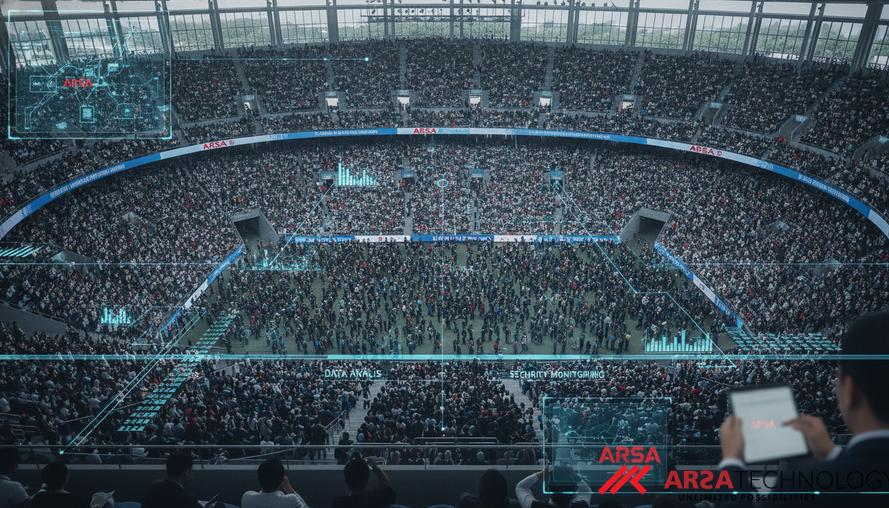
The Expanding Eye of AI at Major Events
As global events like the World Cup and national celebrations such as America250 draw millions of spectators, a parallel evolution is unfolding in the realm of security. What was once primarily a human-intensive operation is now increasingly augmented by advanced artificial intelligence (AI) and sophisticated surveillance technologies. While attendees immerse themselves in the spectacle, an unseen network of cameras, drones, and analytical systems is at work, transforming traditional security paradigms. This shift promises unprecedented levels of public safety and operational efficiency, yet it simultaneously raises profound questions about data privacy, governance, and the long-term implications for public spaces and individual liberties. Understanding this balance is critical for businesses and governments leveraging such powerful tools.
National Security Designations and the Surveillance Build-Up
Major events are frequently designated as National Special Security Events (NSSEs) by authorities like the Department of Homeland Security, reflecting a heightened threat perception. This classification triggers comprehensive security measures, often involving multiple federal agencies and significant financial investment. For instance, the original source notes that cities hosting the World Cup received $250 million in grants, much of which was allocated to acquiring cutting-edge counter-drone equipment and enhancing surveillance capabilities The Verge, 2026. These efforts extend beyond stadium perimeters to encompass fan zones, public transport, and surrounding urban areas, creating an expansive security footprint. The transformation moves beyond visible checkpoints to integrated digital networks, often reactivating or expanding existing Closed-Circuit Television (CCTV) infrastructure with modern enhancements.
AI Video Analytics: From Raw Footage to Actionable Intelligence
The core of this modern security apparatus is AI video analytics, which goes far beyond passive recording. While traditional CCTV footage offered limited immediate insights, AI-powered systems process video streams in real-time to detect anomalies, identify objects (people, vehicles), and even analyze behavior. This capability turns standard cameras into active sensors, capable of:
- Real-time threat detection: Identifying potential security breaches or suspicious activities.
- Crowd management: Monitoring crowd density, flow, and potential bottlenecks to prevent dangerous situations.
- Resource optimization: Directing security personnel more efficiently to areas of concern.
Such systems can detect personal protective equipment (PPE) compliance in industrial settings or track vehicle movements in smart cities, providing operational intelligence that significantly reduces risk and improves incident response times. Companies like ARSA Technology provide AI Video Analytics Software that processes CCTV streams into real-time detections, dashboards, and alerts, illustrating how these systems deliver measurable business outcomes across various sectors. The Security Industry Association (SIA) highlights how AI-powered systems can recognize humans, vehicles, objects, and events, generating alarms that allow users to respond quickly and reduce human error from surveillance fatigue SIA, 2025.
Navigating the Complexities of Data Privacy and Governance
The proliferation of advanced surveillance technology, especially those incorporating biometric data like facial recognition, inherently raises critical privacy concerns. As one privacy expert cited in the original source noted, while increased security at high-risk events may be warranted, the methods of biometric data collection and retention are often problematic The Verge, 2026. Unlike some jurisdictions, such as British Columbia which imposes regulations on surveillance footage retention, a unified federal standard in the United States is still evolving.
Businesses deploying or integrating such systems must grapple with a complex legal and ethical landscape. The SIA's Code of Practice emphasizes principles like "Privacy by Design," "Purpose Limitation," and "Data Minimization," advocating for proactive privacy measures, collecting only necessary data, and using it solely for stated purposes SIA, 2025. Organizations must be transparent with individuals about surveillance, providing clear notice and information on how data will be used and retained. For example, the use of facial recognition on public transport, as explored in Kansas City for identifying missing persons or thwarting human trafficking, highlights the tension between security objectives and public privacy expectations.
Strategic Deployment of Edge AI for Enhanced Control
A significant consideration for enterprises in data-sensitive environments is the deployment model for AI surveillance. Cloud-based solutions offer scalability and ease of deployment but can introduce concerns about data sovereignty and external network dependencies. For many governments, defense, and regulated industries, on-premise solutions or edge AI systems offer a compelling alternative.
Edge AI devices, such as the ARSA AI Box Series, process video streams directly at the source, minimizing data transfer and keeping sensitive information within a controlled local network. This local processing significantly reduces latency, a critical factor for real-time incident response, and bolsters data privacy by limiting external data exposure. ARSA Technology also offers an On-Premise Face Recognition & Liveness SDK for enterprises that require full ownership and control over their biometric systems and data, ensuring that no biometric information leaves the client's infrastructure. This approach aligns with best practices for data sovereignty and compliance, enabling organizations to define their own retention and access policies.
Conclusion: Balancing Security Innovation with Privacy Responsibility
The increasing sophistication of AI and surveillance technologies presents both immense opportunities and significant challenges for businesses and public institutions. While AI video analytics can dramatically enhance security, improve operational efficiency, and provide critical real-time intelligence for major events and daily operations, these benefits must be carefully weighed against the imperative to protect individual privacy and uphold robust data governance. Strategic planning, transparent communication, and the implementation of privacy-by-design principles are essential. Organizations that prioritize ethical AI deployment and offer flexible, secure solutions, such as those enabling on-premise data processing and full data ownership, will be best positioned to leverage the power of AI while building public trust.
Businesses seeking to deploy advanced AI solutions for security, operations, or smart infrastructure, while maintaining stringent control over their data, are encouraged to explore tailored solutions and contact ARSA.
Sources:
- Del Valle, G. (2026, July 3). While you’re watching the World Cup, the feds may be watching you. The Verge.
- Security Industry Association. (©2025). Data Privacy Code of Practice Video Surveillance.